
When it comes to notable works in the anime medium, popularity and quality aren’t the only things that define their place in history. Just as important is the concept of influence, or how an anime has managed to produce a lasting impact on the industry and shift its cultural notions and practices.
Classics like Astro Boy and Space Battleship Yamato are considered some of the most influential anime titles of all time. However, while a series’ impact is easier to judge when it has had time to crystallize over the course of multiple decades, it’s already clear which shows from as recently as the 2010s were most significant in shaping the modern anime landscape.
Puella Magi Madoka Magica’s Dark Take on a Comforting Genre Had a Ripple Effect

Nowadays, it is hard to accurately convey just how impactful Puella Magi Madoka Magica was for anime in the early 2010s, mainly because today, everyone already knows its biggest twist. At the time, however, Madoka Magica pretended quite well to be a run-of-the-mill magical girl series that adopted the cutesy aesthetics left behind by the moe boom and followed the genre’s tropes to a tee – only to reveal itself as something considerably darker and more experimental in the third episode.
Madoka Magica wasn’t the first dark take on the magical girl genre; after all, magical girl anime has been popular for many decades, and creators weren’t opposed to experimenting with its conventions. Madoka Magica, nonetheless, was singular in its impact and its openness in utilizing the tropes fans grew familiar with through shows like Sailor Moon and Tokyo Mew Mew to startlingly subvert expectations. This experiment was met with massive acclaim from fans and critics alike.
Although Madoka Magica didn’t bring about the reign of dark magical girl series, it certainly inspired every variation of this premise that came after, such as Magical Girl Site, Yuki Yuna Is a Hero, and Wonder Egg Priority. Its unorthodox narrative, symbolism, and themes have had a strong impact on experimental anime and inspire passionate discussions to this day. The Madoka Magica franchise itself continues to treat fans to new, exciting projects to this day, although none of them have managed to become quite as influential as the original series.
Your Name Was a Cultural Milestone for Theatrical Anime

Released in 2016, Your Name was the fifth feature-length movie created by director Makoto Shinkai and the one project that propelled him to international stardom. In the mid-2010s, anime had long since become a globally accepted, popular medium; however, it was the astronomical international success of Your Name that made everyone realize that anime was no longer niche in the slightest. Your Name grossed over $400 million worldwide, becoming the highest-grossing Japanese film of all time until it was surpassed by Demon Slayer: Mugen Train in 2020.
Your Name wasn’t tied to an already popular franchise and didn’t come from a studio with an established reputation, like Studio Ghibli, the producer of the previous highest-grossing anime movie, Spirited Away. Your Name achieved such resounding success on its own merit, astounding viewers with its breathtakingly detailed, gorgeous animation, expectations-subverting story, and deeply resonant emotional core that won over fans worldwide. Your Name effortlessly connected with a wide demographic of fans across the globe, including viewers who previously had little to no interest in anime.
On top of aiding Shinkai in the development of his career, with the director later adding two more films to the “disaster trilogy” Your Name started, Weathering with You and Suzume, the movie helped to make anime an even more internationally credible industry. It was also incredibly well-received in its country of origin and certainly contributed tothe rise in popularity of anime movies with grounded, intense emotions at the forefront.
Demon Slayer Carried Its Influence Well Into the 2020s
Premiering its first season in 2019, Demon Slayer is, factually, a 2010s anime series; however, in terms of influence, it has definitely impacted the current anime era the most, serving, in a way, as a turning point between two decades. In terms of story, Demon Slayer can’t be called particularly revolutionary: while a dark series with higher stakes than an average shonen title, it plays things narratively safe and embraces traditional tropes in its character writing, worldbuilding, and plot development.
Yet, despite seeming so average at first glance, Demon Slayer has managed to become one of the biggest, most popular anime titles in the world, particularly among modern audiences. Its success primarily comes from the astounding quality of Studio Ufotable’s anime adaptation. The Demon Slayer anime set a whole new standard for the industry with its fluid, cinematic animation, seamless mix of 2D and CGI, and exquisite action direction – all signature elements of Ufotable’s style that put the studio on the map in the early 2010s, yet were perfected in Demon Slayer.
Demon Slayer’s influence can be seen in many modern battle shonen hits, and in more ways than just how the show raised expectations for high-quality animation among fans. The success of Demon Slayer’s theatrical entries, like Mugen Train and Infinity Castle, arguably had the biggest impact on the industry, proving that anime movies can rival even Hollywood blockbusters in terms of ticket sales and inspiring other franchises, like Chainsaw Man, to adapt arcs into high-octane, impactful, first-rate films.
Sword Art Online Was Highly Polarizing But Undeniably Influential for Modern Isekai

Love it or hate it (and many people do, in fact, hate it), Sword Art Online was definitely one of the most impactful anime titles of the 2010s and the spark that ignited the modern isekai boom. Admittedly, Sword Art Online was far from the first isekai anime ever; as a concept, it had existed for decades before SAO’s premiere, as explored in titles like Aura Battler Dunbine, and more conventional isekai shows were undeniably popular in the 2000s, such as .hack//Sign and The Familiar of Zero.
Sword Art Online originated as a web novel way back in 2002, published around the same time as other isekai pioneers like Mushoku Tensei. However, the series’ mainstream popularity surged a decade later, when A-1 Pictures’ Sword Art Online anime adaptation premiered in 2012. Even back in the day, many weren’t keen on Sword Art Online, criticizing it for inconsistent pacing, poor treatment of female characters, and the use of cheap power fantasy clichés. The backlash, however, hardly stopped the series from soaring to overwhelming popularity.
The massive success of Sword Art Online not only popularized many isekai tropes, like virtual reality and overpowered protagonists; most importantly, the series proved just how lucrative isekai anime can be. In the 2000s, Sword Art Online was at the forefront of shaping the isekai web novel culture, while in the 2010s it proved the genre’s appeal to anime fans, inspiring countless successors and aiding in making isekai one of the most prolific anime genres today.
The Reign of Dark Shonen Anime Started With Attack on Titan
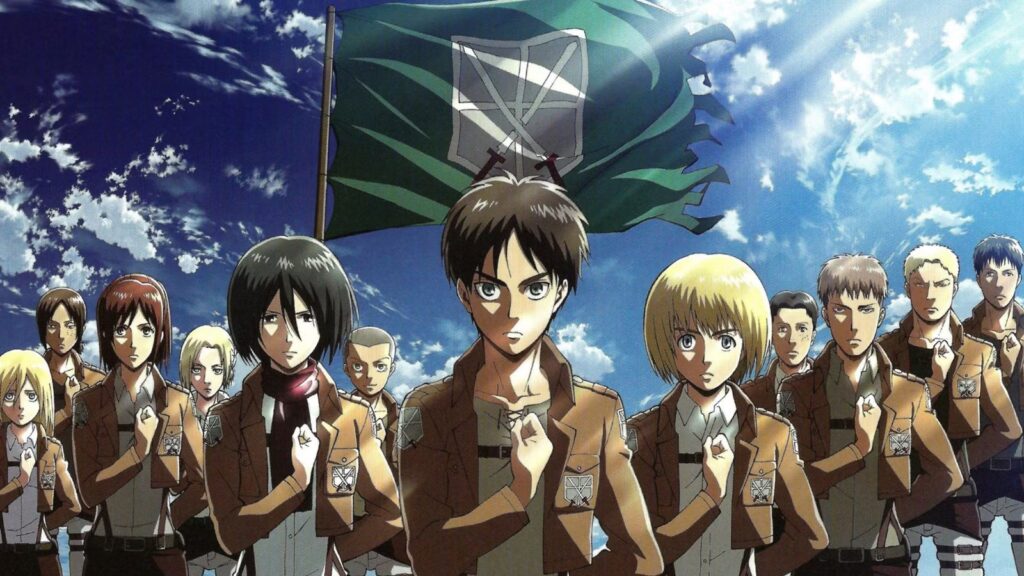
An overwhelmingly popular anime title that largely defined the 2010s era of dark shonen fantasy, Attack on Titan became a sensation immediately upon its premiere in 2013 and kept fans hooked for an entire decade. From the get-go, there was so much that set Attack on Titan apart: the spectacular production quality, the dark, suspenseful world filled with danger and intrigue, and the startling ruthlessness of its narrative, which didn’t shy away from gore and death from the very first episode.
Attack on Titan became a very popular gateway anime almost instantaneously; it offered new fans a self-contained story that had just the right balance of excitement and maturity, while not relying on the typical shonen tropes that the most well-known shows in the demographic previously leaned into. While darker shonen titles obviously existed before Attack on Titan, none of its predecessors were quite as boundary-pushing or embraced brutality on such a scale to be met with such resounding success.
After Attack on Titan, the shift towards more daring and unflinchingly vicious stories in shonen anime became glaringly apparent. The reign of optimistic shonen series with long-running storylines that span hundreds of episodes was replaced by faster-paced shows with higher stakes, as titles like Jujutsu Kaisen and Chainsaw Man took the spotlight. Action shonen anime as a whole started moving away from being safe and uniform – now the demographic’s most popular titles are valued for pushing the envelope and embracing moral ambiguity, unpredictability, and uniqueness.