
Frequently asked questions
What to look for in a hair straightener
There are a few things to look out for when shopping for a hair straightener.
- Temperature range: Fine or fragile hair does best with lower heat (250°F–300°F), while thick, coarse, textured, or curly hair may need up to 400°F. Always use heat protectant, and avoid passing over the same section repeatedly.
- Plate material and size: Ceramic plates are ideal for fine or thin hair, while titanium plates work best on thick or curly strands. Wider plates cover more hair at once, but smaller sections ensure more even heat.
- Ease of use: Choose a straightener that feels comfortable, lightweight, and easy to maneuver.
- Performance: Look for fast heat-up time and smooth, frizz-free results in one pass.
- Features: Swivel cord, automatic shutoff, and customizable heat settings make styling safer and simpler.
How do you choose the best hair straightener for your hair type?
Start with the plate material.
Ceramic flatirons are best for fine, thin, or easily straightened hair.
They heat evenly and gently, reducing the risk of damage, says Raven Hurtado, a hairstylist at Maxine Salon in Chicago. You might also see ceramic tourmaline models, which help boost shine and lock in moisture to minimize frizz and static.
If you have thick, coarse, or curly hair, go for a titanium straightener. Titanium heats up quickly and holds higher temperatures, so you’ll get smoother results in fewer passes, says Lacy Redway, Unilever stylist and celebrity hair artist.
There are also hybrid tools that combine materials—or newer designs, like the Dyson Airstrait, which uses air rather than plates to cause even less heat damage.
No matter which material you use, always use a heat protectant and limit flatiron use to a couple of times a week. If you find yourself straightening daily, Rogerio Cavalcante, hairstylist and owner of the Second Floor Salon in New York, suggests considering longer-lasting options, such as a Brazilian blowout or a keratin treatment.
Are more expensive straighteners better?
Not necessarily, according to Taylor. “A higher price point often reflects added technology, better temperature control, and features that improve the styling experience, but it doesn’t automatically mean it’s the best choice for everyone,” she says. The right straightener depends on your hair type, styling habits, and goals, she says. “Someone who heats-styles every day may benefit from investing in advanced technology, while someone who straightens occasionally may do just as well with a more affordable option that offers adjustable heat settings and quality plates.”
What temperature setting should you use in a flatiron?
The right flatiron temperature depends on your hair type and condition.
- Fine to medium hair: Stick to lower settings between 250°F and 300°F to minimize damage.
- Curly to coarse hair: Use 350°F to 450°F, but always apply a heat protectant first and finish with a smoothing oil to counteract dryness.
- Colored or damaged hair: Keep heat use to a minimum, and if you must straighten, try to stay within the 250°F to 300°F range to avoid further breakage.
How to prevent heat damage when using a flatiron
Always start with a heat protectant, and stick to the lowest effective temperature for your hair type. The hotter your setting, the greater the risk of breakage. Apply a lightweight spray or serum before styling to create a protective barrier, and avoid reapplying to the same section. Our favorite heat protectants to use are the Olaplex No. 9 Bond Protector Nourishing Hair Serum and the Dae Agave Dry Heat Protection Spray.
Important to note: Straighteners with ceramic plates are typically gentler because they don’t hold as much heat throughout your styling session. If your hair is coarser, Cavalcante recommends using a lower temperature when straightening to help minimize frizz, flyaways, and damage. Styling might take longer, but your hair will thank you in the long run.
How can you tell if you have heat damage on your hair?
Hair-styling tools with heat can strip hair of its natural oils, leading to dry, brittle strands that are prone to breakage and split ends, says Anna Chacon, MD, FAAD, a board-certified dermatologist. “Regular and prolonged heat exposure can even cause permanent damage, affecting the hair’s strength and elasticity,” she says. But there are ways to mitigate heat damage by using a heat-protectant spray. “If you’re straightening your hair, ensure your hair is completely dry before, as using irons on damp hair can cause additional damage,” she says.
Can hair straighteners help with frizz?
Yes, hair straighteners can temporarily smooth frizz and flyaways by sealing the hair cuticle. Dryness, open cuticles, and humidity all contribute to frizz, so Cavalcante says pairing a gentle straightener (ideally with ceramic plates) with hydrating shampoo and conditioner is key.
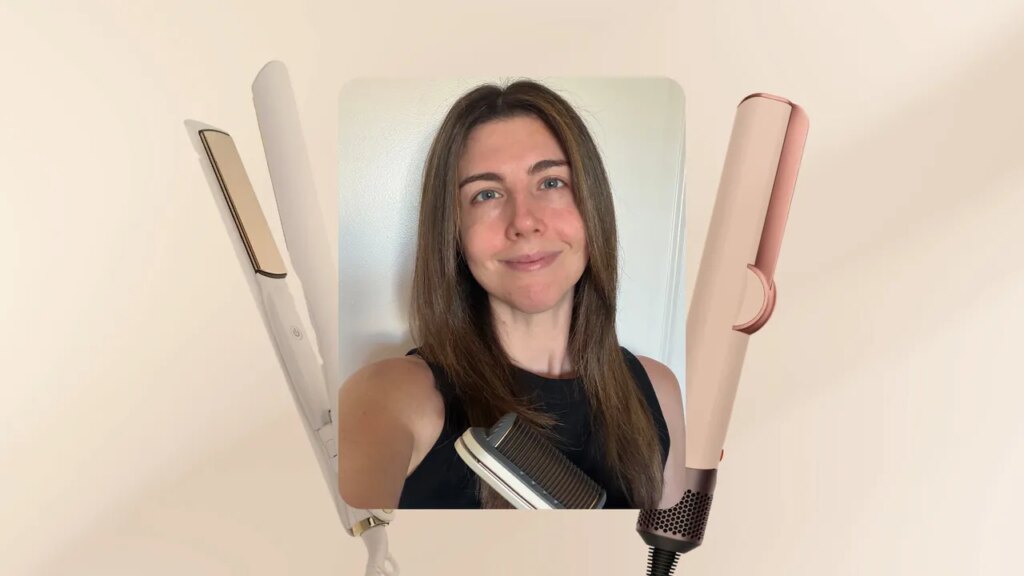
We’ve been testing hair straighteners at Glamour for over three years, and for this roundup we sent more than 20 top-rated models to testers with straight, curly, wavy, short, long, and thick hair. During evaluations, we assessed plate material, temperature range, ease of use, overall performance, and convenience features such as auto-shutoff and included attachments. We looked at how durable each tool was over time and whether it consistently delivered sleek, shiny results. New picks from recent launches are regularly sent to additional testers, and previous contributors are asked to reevaluate whether their picks still hold up.