
It’s no secret that Hollywood loves a remake. If a movie made money, built a fanbase, or left even the slightest cultural footprint, chances are someone, somewhere has pitched a “modern reimagining” of it. Sometimes those remakes work surprisingly well. Other times, they leave audiences wondering why the original needed to be touched in the first place. And then there are movies that feel so perfectly complete that the idea of remaking them feels almost fundamentally wrong.
That doesn’t necessarily mean these films can’t inspire spin-offs, expanded universes, or new stories set in the same world. But there’s a difference between building onto a legacy and trying to replicate it entirely. Between having untouchable performances, lightning-in-a-bottle chemistry, groundbreaking craftsmanship, or sheer nostalgic affection, these classics have reached a rare status where audiences don’t really want reinterpretations — they just want them to keep existing exactly as they are.
1
‘The Faculty’ (1998)

Just by the plot alone, The Faculty is exactly the kind of movie Hollywood would remake nowadays: a group of high-school students discovers their teachers are being taken over by parasitic aliens, leading to a wonderfully chaotic blend of teen drama, body horror, and sci-fi paranoia. Released at the height of the post-Scream era, the film practically runs on late-’90s energy.
And that’s exactly why a remake feels unnecessary. The Faculty works because it captures a very specific cultural moment when teen horror was sharp, self-aware, and just edgy enough without feeling overly polished. A modern version would almost certainly sand down the weirdness or overload it with nostalgia bait instead of simply letting the premise be fun. Even with a remake seemingly in development, there’s a strong sense that the original already did everything the concept needed to do — and with way more personality than a reboot could realistically replicate. So please, don’t. Just leave cult horror movies in their natural form.
2
‘The Goonies’ (1985)

A group of misfit kids discovers a pirate treasure map and embarks on a chaotic adventure filled with booby traps, underground caves, and a wonderfully grotesque crime family. It’s the ultimate adventure flick — loud, messy, heartfelt, and powered entirely by the chemistry between its young cast. In other words, it’s the perfect story filled with archetypes for any generation to remake to their liking.
That said, the problem with remaking The Goonies is that its charm comes from how imperfect and genuinely scrappy it feels. Modern studio filmmaking tends to over-engineer nostalgia, turning childhood adventure into sleek IP management. But The Goonies thrives on disorder. The pacing gets chaotic, the plot goes wild, and the whole thing feels like an actual group of children stumbling through danger together. There’s no way you can recreate the original’s spontaneous magic. Thankfully, The Goonies is likely to get an actual sequel before ever touching remake territory.
3
‘All About Eve’ (1950)

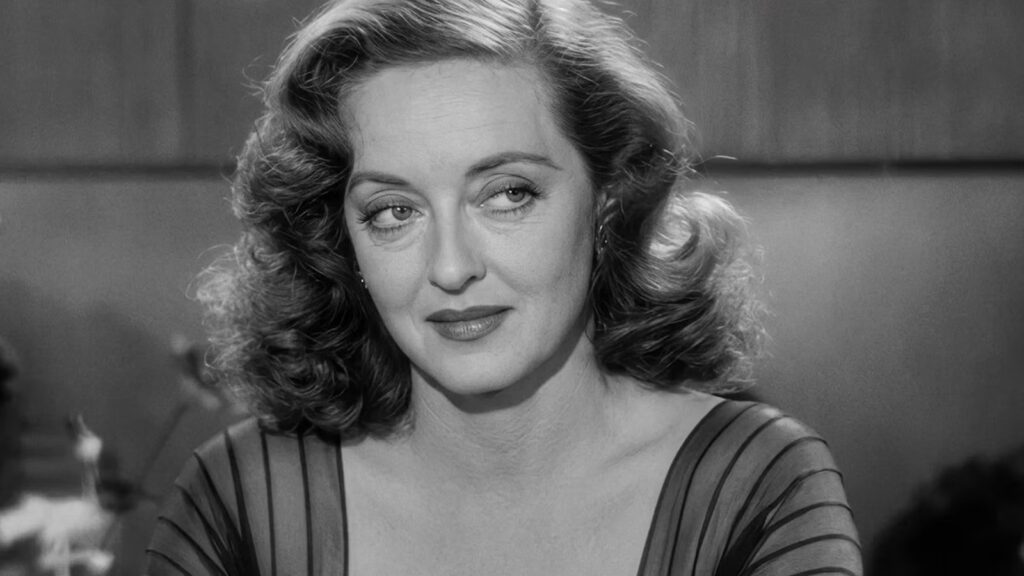
An ambitious young actress named Eve Harrington (Anne Baxter) integrates herself into the life of legendary Broadway star Margo Channing (Bette Davis), before gradually manipulating her way toward fame and power. And what begins as admiration slowly curdles into rivalry, with the film dissecting vanity, insecurity, aging, and the ruthless nature of performance itself.
One can never assume, but perhaps the reason nobody really wants a remake of All About Eve is that the original is already terrifyingly modern. The dialogue remains razor-sharp, Davis’ performance is untouchable, and the film’s observations about fame and public image somehow feel even more relevant now than they did in 1950. A remake would likely overexplain or modernize ideas that already work perfectly well. Besides, half the appeal is watching Golden Age legends like Davis and Baxter absolutely devour every scene with intense wit and precision. Sure, there are plenty of modern-day icons that could carry the weight of these roles, but frankly, it wouldn’t be the same. That kind of lightning doesn’t really strike twice.
4
‘Spirited Away’ (2001)

In Hayao Miyazaki‘s famed film, a young Chihiro (Rumi Hiiragi) becomes trapped in a mysterious spirit world after her parents are magically transformed into pigs. Forced to work in a bathhouse run by the powerful witch Yubaba (Mari Natsuki), Chihiro navigates a strange landscape filled with gods, spirits, and creatures that are equal parts whimsical and unsettling. For many, it’s a coming-of-age fantasy unlike anything else in animation.
So naturally, the hesitation around remaking Spirited Away — particularly as a live action — comes from the fact that the film’s magic is inseparable from its culturally animated form. Miyazaki’s world feels dreamlike because it isn’t bound by realism, allowing emotions, symbolism, and visual imagination to flow freely. Not every beloved animation needs to follow the exhausting Disney live-action pipeline. Some stories are already in their definitive form. Trying to “realistically” recreate No-Face or other set pieces like the bathhouse would almost certainly diminish the delicate, surreal beauty that made the original unforgettable.

After a gentle alien becomes stranded on Earth, he unexpectedly forms a friendship with the lonely young Elliot (Henry Thomas), who secretly hides the alien in his suburban home. And while their bond continues to grow, Elliot employs the help of his siblings to find a way to get E.T. home — even if that means evading government authorities. The film famously transforms a simple sci-fi premise into something deeply emotional and intensely personal. Few movies capture childhood wonder quite so effortlessly.
And honestly, how exactly do you improve on that? E.T. the Extra-Terrestrial isn’t beloved because of its groundbreaking lore or franchise potential — it works because of sincerity. Steven Spielberg taps into imagination and youthful empathy with such emotional precision that remaking it would feel less like honoring a classic and more like trying to recreate someone else’s childhood memories. A modern version would almost certainly lean harder into spectacle, rather than its intimacy. E.T. is timeless for a reason. So, let’s keep it that way by not tampering with its cinematic legacy.
6
‘Back to the Future’ (1985)

As one of the most perfectly constructed blockbusters ever made, Back to the Future follows teenager Marty McFly (Michael J. Fox) after a time-travel experiment sends him back to 1955. Stranded in the past alongside eccentric scientist Doc Brown (Christopher Lloyd), Marty accidentally interferes with his parents’ first meeting and must repair the timeline before he erases his own existence.
There’s a reason audiences get nervous whenever remake rumors even vaguely surface. Back to the Future is a near-perfect execution of a great premise, anchored by irreplaceable performances and a script that runs like clockwork. Fox and Lloyd’s chemistry is impossible to duplicate, and the film’s practical-effects charm remains a huge part of its identity. More importantly, the original still works flawlessly for modern audiences, which raises the obvious question: why recreate what doesn’t need “fixing”?
7
The Lord of the Rings Trilogy (2001–2003)

In Peter Jackson‘s The Lord of the Rings trilogy — an adaptation of J.R.R. Tolkien‘s epic fantasy saga — Frodo Baggins (Elijah Wood) and the Fellowship attempt to destroy the One Ring and defeat the evil Sauron. Massive in scale yet deeply emotional, the trilogy combined groundbreaking visual effects with practical craftsmanship, sprawling world-building, and remarkably sincere storytelling.
But unlike franchises such as Harry Potter or The Chronicles of Narnia, which are (bizarrely) already heading back through the reboot cycle, The Lord of the Rings feels categorically untouchable. Expanding the world through other narrative spin-offs like The Hunt for Gollum? Sure. Exploring other corners of Middle-earth? Absolutely. But remaking the core story of the Fellowship feels almost sacrilegious because Jackson’s films have already achieved the impossible: they concretized Tolkien’s world for an entire generation. The casting, music, production design, and emotional weight are so deeply embedded in pop culture that starting over would feel less exciting and more exhausting.
8
‘The Princess Bride’ (1987)

Part fantasy adventure, part fairy tale parody, The Princess Bride follows farm boy Westley (Cary Elwes) as he battles pirates, princes, and impossible odds to reunite with Buttercup (Robin Wright), the woman he loves. Along the way, the film introduces unforgettable characters and larger-than-life moments, blending romance, comedy, sword fights, and meta-humor into something that somehow appeals to almost everyone.
Naturally, the reason nobody wants a remake is that The Princess Bride already feels like a miracle. Its tone is incredibly delicate — earnest without being cheesy, funny without becoming cynical — and every performance lands with effortless charm. A remake would easily try too hard to recreate iconic moments instead of understanding why they worked organically the first time. Besides, certain movies become so endlessly quoted and culturally beloved that replacing them feels pointless. You don’t remake “Hello, my name is Inigo Montoya. You killed my father. Prepare to die.” You just leave it, and Rob Reiner‘s legacy, alone.