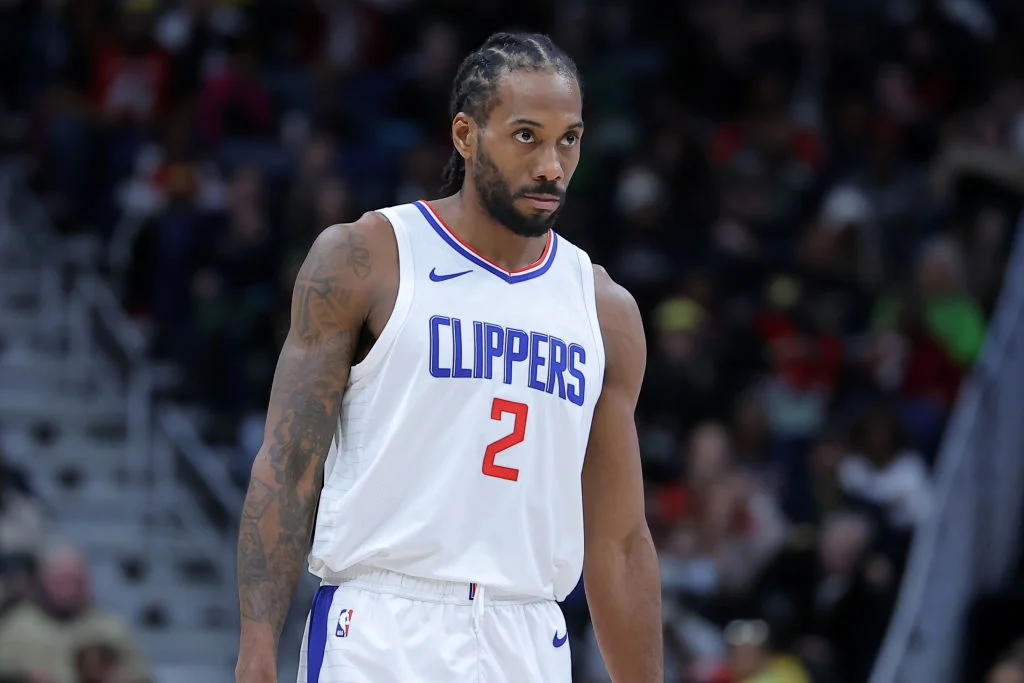

In September 2025, independent sports journalist and podcaster Pablo Torre made some extraordinary allegations involving Kawhi Leonard and the Los Angeles Clippers. Torre reported that Leonard had signed a four-year, $28 million endorsement deal with Aspiration, a major Clippers sponsor, despite there being almost no evidence that Kawhi actually did any meaningful promotional work for the company. One former Aspiration employee described the arrangement as a “no-show job.”
The obvious question was whether Aspiration was really paying Kawhi for an endorsement, or whether the Clippers had somehow used a team sponsor to funnel extra compensation to their star player outside the NBA salary cap. We covered those allegations when they first surfaced. The Clippers were quick to deny any wrongdoing, but there was enough smoke for the NBA to open a formal investigation.
To conduct that investigation, the NBA hired the law firm Wachtell, Lipton, Rosen & Katz. Over the course of nearly a year, investigators conducted 73 interviews with 60 people and reviewed more than 200,000 pages of documents involving the Clippers, Leonard, Aspiration and several other companies.
The findings are damning. Investigators concluded that the Clippers repeatedly violated the NBA’s salary-cap circumvention rules by helping Leonard obtain lucrative sponsorship agreements from companies doing business with the team. Four deals carried as much as $66 million in potential compensation, including $18 million that investigators confirmed was actually paid to Leonard.
The punishment was historic. The Clippers were fined $30 million and stripped of five first-round draft picks, one in every year from 2029 through 2033. Owner Steve Ballmer was suspended from team and league activities for one year, business operations president Gillian Zucker was suspended without pay for a year, and basketball operations president Lawrence Frank received a six-month unpaid suspension. Leonard was ordered to pay the league $700,000.
It’s stunning news in the sports world, but the headline punishment only hints at what investigators actually uncovered. Yesterday, the law firm published a 36-page summary of its findings online for anyone to read. We downloaded and read the entire report so you don’t have to. Here are the eight most damning revelations from the NBA’s investigation…
Jonathan Bachman/Getty Images
1. The Famous “$28 Million Deal” Was Actually Worth Up To $48 Million
The Aspiration agreement that originally ignited the scandal was widely described as a four-year, $28 million contract. That number represented only the cash.
Investigators found that the final agreement promised Leonard $7 million in cash plus $5 million in Aspiration equity per year for four years. That gave the deal a total potential value of $48 million. The cash and equity components had originally been structured differently before being swapped at Leonard’s request.
Aspiration ultimately collapsed before paying the entire amount, so Leonard did not collect $48 million. But when combined with three other sponsorship contracts uncovered by investigators, the total potential value of the arrangements reached $66 million.
2. Three Other Clippers Business Partners Actually Paid Kawhi $18 Million
Before Aspiration, Leonard signed endorsement agreements with Boingo Wireless, Daktronics and Lockton Insurance. All three companies were simultaneously pursuing or conducting significant business with the Clippers.
Those three endorsement contracts paid Leonard a combined $18 million, all of which had been paid by August 2021. Yet investigators found almost no conventional endorsement activity in exchange for the money.
None of the deals was publicly announced. Investigators could confirm only a single visit to a military base under one agreement and the signing of memorabilia under another. Each company had also never previously entered into an athlete endorsement deal remotely approaching the financial magnitude of its arrangement with Leonard.
3. Two Kawhi Sponsors Got $10 Million Payments From The Clippers Before Signing Him
The money trail becomes much more interesting when you look at what the Clippers were paying the companies that were paying Leonard.
At the time Zucker began connecting Leonard’s representatives with Boingo, Daktronics and Lockton, none had finalized its Clippers business agreement. Within weeks, each company had both a multimillion-dollar commercial relationship with the Clippers and a multimillion-dollar endorsement agreement with Leonard.
Two of the companies received almost their entire Clippers consulting fees upfront: $10 million each, paid before they signed their endorsement agreements with Leonard. A third company received a $2 million Clippers consulting payment one day after making its first payment to Kawhi.
Investigators concluded that the Clippers were not simply introducing their star to sponsors. They were inducing companies to enter into Leonard endorsement deals by giving those companies Clippers business.
4. A Witness Says One Consulting Deal May Have Been A Sham Designed To Fund Kawhi
This may be the most explosive allegation in the entire report. Investigators said a credible witness with direct knowledge told them that one company’s consulting agreement with the Clippers was actually a “ruse” designed to provide that company with Clippers money that could then be paid to Leonard.
According to the witness, the company was willing to participate because it had been promised the opportunity to win a much larger services contract from the Clippers afterward. That raises the possibility of something much more serious than the Clippers merely encouraging sponsors to hire Leonard: Clippers money may effectively have been routed through an outside company before reaching Kawhi.
The report is careful about this allegation. Investigators said the information arrived late in the investigation and that additional work is underway to corroborate it. But investigators specifically noted that, if confirmed, the Clippers’ misconduct may have been even more severe than the violations they had already established.
5. Uncle Dennis Wanted The Clippers To Generate $10 Million A Year For Kawhi
The report traces the system back to Leonard’s uncle and business manager, Dennis Robertson. During Leonard’s 2019 free agency, Robertson had already requested benefits prohibited by NBA rules, including team equity, housing, private transportation and guaranteed endorsement income. After Leonard joined the Clippers, investigators say Robertson resumed pressuring the organization to generate off-court money for his nephew and communicated a target of roughly $10 million per year.
Contemporaneous notes kept by Lawrence Frank make those demands sound considerably less subtle. During an April 2020 conversation, Robertson complained to Ballmer about the quality of the endorsement opportunities the Clippers were producing and bluntly declared: “I have to get paid.”
According to Frank’s notes, Ballmer responded by telling Robertson that he and Clippers personnel were collectively working to help Leonard achieve his financial goals. Zucker assured Robertson that Ballmer would follow through, while Robertson requested a three-to-six-month plan containing five or six more lucrative companies that could be introduced to Leonard.
Within months, the first three multimillion-dollar sponsorship arrangements appeared.
6. The Clippers’ Introduction Emails Looked Like They Were Created To Cover Their Tracks
NBA rules allow a team to provide a player’s contact information when a sponsor independently asks to connect with him. What teams cannot do is proactively generate endorsement opportunities for their players.
Investigators found that Zucker sent emails connecting Robertson with Boingo, Daktronics and Lockton during a six-day period in June 2020. Each was written to create the impression that the company itself had independently requested access to Leonard. Investigators found no documentary evidence supporting that version of events and noted how implausible it was that three companies would all independently seek introductions to Leonard within six days, during the depths of the COVID-19 shutdown.
Even more suspiciously, a new company owned by Leonard and Robertson, KL2 LBS LLC, was legally formed during those same six days. It subsequently became the entity that signed all three endorsement agreements, suggesting Leonard’s representatives were already preparing to receive sponsorship money before the supposedly spontaneous introductions could realistically have produced negotiations.
The Aspiration introduction followed an even more revealing pattern. Before Zucker sent what was presented as an introductory email, she had already recruited an outside business agent to help structure Aspiration’s Kawhi offer, conveyed proposed financial terms and provided input on the term sheet. Investigators concluded the eventual introduction email was created primarily for “record-making purposes.”
In other words, according to investigators, the paper trail designed to make the transaction look compliant was created after the dealmaking process was already underway.
7. A Clippers Executive Called The Aspiration Arrangement Super Shady
Perhaps the most damaging comments didn’t come from NBA investigators. They came from inside the Clippers.
As the team negotiated a new sustainability agreement with Aspiration involving the Forum arena, Clippers Chief Commercial Officer Scott Sonnenberg expressed serious concerns in internal messages. In March 2022, Sonnenberg wrote: “Always knew it was super shady.”
In another internal exchange, Sonnenberg said the transactions contained an extraordinary number of red flags and indicated that he was simply carrying out instructions. Those comments are particularly striking because they came from a senior Clippers executive while the arrangement was actively being negotiated, not from someone looking back after the scandal emerged.
The concern centered on a proposed agreement under which the Clippers would pay Aspiration $7 million per year for sustainability services related to the Forum. The initial deal documents didn’t begin with a calculation showing that $7 million was actually required to offset the arena’s carbon emissions. Instead, investigators found that $7 million appeared in the proposal from the beginning.
That happened to be the exact amount Aspiration had agreed to pay Kawhi Leonard in cash every year.
Ballmer and Zucker later told investigators that the $28 million Forum budget resulted from an analysis performed by a consultant. Investigators interviewed that consultant, who gave them the reverse account: the Clippers had supplied him with a $28 million budget to work with, rather than his analysis producing that number.
8. Aspiration Wanted The Kawhi Deal To Be Cashflow Neutral — And Ballmer Approved The Business That Made It Possible
Internal Aspiration executives apparently weren’t enthusiastic about paying Leonard $48 million, either. When the proposed agreement circulated among executives who actually had authority to approve it, they questioned why Aspiration would make such an enormous commitment to Leonard when the company was already paying hundreds of millions of dollars to sponsor the Clippers.
According to the investigation, Aspiration co-founder Joe Sanberg explained internally that the Clippers wanted the company to enter into the Leonard deal and would increase the amount of business they gave Aspiration to offset what Aspiration was paying Kawhi. An Aspiration executive responded that the arrangement would work if it remained “cashflow neutral.”
That is an extraordinary detail. Investigators say Aspiration executives understood the basic economics as the Clippers increasing their payments to Aspiration in line with the money Aspiration would send to Leonard.
The connection became even more explicit during negotiations over the Forum sustainability contract. When the Forum agreement appeared at risk of falling apart, Sanberg repeatedly threatened to cancel Leonard’s endorsement agreement. At one point, his message was unequivocal: “ZERO CHANCE there is a Kawhi deal” if the Clippers did not resolve the Forum arrangement.
Senior Clippers executives were aware of those threats. Internal communications even discussed whether Ballmer understood that failure to complete the Forum deal could result in Aspiration telling Leonard that his $12 million annual package was disappearing because of Clippers management.
Ballmer subsequently acknowledged to investigators that he knew Sanberg was threatening not to move forward with Leonard’s endorsement agreement unless the Clippers completed the Forum deal.
Ballmer nevertheless personally approved the Clippers’ Forum agreement with Aspiration.
Investigators concluded that his decision to approve the transaction despite knowing the Leonard endorsement was conditioned on it constituted a direct act of salary-cap circumvention.
And There Was More
The $66 million sponsorship structure wasn’t the only improper financial benefit investigators uncovered. The Clippers also paid for hundreds of personal expenses involving Leonard, his family and Robertson, including air and ground transportation, accommodations, gifts and tickets. The report doesn’t disclose an exact total, but describes the aggregate amount as substantial.
The Clippers also weren’t newcomers to this particular rule. In 2015, the franchise was fined $250,000 for improperly attempting to facilitate an endorsement opportunity for DeAndre Jordan. Then, after Robertson’s demands during Leonard’s 2019 free agency, the NBA specifically trained Ballmer, Zucker, Frank and other Clippers executives on salary-cap circumvention rules.
In other words, the league’s position is not that the Clippers accidentally wandered into a technical violation.
The NBA says the organization knew the rules, had previously broken similar rules, had been specifically warned about Leonard-related circumvention concerns, and nevertheless spent years helping Leonard obtain tens of millions of dollars from companies doing business with the franchise.
The Clippers vehemently deny deliberately circumventing the salary cap and have attacked the investigation as biased.
But the NBA has made its judgment.
The Clippers are out $30 million. They’re losing five first-round picks. Their owner is suspended for a year. And the 36-page report detailing how they got there may ultimately be even more damaging than the punishment itself.