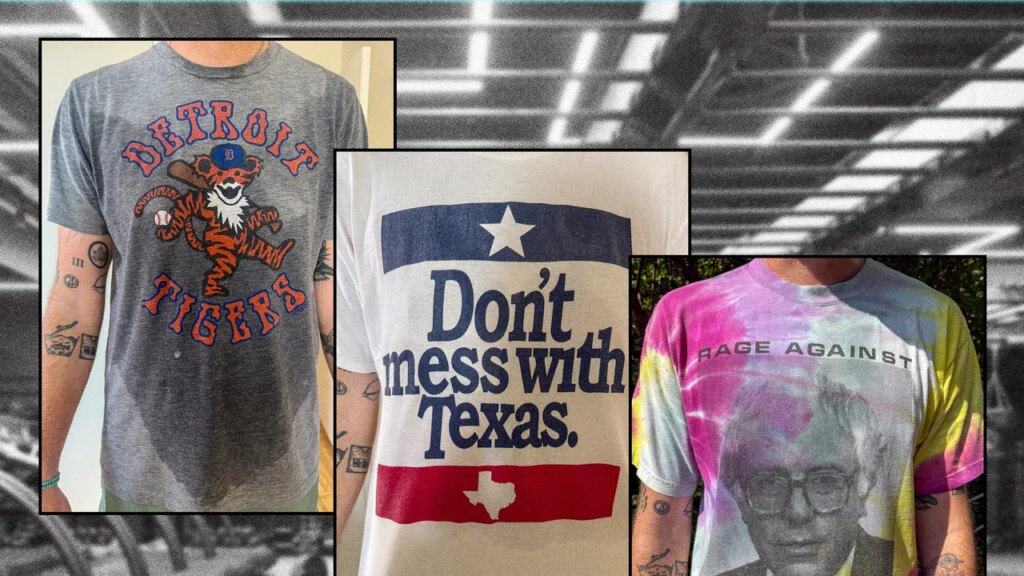

In the ’90s, innovations in athletic wear went mainstream and put every weekend warrior under a deep spell. These new technical fabrics promised to wick away sweat and make you a better athlete. Sometime during the Obama administration what was initially designed for function became publicly acceptable at the airport and the grocery store. Now, these stretchy slate fabrics are the minimalist uniform and fashion’s worst enemy: athleisure.
Enough is enough. We have spent too much time wrapped in the death grip of purportedly functional fabrics. All along, there has been a natural alternative to the soulless, synthetic shirts lining the racks at Dick’s Sporting Goods, and it’s something you probably already have: an old-fashioned 100% all-natural cotton tee.
When I was a high school cross-country runner in the late ’90s and early aughts, all we ever ran in were cotton T-shirts. Ratty Blink-182 shirts, team-issued tees, local radio giveaways. But techy fabrics, with their trademarked names and proprietary blends of polyester, nylon, and spandex, had just muscled their way into every mall in America. Nike rolled out Dri-Fit in 1991. Under Armour was founded in 1996 by a former college football player who couldn’t stand his sweat-logged cotton practice shirts. By the early 2000s, these new shirts had trickled down from elite athletes to the average gymgoer, and cotton—long the preferred and classic workout tee—was suddenly considered passé, a performance liability. “Cotton is rotten, brother!” the guy at the local bike shop in the northern Michigan town where I grew up told me, warning that it would weigh me down with the puddles of sweat it soaks up.
I admit I listened. Like any impressionable young man, marketing and trends got the best of me: I converted to the inescapable gospel of lightweight athletic fabrics sometime in 2003. I wore a bright blue polypropylene shirt to trot along the shores of Lake Michigan. And I continued my commitment to the trend when I arrived in New York in 2007, a lanky midwestern 20something running through the streets of the East Village in a hideous neon blend of polyester and nylon. I didn’t stop there. Reader: I was once arrested while running in Prospect Park after dark—long story—gorped out in a $120 hi-vis Saucony long-sleeve.
The thing is, I never really liked these fabrics. The synthetic blends always felt stiff and scratchy on my skin. They would hold a stench after a half dozen wears, no matter how long I soaked them in distilled vinegar. On long runs, they made my nipples bleed! Yet I wore them dutifully for two decades for the dumbest reason: Because that was what you’re supposed to workout in. That’s what everyone wore. The soft-focus ads and peer pressure worked.
Three years ago, I ditched synthetic fabrics cold turkey. The main reason was vanity: All my running shirts looked dorky. Modern race T-shirt aesthetics are best described as “AI-generated images of a bridge brought to you by a global financial services company.” The neutral workout gear in my drawers—drab grays with reflective piping—had all the charm of a surveillance drone. Meanwhile, my Instagram algorithm was filled with incredible vintage running photos. There’s New York City Marathon founder Fred Lebow in a ringer tee. Bill Clinton and Al Gore chopping it up sweat-soaked on the campaign trail in 1992 carrying McDonald’s cups. Bill Rodgers winning his first of four Boston Marathons in 1975. They were all wearing cotton. They all looked fantastic.

LITTLE ROCK, AR – JULY 10: Democratic Presidential Candidate Gov. Bill Clinton (R) responds to a supporter as he and his new vice presidential candidate, Sen. Albert Gore of Tennessee, walk back to the Governor’s mansion July 10, 1992 after a morning jog in Little Rock, Arkansas. (Photo credit should read TIM CLARY/AFP via Getty Images)TIM CLARY/Getty Images