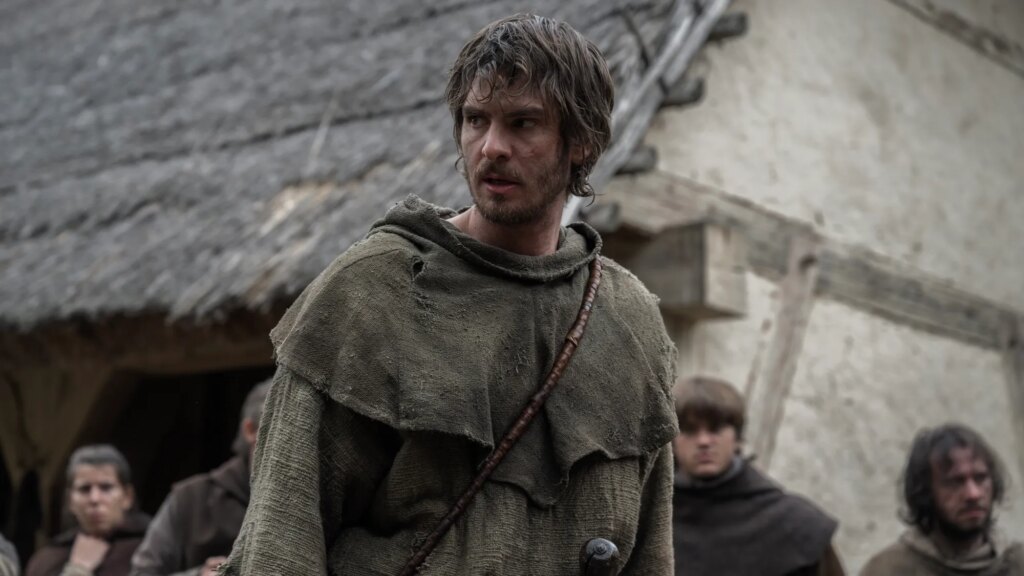

While obviously there wasn’t a real man called Ploughman, he’s my fictional hero, but that village looks pretty much like Brentwood would have looked like, and the tax collection would have been the tax collection, and for sure it began with a violent altercation when the tax collector came to town and started roughly assaulting the young women in the village. It’s attested that that’s how it began. What was unusual was it spread incredibly rapidly all across southern England within a matter of days and coalesced into this coordinated march by ordinary men and women in their tens of thousands on London at a time when there were no armies there. The armies were in Scotland and France, and the crown was effectively defenseless.
You had then this week of high drama as they got to London, negotiated with the king, were betrayed and the rebellion was crushed, but they got inside the place and trashed the place. It began peacefully with very clear and specific aims and was actually initially highly disciplined, but then like all revolutions do, it descended into violence and chaos.
That violence, as well as the ideals and aspirations, it all begins with people challenging their institutions. After the plague, peasants began challenging their governments, their churches, in the 1300s, but I feel like right now, we’re living in a moment of retrenchment where people are pulling away or burrowing down. Do you see this movie as a reminder to the opportunity we as a society might have at this moment?
When you make a movie you start by trying to decide what sort of movie you want to make. Do you wanna make a sci-fi movie, do you want to make a romantic comedy? I wanted to make a sort of historical epic, that’s kind of what was in my mind. I very much admired Spartacus, [Stanley] Kubrick’s movie, very much, and I very much admired Ridley’s movie Gladiator. I love those kinds of movies. So when I was looking to do a story about an English [event], I thought, ‘Oh, I could do like a Gladiator, Spartacus type movie, but it’d be my version of one of those movies, because I’m not going to have the same sensibility as either Ridley or Kubrick.
So I’ll create a fictional character and I’ll try to tell a hero’s journey through these dramatic events, which were so important in the evolution of the story of individual rights in our societies, I mean, historians hold a mirror up to the Peasants’ Revolt [to today]. There’s a brilliant book by a historian called Barbara Tuchman, A Distant Mirror, and it’s about the 14th century, the chaos of the 14th century, but it’s really all about how that instability of which the Peasants’ Revolt was the most important part of it, led the way to the evolution of individual rights and on through the individual rights, the fight against the crown, the American Revolution, the Constitution, it’s an unfolding story of the Enlightenment and the evolution of democracy, and it was a foundational moment.
But all of that’s irrelevant because you’ve got to craft an entertainment, you’ve got to craft a movie. Although I was very struck by how contemporary it all felt, to go to your question—this starkly divided world between the oligarchs protecting their wealth and this sense generally of rage out there that people feel a bit locked out by a system rigged against them—that all felt very contemporary, but in the end, it doesn’t give you your film. It’s part of what you’re dealing with, but you’ve got to craft your hero’s journey, your entertainment, characters that you want to follow, and tell it with economy and give it scale and drama and all the rest of it.