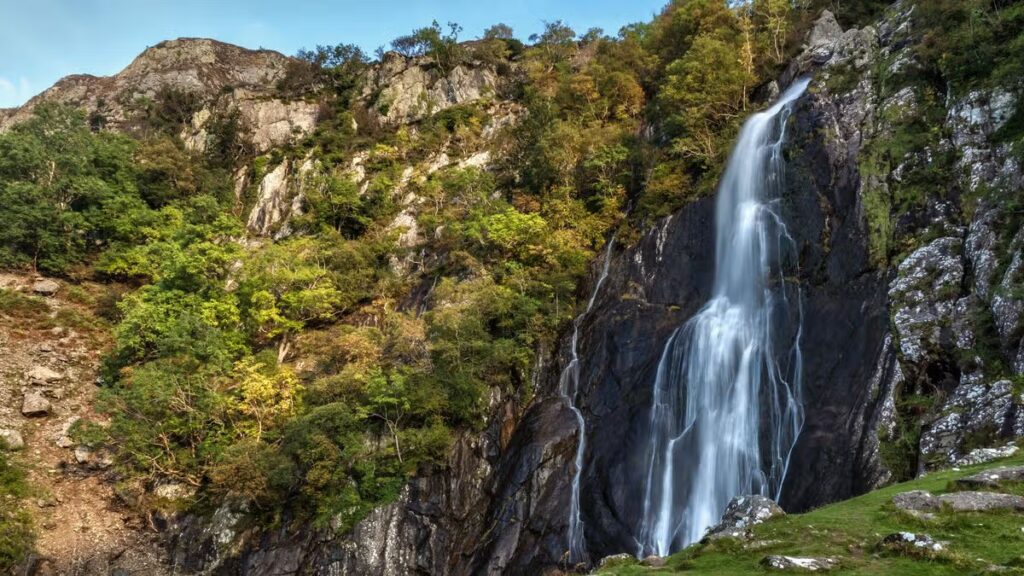

During my recent travels across north Wales, I returned to one of my top waterfall picks for a picnic and a scenic dip

We are blessed with an abundance of waterfalls in Wales, where you can hike, take pictures or brave a dip in plunge pools(Image: Getty)
We are blessed with an abundance of waterfalls in Wales, where you can hike, take pictures or brave a dip in plunge pools.
If you’re seeking a connection with nature, there’s nothing quite like slowly wading into freezing water in a quiet, natural setting to melt away your worries. Trust me, you’re not thinking about whether you filed that report when the water is 16 degrees.
I’ve been swimming and dipping in waterfalls all over Wales (carefully, of course) and I’ve racked up quite a few favourite spots. If you want to see the top places in Wales and beyond, make sure to follow me on TikTok.
During my recent travels across North Wales, I returned to one of my top waterfall picks for a picnic and a scenic dip – Rhaeadr Fawr (Aber Falls).
This super popular waterfall located about two miles south of the village of Abergwyngregyn attracts loads of hikers and dippers, so you’ll need to arrive early if you want to beat the crowds.
For families, Aber Falls is a top place for a hike and has just been named the UK’s top family-friendly walk in new research carried out by photo printing company CEWE.
The study ranked walking routes across the UK using factors including Google review scores, overall star ratings, and the frequency of family-focused terms such as “kids”, “picnic”, and “easy” in visitor reviews.
Situated at the northern edge of the Carneddau mountains in Gwynedd, Aber Falls claimed the top spot thanks to its impressive family appeal. The walk received 759 family-related Google reviews, earned an average 4.8-star rating, and generated around 1,000 Instagram hashtags alongside 115,000 TikTok views.
The easily accessed waterfall drops about 36 metres (120 feet) over a steep rock face into a shallow pool and is one of the most beautiful and impressive single-drop falls you can visit in Wales. Situated at the northern foothills of the Carneddau, the waterfall is part of Afon Goch’s (Red River) final dramatic descent to the Menai Straits.
I was playing tour guide to my visiting American friend who wanted to see “castles and waterfalls, maybe get a cheeseburger,” so Rhaeadr Fawr seemed like the obvious choice.
We arrived super early at the paid-for car park (£5 per day), and we were clearly one of the first to arrive. I would personally avoid parking in Abergwyngregyn village so as not to cause a nuisance for residents, who are likely fed up of tourists blocking their driveways and clogging up streets. Just set the alarm early and get out there for an early morning adventure.
From the car park we set out to chase waterfalls. The walk to Aber Falls is one of the most accessible and rewarding routes in the area, making it a great choice for families and visitors looking for an easy way to explore one of the best waterfalls in Eryri. The route is 6km (3.7 miles) there and back, taking around 45 minutes each way at a steady pace.
You can follow the route on the AllTrails app, or you can download a PDF from the Eryri National Park website.
The walk begins by crossing a small bridge that leads to a wide gate. This section is fully accessible and is clearly marked as suitable for pushchairs. From here, follow the wide path and keep an eye out for the yellow waymarkers, which make the route easy to follow.
As you continue, you’ll pass a wooden hut before heading through another set of wide gates. The path gradually begins to climb, but the incline is quite gentle.
Before long, you’ll reach a flat grassy area where the valley opens up, giving you a nice spot to stop and admire the views. Just beyond this viewpoint, you’ll see Bwthyn y Nant cottage on your left.
Keep following the main path as it continues through the valley. Along the way, you’ll pass through two iron gates before reaching a fork in the trail. Bear right here to stay on the accessible route. The path remains clear and easy to follow as it winds towards the large falls.
After passing through a small metal gate, the final section becomes slightly rougher underfoot, so it’s worth taking a little extra care. Within a few minutes you’ll hear the sound of rushing water at Aber Falls. The waterfall drops dramatically over the cliff into the pool below, and it’s astonishing.
Upon arrival, we opted for a dip in one of the plunge pools beneath the 36-metre fall that was relatively small, shallow, and filled with large rocks. It’s slippery here, and I was glad to be wearing sturdy water shoes as I carefully made my way into the bracing waters, with the sound of the cascading falls behind me.
Happily, we were the only people taking a dip, and it was ridiculously refreshing on a muggy summer day.
The pools are shallow here, so you can’t swim as such; instead, you can take a cooling plunge rather than doing backstroke.
While I could have spent all day here, I’m aware that water immersion that’s significantly cooler than you’re used to can lead to cold water shock, even in summer, so we reluctantly exited the water and warmed up with coffee and snacks.
Considering the car park is just a fiver, it’s an affordable morning out for families, friends and hikers who are trying to keep costs down during the long summer holidays. Lord knows I’m haemorrhaging money every time I leave the house.
It’s definitely one for your travel list, and I would strive to get there early and enjoy these impressive falls from the viewing areas or waist-deep in refreshing water.
How to prepare for wild swimming
Wild swimming can be challenging due to cold water and potentially hazardous terrain, so it’s essential to be prepared and to have a decent swim kit to stay as warm and comfortable as possible.
Swim Wales advises that you check the conditions of your swimming spot and endeavour to swim in an accredited facility or a lifeguarded beach where possible. They also advise you to have the right gear, not to swim alone, and, if you get into trouble, ‘float to live’.
Before setting off for an outdoor swimming session, check the weather and, if possible, the approximate water temperature at the location. In autumn and winter, water temperatures can drop drastically, so it’s important to have as much information as possible.
If you are swimming in the sea, check tide times and look into tidal ranges. The Bristol Channel is a popular swimming spot, but it has the second-highest tidal range in the world, ranging from 12 to 14 metres. So even strong swimmers can easily get into trouble.
Also, practise box breathing before you enter the water, and continue until the effects of cold-water shock pass. This is so your breath remains controlled and does not put your body into a panic mode.”
When you reach up to your shoulders, tread water for a minute or two – the effects of cold water shock should hopefully pass, but if not, carefully exit the water to warm up.
What swim gear will you need?
In the summer months, I usually still wear a rash vest and boardies to stay warm. Dippers should also consider wearing a decent wetsuit or swim gear, booties, gloves, and a swim hat to reduce the impact of icy waters.
Other essential items include a tow float, warm layers and a weatherproof changing robe. Activewear brand Sundried offers a swim changing robe that I love, and I’m also a huge fan of Dry Robe gear.
You also want to be seen in the water, so I recommend the Dippy Wild Swimming Tow Float, a brightly coloured, lightweight inflatable buoy used by open-water swimmers, triathletes, and paddleboarders to increase visibility and safety.
For hot drinks after a swim, bring a double-walled vacuum-insulated flask that keeps drinks hot for hours. This way, you can enjoy a well-deserved cup of tea, coffee, or hot chocolate.