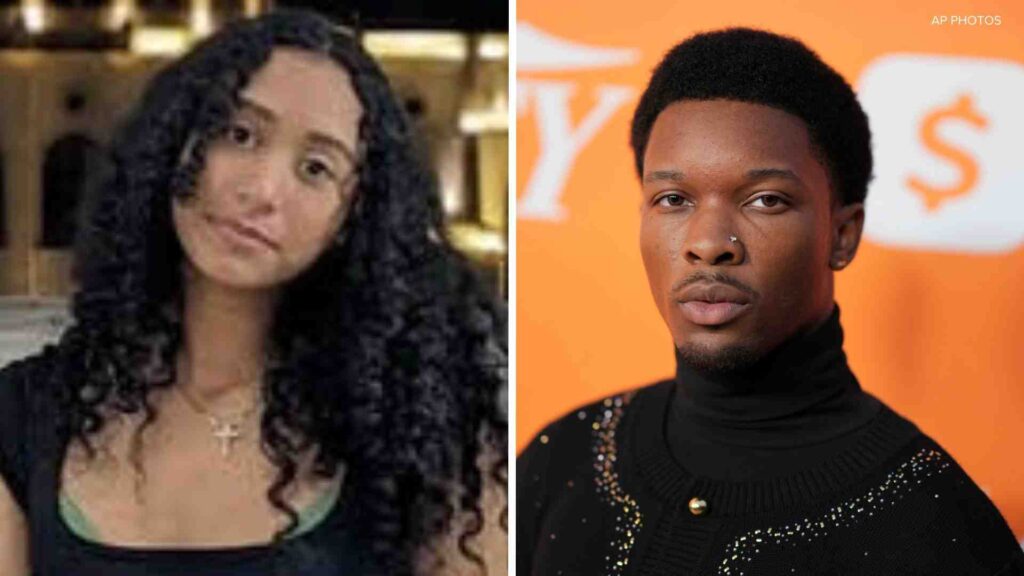

The latest D4vd Update centers on whether prosecutors will pursue the death penalty against David Anthony Burke, the 21-year-old singer charged in the 2025 death of 14-year-old Celeste Rivas Hernandez. The case has drawn intense attention because special circumstances allegations could qualify him for capital punishment even though California has not carried out an execution since 2006. Recent family statements and a new civil suit have sharpened the debate over what sentence the Los Angeles County District Attorney’s office may ultimately seek.
Case timeline in brief
Burke was arrested in April 2026 and charged with first-degree murder, continuous sexual abuse of a child under 14, and mutilation of human remains. The preliminary hearing ended in July when Judge Charlaine Olmedo found sufficient evidence to send the matter to trial. Arraignment followed in August, and the case is now scheduled for 2027.
Prosecutors allege Burke killed Hernandez on April 23, 2025, after she threatened to expose their relationship and derail his rising career. Phone records, DNA evidence from his garage, and online chainsaw purchases form the backbone of the case presented at the hearing. The defense maintains he is innocent and was not the cause of her death.
His original high-profile defense team withdrew shortly after arraignment, leaving him represented by the public defender’s office. That shift has raised questions about resources and strategy heading into a capital-eligible proceeding.
Special circumstances at issue
The complaint lists three special circumstances: lying in wait, murder for financial gain, and killing a witness. Each one independently makes Burke eligible for the death penalty or life without parole under California law. Prosecutors tied the financial-gain allegation to his roughly $19 million recording contract and ongoing earnings.
District Attorney Nathan Hochman has said the office is still reviewing whether to seek death. He noted the decision will come at a later date and stressed that the evidence will dictate the outcome. The family of Celeste Rivas Hernandez has publicly urged prosecutors to pursue the maximum penalty.
California’s execution moratorium, imposed by Governor Gavin Newsom in 2019, remains in effect. The policy halts executions but does not prevent prosecutors from seeking the death penalty in qualifying cases. Legal observers note that any death sentence would likely remain under review for years.
Family statement and pressure
On what would have been Celeste’s 16th birthday, her family released a statement calling for the death penalty. They described the defendant as someone “devoid of feelings” who caused pain to their daughter and the wider community. The remarks were issued through their attorney and quickly circulated online.
The family has also filed a wrongful-death civil suit naming Burke, his mother, his manager, a security guard, and several corporate entities. The suit alleges sexual battery and human trafficking in addition to wrongful death. Civil cases carry a lower burden of proof and could proceed regardless of the criminal outcome.
Supporters of the family have amplified the statement on social media, urging the district attorney to act. The volume of posts has kept the case in public view even as the criminal trial remains months away.
Evidence presented so far
At the preliminary hearing, prosecutors introduced roughly 20 minutes of timeline evidence showing Burke’s movements on the day Hernandez disappeared. Phone records placed the two together, and DNA recovered from his garage matched the victim. Investigators also documented online purchases of chainsaws and disposal supplies.
Uber records and witness statements helped establish when Hernandez was last seen alive. Prosecutors argue the pattern shows premeditation and an attempt to conceal evidence. The defense has not yet presented its full case but has signaled it will challenge the chain of custody and forensic conclusions.
Because the case involves both capital eligibility and sexual abuse allegations, the court has ordered extensive discovery. Additional motions are expected before trial, including challenges to the admissibility of certain digital evidence.
Defense team changes
Burke’s original counsel included veteran entertainment lawyer Blair Berk and several associates known for high-profile music-industry cases. Their withdrawal after arraignment left the public defender’s office to handle both the criminal defense and related civil matters. Observers say the shift could affect plea negotiations and trial preparation.
Public defenders in Los Angeles carry heavy caseloads, and capital cases require specialized resources. The court has not yet ruled on additional funding requests for experts or investigators. The defense maintains its position that Burke did not commit the murder.
Any change in representation also raises questions about continuity. New counsel must review thousands of pages of discovery and prepare mitigation evidence if the death penalty remains on the table.
Civil suit developments
The wrongful-death complaint filed in September 2026 seeks damages from multiple parties beyond Burke himself. It names his mother, manager, and security personnel, alleging they enabled or concealed the relationship. Corporate defendants include the label and management companies tied to his recording contract.
Because the civil case operates on a preponderance standard, it could yield findings even if the criminal jury acquits. Insurance coverage questions and potential asset freezes may surface early in the proceedings. The suit also requests punitive damages, which could influence settlement talks.
Attorneys for the family say they intend to use civil discovery to gather additional evidence that might support the criminal case. Parallel tracks like these are common in high-profile matters but add complexity for all sides.
Public and media response
Initial coverage focused on the gruesome discovery of remains inside Burke’s towed Tesla. National outlets including The New York Times and Reuters tracked the preliminary hearing and the family’s subsequent statement. Local Los Angeles stations have maintained steady reporting on court dates and filings.
Social media conversation spiked after the family’s call for the death penalty. Hashtags referencing the case and the victim’s name trended briefly, prompting renewed scrutiny of the singer’s earlier public image. Streaming platforms quietly removed some promotional material tied to his catalog.
Industry observers note that the case has already affected how labels and managers handle artist background checks and age-verification protocols. The episode has become a reference point in ongoing discussions about accountability in the music business.
What happens next
The district attorney’s office has not set a deadline for deciding whether to seek the death penalty. Legal analysts expect a formal notice at least six months before trial, giving the defense time to prepare mitigation evidence. Any death-penalty filing would trigger additional pretrial hearings on jury selection and expert testimony.
Burke remains in custody without bail. The next scheduled appearance is a status conference in late fall, where the court will address discovery disputes and possible plea discussions. The 2027 trial date could shift depending on motion practice and resource allocation.
Regardless of the criminal outcome, the civil suit will continue on its own timeline. Families in similar cases often use civil judgments to secure financial accountability even when criminal penalties are reduced or overturned on appeal.
Practical realities ahead
Even if prosecutors file a death notice, California’s moratorium means any sentence would remain symbolic for the foreseeable future. The case could still influence legislative debates over capital punishment and the resources required to maintain death rows without executions. Victims’ advocates argue that the threat of a death sentence can encourage plea deals that spare families a trial.
Defense attorneys will likely emphasize mitigation factors tied to Burke’s age and lack of prior record. Prosecutors will counter with evidence of premeditation and the victim’s age. The jury that ultimately decides guilt will also weigh whether special circumstances have been proved beyond a reasonable doubt.
For now, the D4vd Update rests on two open questions: whether the district attorney will seek death, and how the civil suit will intersect with the criminal proceedings. Both developments will shape public understanding of accountability in cases involving young victims and high-profile defendants.