
Writers of science fiction are walking tall just now.
Policymakers, legislators, and other decision-makers around the globe are looking on their futuristic speculations with a new respect as they contemplate the emergence of AI with a mixture of wonder and worry.
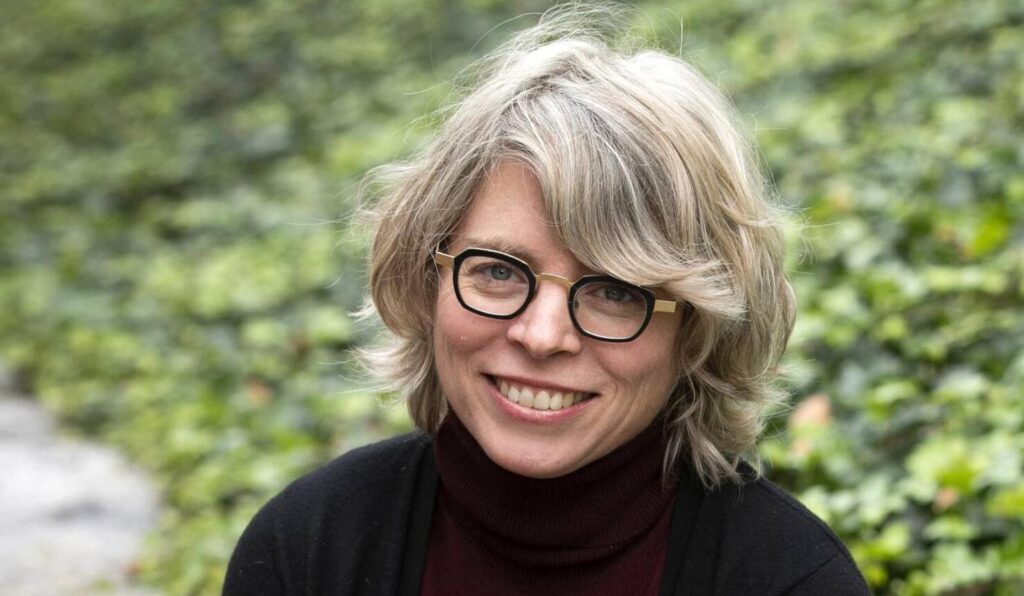
The sci-fi brigade can say “we predicted it would happen but you ignored our warnings”. And according to the prizewinning Harvard historian Jill Lepore:
“They saw our present when it was still the future”.
And they worried it might turn out disastrously.
In her new book, she reminds us that they, and some social scientists, “issued warning after warning about the rise of what I call the artificial state, the replacement of the liberal democratic nation-state, the consent of the governed, with the rule of people by machines”. Really scary stuff.
“They warned of a future in which democratic deliberation would be replaced by prediction by calculation, the public sphere would be supplanted by data-driven commerce, and drones would take the place of the demos. Why didn’t anyone listen?”
As of now, the “artificial state” is still a fantasy, a half-realised dream. “The Artificial State is an unfinished digital communications infrastructure.”
But within it “nearly every element of public and democratic life — civil society, representative government, an informed citizenry, equality of rights, freedom of thought, freedom of expression, and faith in elections — is vulnerable to subversion through the reduction of politics to the digital manipulation of attention-mining algorithms … the Artificial State is government without consent”.
Ever the historian, Lepore, whose many books include the international bestseller , traces the origins of the rapidly evolving technologies leading to the development of AI back to 1957 when the Soviet Union launched Sputnik 1, the first man-made satellite to orbit Earth.
Sputnik, NBC News said, “forevermore separates the old from the new”. One report described the launch as “the first step toward escape from men’s imprisonment to the earth”.
The German-born political theorist Hannah Arendt wondered whether humans would one day soon need artificial machines to do our thinking and speaking.
“That day has now come,” says Lepore.
Sputnik and the many technological breakthroughs that followed it led to the dreaming of a new dream — “a dream of escape from the constraints of nature and even from the burdens of being human, and especially from the obligations of human family, society, and government”.
So we get to a stage where the Artificial State is less of a state than a dream of being without one.
“An extreme form of this dream is the actual plan of a very small number of staggeringly powerful twenty-first century merchants princes, Silicon Valley billionaires … much of what they want comes from a story published nearly a century ago in a science fiction magazine for boys.”
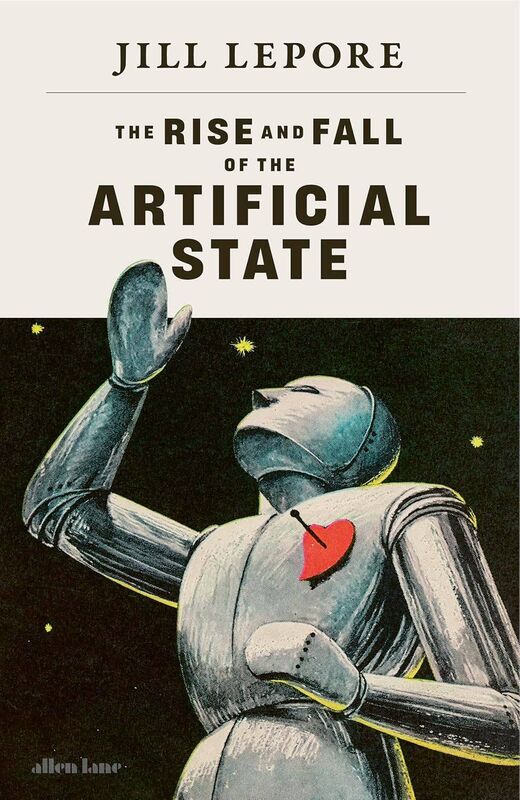
Can the Artificial State be dismantled? Lepore thinks so, but this is the weakest part of the book. Her imagined solution is way too sanguine. Regulating AI is going to be an uphill struggle.
In December 2025 the new head of MI6, Blaise Metreweli, explained why.
Emerging technologies were creating “science-fiction like tools” and control over these technologies “is shifting from states to corporations, and sometimes individuals”.
The latter have no interest in democracy or any capacity for restraint.
It will require an international solution, and the Chinese have been pressing for this, but, as Lepore notes, Trump has dismissed the regulation of AI as a form of wokeism, and the EU has put its Artificial Intelligence Act on hold,
Since the publication of Lepore’s book, Bill Gates, the Microsoft co-founder, published a 6,000-word essay on his personal website, GatesNotes, warning that the rise of AI will put millions of jobs at risk and empower “bad actors”.
He said it was time to “prepare for the period of social, political, and economic upheaval we are about to enter”. How well prepared is Ireland?