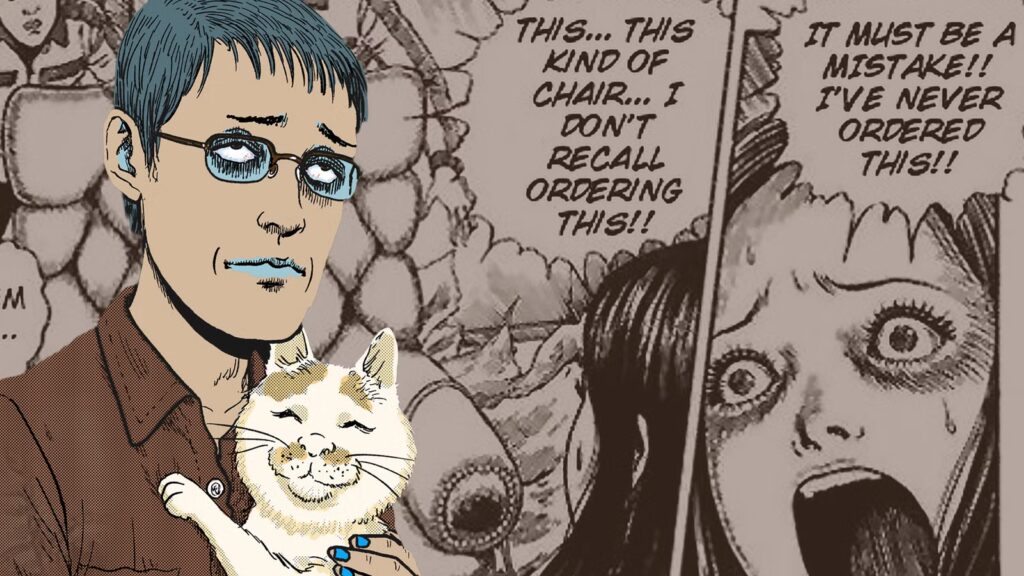

There are many revered mangaka who have become household names with international notoriety, but it’s truly impressive how Junji Ito‘s disturbing tales of terror have turned him into a mainstream success. Ito has published over 100 short stories that feature some of the most unsettling illustrations ever committed to manga.
Ito has a remarkable ability for tapping into uncomfortable ideas that get progressively darker and more disturbing over time. As a true master when it comes to body horror, cosmic horror and unsettling slice-of-life scenarios, some of his most bizarre stories are must-read classics perfectly designed to unnerve.
“The Long Dream” Is An Existential Nightmare That Blurs Fantasy With Reality
It can be such an unsettling and destabilizing experience to lose one’s grip on reality. “The Long Dream” is a Junji Ito story that masterfully captures the anxiety of this experience that culminates in a truly frightening finish. Dr. Kuroda, a neurosurgeon, examines Tetsuro Mukoda, who suffers from vivid dreams that feel like they last for days. Mukoda’s condition intensifies, and his dreams begin to feel like they span decades and even centuries.
The time that Mukoda spends in his dreams starts to feel more realistic and substantial to the real world. This stressful process begins to affect Mukoda’s physical body until he’s rapidly aged into nothingness and crumbles into stone and crystals. This ending, while chilling and confusing, builds to a toxic and never-ending cycle as another patient, Mami, starts to experience the same unexplainable symptoms.
“Gyo” Features A Frightening Plague Of Walking, Rotting Marine Life

“Gyo” is one of the weirdest zombie attack subversions that plays by its own rules and only gets progressively more ridiculous over time. The story’s initial threat involves rotting marine life that’s reanimated with the help of metallic walking machines. It feels as if “Gyo” is born out of the uncomfortable imagery of fish, sharks, and octopus causing havoc on land with the help of jarring metallic legs. It’s a terrifying concept that Ito fully embraces.
“Gyo” impressively provides an explanation for this viral plague and the circumstances and origins behind the metal walkers. “Gyo” somehow finds an internal logic that works for it as it builds to a more extreme apocalyptic endgame. Ito’s “Gyo” was adapted into a 70-minute OVA back in 2012 that does a commendable job at capturing the story’s abject weirdness. However, the manga is still the superior experience.
“Slug Girl” Is A Terrifying Tale Of Transformation & Trauma

Some Junji Ito stories are born out of intricate ideas and rich commentaries upon society. Others are remarkably simple and just double-down on a haunting and weird concept. “Slug Girl” takes something that’s both natural and unsettling, like slugs, and combines them with the human anatomy.
Yuuko is an introspective girl who turns into a recluse after her tongue becomes a slug that begins to feed off of her body. “Slug Girl” is full of detailed visuals of slugs that ramp up as Yuuko’s situation worsens. Yuuko’s family attempts a drastic solution to this problem — submerging her in salt — only for Yuuko’s body to disintegrate. The story’s final image is among Ito’s weirdest visuals.
“House Of The Marionettes” Turns Real Life Into Macabre Performance Art

“House of the Marionettes” culminates in a cathartic homecoming that forces its protagonist to question everything that they’ve known about their life. It’s a traumatic experience that defies reality, but the best Junji Ito stories are the ones that pull the rug out from under the audience and leave them unsure what to trust. Haruhiko and his brother, Yukihiko, come from a family of puppeteers who are obsessed with the artistry of marionettes.
An unnerving puppet, Jean-Pierre, begins to literally pull the strings and has these brothers wondering if the puppets are the ones who truly have control. Haruhiko returns to his childhood home, years later, and experiences a debilitating shattering of reality when he discovers that his own wife is actually a puppet that is suspended from the ceiling by piano wires. Reality continues to crumble in a cruel conclusion that reflects the fragility of life.
“The Town Without Streets” Uses Haunting Liminal Horror To Reflect Upon Privacy
Junji Ito’s “The Town Without Streets” is one of the author’s most unnerving narratives and a must-read entry for anyone who is a fan of Backrooms or liminal horror. Saiko decides to visit her aunt, Tamae, only to discover that her bizarre town is made up of indestructible and overlapping buildings that block any possible path and have replaced streets. This means that any means of travel involves directly walking through other people’s homes.
This becomes a disturbing meditation on privacy and the residents of this weird community wear masks as some way to regain anonymity and control. “The Town Without Streets” is such a powerful way for Ito to talk about security and privacy. It takes something completely innocuous and turns it into a suburban nightmare.
“The Enigma Of Amigara Fault” Chronicles A Perplexing Psychological Condition

“The Enigma of Amigara Fault” taps into something cosmic and visceral that leads to one of Junji Ito’s most unforgettable stories. There are plenty of adrenaline and danger junkies who put their lives in harm’s way by exploring treacherous terrains and caves. “The Enigma of Amigara Fault” features a seismic earthquake that reveals thousands of holes in the side of a mountain that seem to be exact matches for different individuals.
These individuals feel some kind of cosmic calling to the Amigara Fault and are compelled to enter their respective holes. The end result is that these bodies get stuck inside the increasingly-tight holes or manage to make it to the other side, albeit with a body that’s warped beyond recognition. Everything about this story, whether it’s the holes themselves or the psychological urge to enter them, is weird.
“Army Of One” Creates A Twisted Tapestry Of Connection & Unity

There are certain Junji Ito stories that gradually build to uncomfortable territory, whereas there are others that are nightmare fuel right from the jump. “Army of One” is pure horror that sees Japan systematically under attack from a cryptic force of nature that leads to people being sewn together with fishing wire. Michio is a “hikikomori” — a social recluse — who hasn’t left his home in years. An opportunity for Michio to go out into the world coincides with a series of odd abductions and murders.
Meanwhile, an “Army of One” mantra begins to be broadcast throughout Japan, which urges individuals to unite, become one, and eradicate loneliness. It’s a frightening twist on the idea of there being safety in numbers while also preying upon Michio’s fear of the outside world and what he’s unable to control. It also contains some of Ito’s most unsettling imagery that combines a morbid massacre with utter bliss.
“The Hanging Balloons” Becomes A Surreal Exercise In Death’s Equalizing Nature

“The Hanging Balloons” is the perfect mix of frightening folklore and violent visuals that tap into something very primal. A teenage pop idol’s death triggers a wave of grief that’s followed by the appearance of abnormal balloons that are shaped like human heads. These monstrous entities locate their human counterparts and lure them to take themselves out with the metal nooses that are connected to them.
This attack feels like an abstract apocalypse that’s never properly explained and just embraces the dark imagery of lifeless bodies hanging from balloons. At the same time, “The Hanging Balloons” functions as a parable about fate, inevitability, and facing the end with courage.
“The Human Chair” Combines Craftsmanship & Obsession With Unnerving Results

Junji Ito’s “The Human Chair” is actually an adaptation of Edogawa Rampo’s 1925 short story of the same name, yet it feels so perfectly in line with Ito’s twisted sensibilities. In what feels like a hybrid of “Uzumaki” and “The Enigma of Amigara Fault,” The Human Chair” details an old luxury armchair that’s been hollowed out to perfectly fit its craftsman.
The craftsman hides inside the armchair and takes satisfaction in people sitting on him without their knowledge. The two become one in this alarming exercise. “The Human Chair” is full of unsettling visuals and a terrifying ending that actually improves upon Rampo’s original story. It’s a great example of Ito’s signature weirdness that doesn’t always provide answers for its malevolent mysteries.
“Glyceride/Greased” Is A Disturbing Descent Into Disgusting, Oily Body Horror Extremes
“Glyceride,” also known as “Greased,” is easily one of Junji Ito’s weirdest and most disgusting stories. It’s received an anime adaptation, but no visuals have managed to match Ito’s original drawings. “Glyceride” unpacks a simple premise about a filthy, grease-obsessed family. The seemingly normal Yui struggles to accept her family’s greasy tendencies, particularly those of her brother, Goro. Goro chugs down oil and is absolutely covered in acne.
Some of “Glyceride’s” weirdest and worst material involves Goro aggressively popping his acne over Yui’s face, as she’s disgusted by the pus that’s released. It’s a unique approach to body horror that taps into something raw and real. Ito’s ability to turn such an odd idea into a horror manga masterpiece is why he’s such a skilled storyteller.