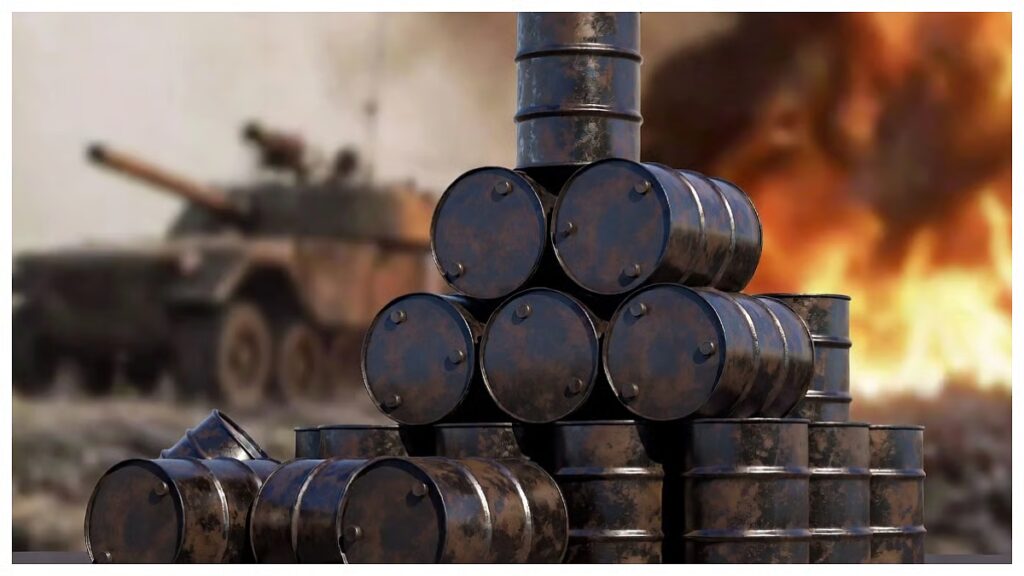

Oil prices extended their decline on Friday, falling about 1% for the third straight session, although both major crude benchmarks continued to trade above the $100-a-barrel mark.
Expectations of alternative supply arrangements from the Middle East helped ease concerns over potential disruptions.
Brent crude futures dropped $1.01, or 1%, to $103.77 a barrel, while US West Texas Intermediate (WTI) futures declined $1.03, or 1%, to $100.88. Both benchmarks had ended the previous session about 1% lower.
Alternative supply routes ease crude concerns
The fall in prices came despite continued tensions in the Middle East, including strikes involving Saudi Arabia and Yemen’s Houthis. Traders are also monitoring developments related to Iran and possible diplomatic initiatives by the US.
Recent concerns over supply disruptions had pushed crude prices higher, but reports of alternative transportation routes for Middle Eastern oil have reduced fears of a broader shortage.
Market participants are weighing the possibility of further conflict against indications that crude supplies can continue reaching global buyers through other channels.
The Middle East remains a crucial source of global oil supplies, and any prolonged disruption to production or shipping routes could significantly influence prices.
Iran diplomacy remains key market factor
US President Donald Trump’s comments on possible talks with Iran have also influenced market expectations. Trump said Tehran wanted to reach an agreement but was not yet prepared.
“Iran wants to make a deal; they’re not ready, in my opinion. We’re gonna either make a good deal, or we’re not gonna make a deal at all,” Trump told ABC 11.
Any progress in diplomatic efforts could reduce the geopolitical premium currently supporting crude prices. However, renewed tensions or failure of negotiations could keep supply risks elevated.
For now, oil markets remain focused on balancing geopolitical uncertainty with signs that alternative supply routes may limit the impact of regional disruptions on global crude availability.