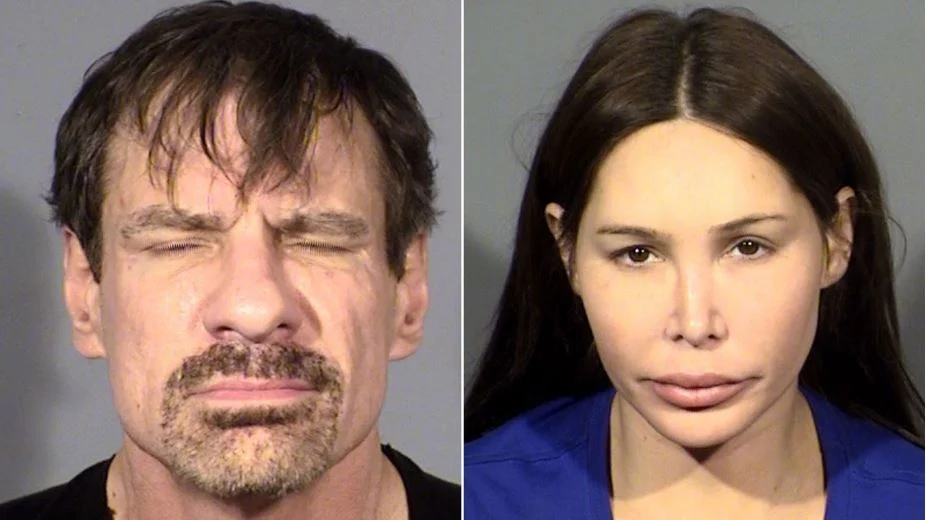

At first glance, Henry Nicholas III comes across as a fairly typical, mild-mannered tech gazillionaire. He co-founded Broadcom, one of the most important semiconductor companies of the Internet era, and today has a $22 billion net worth. He has also donated tens of millions of dollars to charity, helped thousands of underserved students attend college, and spent years championing victims’ rights in honor of his younger sister, who was murdered by an ex-boyfriend.
Based on those qualities, Henry certainly sounds like an upstanding billionaire, right? Certainly not a man who allegedly tried to build a secret underground sex-and-drug lair beneath his family home. Certainly not a man whose former contractors claimed he later recreated that lair in a warehouse where prostitutes and drugs were allegedly plentiful. And definitely not a man federal prosecutors once accused of smoking so much marijuana aboard his private jet that the pilot had to put on an oxygen mask.
Yet those allegations are all part of Henry Nicholas’ remarkable story. So is a 2018 Las Vegas arrest in which police reported finding methamphetamine, cocaine, heroin and psychedelic drugs inside his hotel suite. Who exactly is this Henry Nicholas character?
Early Life
Henry Nicholas was born in Cincinnati in 1959. His father, Henry Nicholas Jr., was an attorney for the IRS who struggled with alcoholism. His parents divorced when Henry was four, after which he and his younger sister, Marsalee, moved with their mother to Santa Monica, California. His mother later married journalist and screenwriter Robert Leach.
Henry, who has long gone by “Nick,” graduated from Santa Monica High School and enrolled at the United States Air Force Academy. He left after three years when it became clear that, at 6’6″ tall, he was unlikely to achieve his dream of becoming a fighter pilot. He transferred to UCLA, earning a B.S. in electrical engineering in 1982 and an M.S. in 1985. Years later, while already running Broadcom, he completed a Ph.D. in electrical engineering from UCLA.
While Nicholas was in graduate school, his family suffered an unimaginable tragedy. In 1983, his 21-year-old sister, Marsalee “Marsy” Nicholas, a senior at UC Santa Barbara, was murdered by an ex-boyfriend who had been stalking her. Her death would eventually inspire Nicholas to become a major figure in the victims’ rights movement.
After college, Nicholas worked at defense contractor TRW. There, he met his future Broadcom partner, Henry Samueli. He also met fellow electrical engineer Stacey Feller. They married in 1987 and eventually had three children.

(Photo by Kevork Djansezian)
Broadcom
In 1991, Nicholas and Samueli founded Broadcom in the spare bedroom of Nicholas’ Redondo Beach condominium. Each man invested just $5,000. Nicholas became CEO, while Samueli served as the company’s chief technologist.
Broadcom developed semiconductor chips capable of moving enormous amounts of voice, video and data at high speeds. Its technology became increasingly important to cable modems, broadband internet, networking equipment, Wi-Fi, Bluetooth and countless consumer electronics.
Broadcom went public on April 17, 1998, near the height of the original Internet boom. Shares were priced at $24 and closed their first trading day at $53.63. By the closing bell, Nicholas and Samueli’s respective stakes were each worth roughly $650 million. Within months, both men were billionaires.
By the summer of 2000, Broadcom’s market capitalization had topped $60 billion and both founders were worth around $10 billion on paper. The dot-com crash later erased much of those fortunes, and Nicholas stepped down as Broadcom CEO in 2003.
Broadcom survived and eventually became vastly more valuable. Avago Technologies acquired the original company for $37 billion in 2016 and adopted the Broadcom name. Today, Nicholas’ net worth is estimated at approximately $22 billion.
And when the first wave of Broadcom riches arrived, Henry found some unusual ways to enjoy his money.
The Underground Lair
Nicholas and his wife, Stacey, apparently had very different reactions to their sudden fortune. Stacey reportedly remained happy driving a minivan and shopping at Target. Henry acquired an aviation company called Prestige Air, giving him access to three private jets and a helicopter.
Then there was the house.
The Nicholas family lived in Nellie Gail Ranch, an affluent equestrian community in Laguna Hills. Shortly after Broadcom’s IPO, they purchased a much larger property a few doors away for approximately $1.7 million. What began as a relatively conventional renovation reportedly grew into a project costing around $30 million.
The most interesting work was happening underground. According to contractors who later sued Nicholas, workers excavated tunnels beneath the property leading toward a planned 2,000-square-foot sports bar called Nick’s Café. One entrance reportedly began behind a movable panel in the library. The passageway featured faux-stone walls, skulls carved into illuminated niches and candelabras, while other plans called for 12-foot ceilings, gold-leaf columns, elaborate sound systems, entertainment rooms and a Jacuzzi.
According to Nicholas, it was an elaborate private entertainment complex. Contractors offered a much more colorful description, alleging in court filings that Nicholas intended it to be a “secret and convenient lair” where he could use drugs and entertain prostitutes without his wife knowing what was going on beneath the family home. Nicholas denied the most sensational allegations.
Whatever its intended purpose, the construction was impossible for neighbors to ignore. Heavy equipment, work crews and armed security guards disrupted the neighborhood and nearby horse trails. City inspectors eventually discovered that portions of the underground work lacked permits and ordered construction stopped.
Here is an aerial photo of the property taken in September 2000:
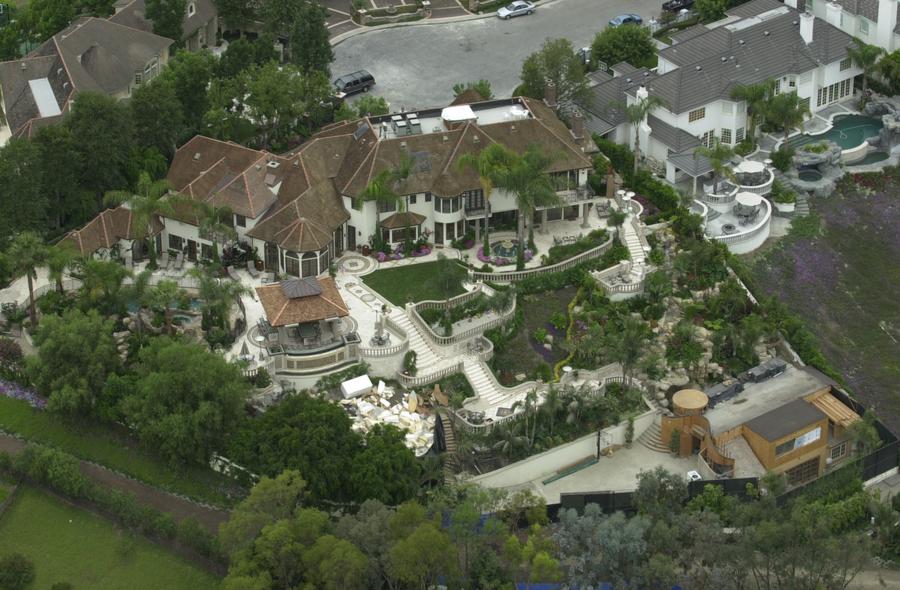
(Photo by Don Kelsen/Los Angeles Times via Getty Images)
The Warehouse
Being ordered to stop apparently did not kill Nicholas’ dream. According to contractors, he simply relocated it.
Nicholas rented warehouse space in an industrial area a few minutes from his home. Workers were allegedly instructed to recreate the underground entertainment complex inside the warehouse. The new venue became known as “The Ponderosa” or simply “The Pond.”
Visitors reportedly entered through a concealed passageway into an elaborate red-and-gold interior containing a large television, custom bar, expensive sound equipment and extravagant decorations. According to federal prosecutors and former workers, Nicholas hosted parties there where cocaine, Ecstasy and marijuana were readily available. Contractors went further, characterizing the Pond as his personal brothel and alleging that prostitutes were routinely brought in for Nicholas and his guests.
Federal prosecutors would later accuse Nicholas of supplying drugs to employees, customers and business associates. One indictment alleged that he secretly put Ecstasy into the drinks of technology executives. Prosecutors also claimed that during a private flight from Orange County to Las Vegas, Nicholas and his entourage smoked so much marijuana that smoke entered the cockpit and forced the pilot to use an oxygen mask.
Nicholas pleaded not guilty and denied criminal wrongdoing.
When His Wife Found Out
According to contractors involved in the subsequent litigation, Stacey eventually discovered the Pond. In May 2002, she allegedly arrived there unexpectedly and caught Nicholas with a prostitute while he was under the influence of drugs.
Stacey filed for divorce later that year. The bitter divorce battle would drag on for years and produce numerous allegations involving drugs, infidelity, money and custody. Nicholas stepped down as Broadcom’s CEO in 2003, saying he wanted to focus on his marriage and family.
Away from all the allegations involving drugs, prostitutes and secret lairs, Broadcom was also developing a serious accounting problem.
The Stock Options Investigation
After the dot-com boom, federal authorities began investigating whether executives at numerous technology companies had improperly backdated employee stock options. Broadcom became one of the highest-profile targets.
In simple terms, backdating allowed a company to issue an option using an earlier date when its stock price was lower, instantly making the option more valuable. The practice was not automatically illegal, but companies were required to properly report the resulting compensation expense.
The SEC began investigating Broadcom in 2006. The company ultimately restated years of financial results and recorded approximately $2.2 billion in additional stock-based compensation expense, one of the largest restatements to emerge from the stock-options scandal.
In 2008, federal prosecutors indicted Nicholas on securities fraud and related charges. At roughly the same time, they unveiled a separate narcotics indictment containing many of the extraordinary allegations involving the Pond, prostitutes, Ecstasy, cocaine and his private planes.
For a while, it appeared Nicholas could potentially spend years in prison. Then the prosecution fell apart.
The Federal Cases Collapse
In December 2009, U.S. District Judge Cormac Carney dismissed the stock-options case against Nicholas after finding serious misconduct by federal prosecutors. The judge accused prosecutors of improperly intimidating witnesses and expressed doubts that the government’s evidence proved criminal intent.
The consequences spread throughout the Broadcom investigation. Charges against former CFO William Ruehle were dismissed, a guilty plea previously entered by Henry Samueli was vacated, and the SEC ultimately abandoned its civil case against the former Broadcom executives.
In January 2010, federal prosecutors also asked the court to dismiss the separate narcotics case against Nicholas. The judge granted the request. Despite the sensational details contained in the indictments, Nicholas was never convicted of any of the charges stemming from the federal Broadcom or drug investigations.
Rehab, Philanthropy and Marsy’s Law
As his legal problems mounted, Nicholas voluntarily entered the Betty Ford Center for alcohol treatment in 2008 and later continued treatment at Cliffside Malibu. He also dramatically expanded his philanthropic efforts.
Nicholas became the principal benefactor of the Nicholas Academic Centers, which provide tutoring, college preparation, mentoring and financial assistance to students from underserved communities in Santa Ana. More than 2,000 students have graduated through the program, with the overwhelming majority continuing into post-secondary education.
His sister’s murder also inspired what became perhaps Nicholas’ most visible public cause. In 2008, he spent millions of dollars supporting California’s Proposition 9, better known as Marsy’s Law, which expanded constitutional rights for crime victims and their families. Versions of Marsy’s Law have since been adopted in 12 states.
A decade after becoming one of America’s most prominent advocates for crime victims, however, Nicholas once again found himself on the other side of the criminal justice system.
The 2018 Las Vegas Arrest
On August 7, 2018, Nicholas was staying at the Encore hotel in Las Vegas with a companion named Ashley Fargo. At some point that evening, he became locked out of his villa and asked hotel security to let him back inside.
Security personnel entered and found Fargo lying on a bed. According to the police report, she was unresponsive and had a partially deflated balloon in her mouth. Fargo’s attorneys later disputed that characterization and said she had simply been asleep.
Hotel personnel also found two black hard-sided cases. Concerned that one might contain a weapon, security opened them and discovered drugs. Police subsequently reported recovering substances that included methamphetamine, heroin, cocaine, marijuana and psychedelic drugs.
Nicholas and Fargo denied owning the cases. Their attorneys argued there was no fingerprint or forensic evidence proving who possessed the narcotics and noted that multiple people had reportedly entered the hotel suite.
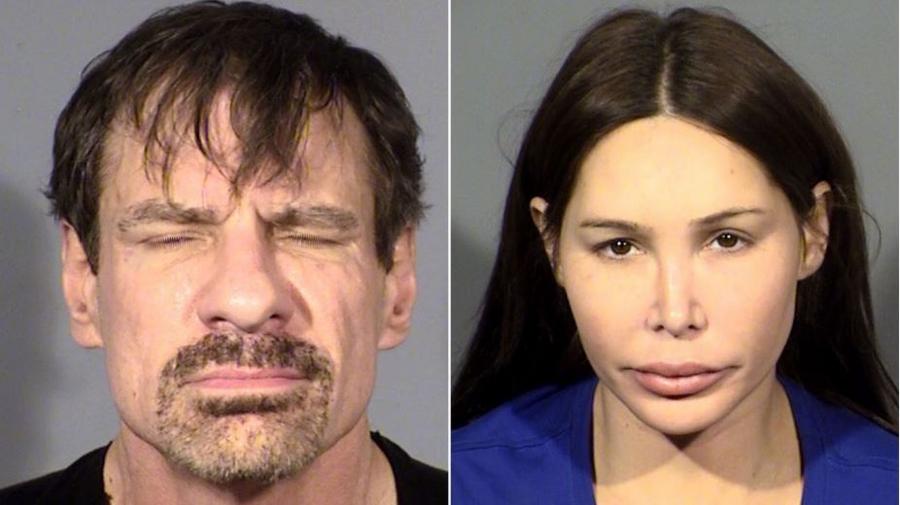
In 2019, prosecutors charged Nicholas and Fargo with felony drug trafficking and possession offenses. The case was ultimately resolved that October through an unusual plea agreement.
Nicholas entered an Alford plea to one felony drug-possession charge. An Alford plea allows a defendant to maintain innocence while acknowledging that prosecutors possess enough evidence to potentially obtain a conviction. The more serious trafficking charges were dropped.
Under the agreement, Nicholas was required to undergo drug counseling, complete 250 hours of community service, avoid further legal trouble and personally donate $500,000 to Las Vegas-area drug treatment and prevention programs. Fargo entered a similar agreement and contributed another $500,000, bringing their combined donations to $1 million. The arrangement allowed the cases to be dismissed after the conditions were successfully completed.
And Today?
More than three decades after Henry Nicholas and Henry Samueli launched Broadcom with a combined $10,000, the company they created has evolved into one of the world’s most valuable technology businesses. Broadcom has also emerged as one of the more surprising winners of the artificial intelligence boom, thanks to soaring demand for its custom AI chips and networking technology. Broadcom’s stock has risen more than 500% over the last five years, pushing the company’s market capitalization to roughly $1.7 trillion. Nicholas’ fortune today stands at approximately $22 billion, more than twice the $10 billion figure attached to him during the original dot-com boom.
His public life has become much quieter. Recent coverage has focused largely on his philanthropy, the Nicholas Academic Centers, and his continuing support of victims’ rights through Marsy’s Law rather than the astonishing personal controversies that once dominated headlines.
That leaves Henry Nicholas with one of the stranger billionaire biographies imaginable: pioneering engineer, semiconductor mogul, victims’ rights crusader, and major education philanthropist on one side; secret tunnels, the Pond, prostitutes, mountains of alleged drug use, a private-jet oxygen mask, and two suspicious black cases in a Las Vegas hotel room on the other.
Some billionaires buy yachts. Some collect art. Some play golf.
Henry Nicholas’ story has always been a little more complicated.