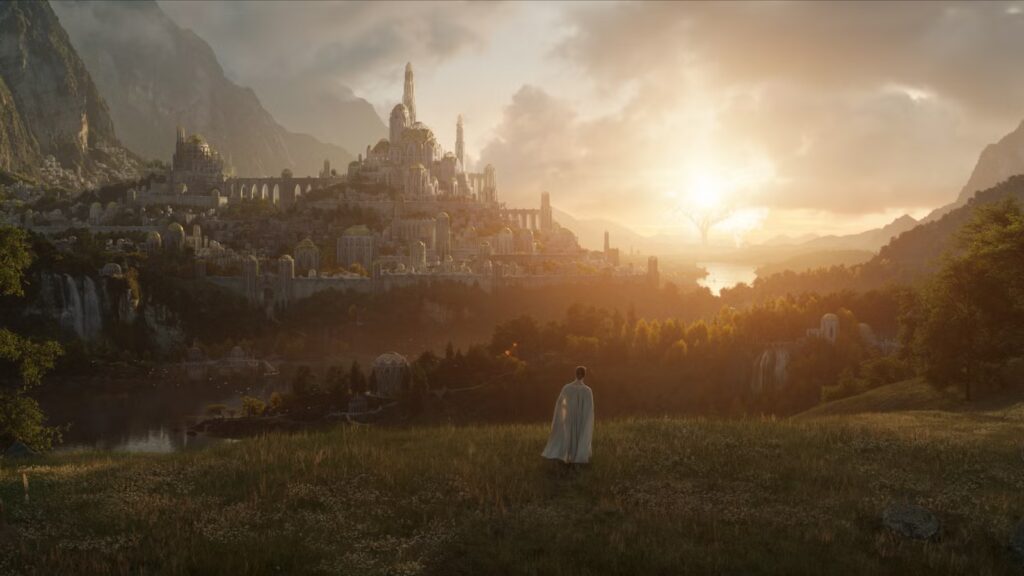

The fantasy genre is built on unforgettable final acts that leave the stage in a blaze of spectacle. George R.R. Martin famously closes A Game of Thrones by spectacularly reawakening magic with the birth of dragons, while Brandon Sanderson caps the Mistborn trilogy with a universe-altering revelation of godhood. Others lean into existential weight, trapping readers in inescapable loops, much like Stephen King did with The Dark Tower or the metafictional continuity of Andrzej Sapkowski’s The Witcher. These are undeniably some of the greatest closing notes in literature (fantasy or otherwise), designed to leave audiences in awe of the cosmic and mythic scale of the worlds they inhabited.
The single best ending in fantasy history, however, prevails by doing the exact opposite. It raises the question of whether any fantasy epic ever stuck the landing quite like The Lord of the Rings. J.R.R. Tolkien spends three volumes constructing a mythos overflowing with apocalyptic wars, immortal Elves, and a world-shattering Ring at the center of it all. Yet when the dust finally settles, the author resists the urge to close on an imperial proclamation, shrinking the lens to a quiet front porch as a weary Samwise Gamgee steps into the frame. The world still carries scars, but the nightmare is long over. Sam is home. In a genre obsessed with cosmic grandeur, it’s this radical, heart-wrenching simplicity that renders the finale a masterstroke in fantasy.

Instead of rolling the credits at the coronation of King Aragorn or the collapse of Barad-dûr, Tolkien meticulously winds the narrative down to a deeply personal scale. The hobbits return to liberate the Shire from Saruman’s industrialized rot, only for Frodo to realize his psychological wounds are too deep to heal. The true climax isn’t a battle, but a farewell. Frodo departs for the Undying Lands from the Grey Havens, leaving Sam behind to inherit Bag End. Sam simply walks back up the hill, opens his green door to his wife Rosie and daughter Elanor, and sits down. Tolkien closes the book with the simple phrase: “’Well, I’m back,’ he said.”
It’s far more than a cozy sign-off. Sam’s final words serve as a quiet thesis statement for the entire trilogy, offering a definitive answer to what every bloody battle, fallen kingdom, and grueling mile was ultimately for. In three short words, Tolkien closes the door on the trauma and horrors of the Third Age, offering a profound truth: the ultimate purpose of surviving an apocalyptic quest isn’t glory, power, or ascension, but the right to return to the life you fought to save. For a legendarium so defined by the endless burden of the “Road,” where the trail perpetually leads on into myth, its most unforgettable moment isn’t a step into legend, but the definitive act of coming home.
Sam isn’t crowned king. Though minstrel songs were sung for him on the distant battlefields of Gondor, back in the Shire he claims no grand throne or mythic monument. He simply returns to the soil, marries Rosie Cotton, and begins the unglamorous work of picking up the pieces. The cataclysmic events we’ve spent thousands of pages tracking give way to something much quieter — and far more sacred: a warm hearth, a crying baby, and the everyday business of living after the adventure’s end.
Forged in the Trenches

Tolkien’s focus on domestic life wasn’t merely a narrative choice; it was rooted in his own lived trauma. As a veteran of the Battle of the Somme — one of the bloodiest conflicts in human history — Tolkien watched the mechanized horror of World War I wipe out nearly all of his closest friends. He knew firsthand what happened when the mud cleared and the surviving soldiers returned to England. They weren’t triumphant demigods, but traumatized and shell-shocked men tasked with picking up spades and returning to ordinary jobs in quiet towns, carrying wounds invisible to the rest of the world.
That experience fundamentally shaped his vision of Middle-earth. Tolkien understood that the most profound part of a war story isn’t the defeat of the big bad, but what happens after. The world doesn’t freeze in place once the dark lord falls, nor does history stop when the book closes. Middle-earth continues to turn, and its survivors must find a way to exist inside it. By denying us a mythic spectacle and giving Samwise Gamgee the final word, Tolkien insists that saving the world is only half the battle. The true triumph is having the courage to step back into the quiet rhythm of normal life and simply go on.
Would you rather listen to this one?
Get it — and thousands of other titles — read aloud with Audible. Pick the
plan that works for you.
Polygon may earn a commission from purchases made through these Audible links.
There’s also a level of lingering melancholy lurking beneath those final words. Sam has returned, but he is no longer the hobbit who left. Nor is Frodo, nor is the Shire itself. Tolkien refuses to rush toward a sanitized resolution, choosing instead to let the permanent scars of war settle into the earth. The quest is finished, but its consequences remain.
It’s an emotional honesty that explains why the line has aged so effortlessly across seven decades of fantasy literature. The genre has spent generations trying to replicate Tolkien’s sprawling worldbuilding and cosmic stakes, but its most enduring endings understand the human truth that dark lords can fall, prophecies can be fulfilled, and rings can melt in the fire, but when the dust clears, someone still has to go home and live in the world left behind.
After everything Sam has gone through, there is something almost impossibly satisfying about him finally doing exactly that.