

Today, Barbara Corcoran is one of the most recognizable business personalities in America. She has been sitting on ABC’s “Shark Tank” since the show debuted in 2009, dispensing advice, rejecting entrepreneurs and writing checks for companies she thinks have a chance to become enormous. We currently estimate her net worth at $100 million.
But Barbara’s own entrepreneurial origin story begins with an investment so small that it wouldn’t get anyone through the doors of the “Shark Tank”: $1,000.
Barbara was working as a waitress in New Jersey when a boyfriend convinced her that she should try real estate. He loaned her $1,000 to start a company, taking 51% of the business while Barbara owned 49% and did most of the work.
It turned out to be an incredibly good investment for both of them, at least for a while. Several years later, after the company had become successful, Barbara’s boyfriend informed her that he was leaving her to marry their secretary. As they eventually divided the business and went their separate ways, he left Barbara with six words she would remember for the rest of her life:
“You’ll never succeed without me.”
That was a mistake.
A Waitress With $1,000
Barbara Corcoran grew up in Edgewater, New Jersey, the second-oldest of 10 children. Her father worked as a printing-press foreman while her mother managed the enormous Corcoran household. Barbara has joked that earning straight D’s in Catholic school practically qualified as an academic achievement for her, and she cycled through roughly 20 jobs by the time she was in her early 20s.
She graduated from St. Thomas Aquinas College in 1971 and was working as a waitress at a New Jersey diner when she met Ray “Ramone” Simone, a small-time builder who was several years older. Simone thought Barbara’s personality would make her good at real estate. Eventually, he offered to put up $1,000 so the two of them could start a business together. In 1973, they launched Corcoran-Simone. Simone owned 51%. Barbara owned 49%.
Her first specialty was Manhattan apartment rentals, but an accidental sales commission quickly changed her ambitions. One day, Barbara was showing rental apartments to an engineer from Union Carbide when he told her he actually wanted to buy something. Barbara didn’t have any properties for sale, but that minor detail didn’t stop her. She walked him around Manhattan acting as though she knew exactly what she was doing.
He bought an apartment for around $50,000, and Barbara’s commission was approximately $3,000, more than 10 times what she was accustomed to earning from a rental. She quickly concluded that perhaps she should be in the apartment sales business.
The $180 Growth Strategy
Corcoran didn’t have venture capital, a line of credit or much cash, so she developed an extremely simple system for growing the company. At the time, a small three-line real estate advertisement in the New York Times cost about $180. Whenever Corcoran-Simone had more than $180 in receivables, Barbara would use the money to advertise for another agent.
The higher sales commissions gave her more money to hire more agents, which produced more listings, which generated more commissions. By 1975, Barbara had abandoned rentals entirely and focused the company on sales. By 1978, Corcoran-Simone had around 14 agents and was generating approximately $560,000 a year in revenue.
And that’s when Barbara’s personal and professional lives simultaneously exploded.
“You’ll Never Succeed Without Me”
According to Barbara, Simone came home one evening while she was cooking dinner and informed her that he was leaving her to marry the company’s secretary. Barbara was devastated. Simone wasn’t merely her boyfriend. He was the older, more experienced businessman who had given her the original $1,000, brought her into real estate and owned a controlling stake in the company they had built together.
Eventually, Barbara decided the business had to be split as well. There were 14 employees, so she and Simone essentially conducted a draft, alternating picks until Barbara had seven people to start over with. The new company needed a name. She called it The Corcoran Group.
As they separated, Simone told Barbara, “You’ll never succeed without me.” Corcoran has repeatedly described that insult as one of the greatest gifts she ever received. Rather than convincing her that she couldn’t make it on her own, it gave her a nearly pathological desire to prove him wrong.
In the Corcoran Group’s first year, Barbara’s seven-person operation generated approximately $350,000 in revenue. She was on her way.

Barbara Corcoran Net Worth / Brian Ach/Getty Images
How 11 Apartment Sales Made Barbara Corcoran An “Expert”
One of Barbara’s smartest moves came during a difficult real estate market in 1981. Her agents were complaining that the tiny Corcoran Group wasn’t spending enough money on advertising. They had a point. Bigger real estate firms had far larger marketing budgets and were routinely quoted by reporters as experts on the New York housing market.
Barbara couldn’t outspend them, so she found a cheaper way to make herself look just as important. She took the 11 apartment sales her company had recently completed, added up the prices and calculated the average. It came to roughly $255,000. Then she typed up a document with an extremely official-sounding name: “The Corcoran Report.”
Barbara made copies and mailed the report to reporters at the New York Times. That tiny sample of 11 sales did exactly what she hoped. The Times used her numbers in its real estate coverage, presenting Barbara Corcoran as an authority on New York housing prices.
Suddenly, the little brokerage had credibility. Barbara kept publishing the Corcoran Report, and as her company grew, so did the underlying data. Eventually, the report became a legitimate and influential source of information about the Manhattan real estate market. The strategy also taught Barbara an enormously valuable lesson that she would use repeatedly throughout her career: If you can’t afford to buy attention, figure out how to generate publicity for free.
The Corcoran Group continued finding ways to get ahead of larger rivals. It became an early adopter of online real estate listings and eventually became Manhattan’s first major brokerage to put its listings online. Over the following two decades, Barbara turned her seven-person company into one of the most powerful names in New York residential real estate.
Then Someone Offered Her $20 Million
By 2001, Barbara had reached the goal she had been chasing for more than 20 years. The Corcoran Group had more listings than its major competitors across New York, and Barbara felt she had finally become the city’s top residential broker. The numbers were enormous compared with where she had started: The Corcoran Group had approximately 850 salespeople and was generating around $97 million in annual revenue.
Barbara was also a mother by this point. After years of fertility treatments, she had given birth to her son, Tommy, at age 46. She increasingly wanted to redirect some of the energy she had poured into the Corcoran Group toward her family, so she decided to sell.
NRT, which had become a major consolidator of residential real estate brokerages, was an obvious potential buyer. Barbara hired an attorney who sat on NRT’s board and told him she was interested. Eventually, the attorney came back with an offer: $20 million.
For most people, turning a $1,000 startup investment into a $20 million acquisition offer would qualify as a fairly successful outcome. Barbara said no.
Why $66 Million?
When Barbara’s attorney told her he could get $20 million, she responded with her counteroffer: $66 million. Why $66 million? Was it based on a sophisticated discounted cash-flow model, a detailed analysis of comparable brokerage acquisitions or a projection of future commissions?
Nope. 66 was Barbara’s lucky number.
She later recalled telling the attorney, essentially, “Tell them I’ll take $66 million,” and hanging up. Incredibly, NRT eventually agreed. The contract was signed on the Friday immediately before the September 11 attacks, and the transaction closed shortly afterward.
Barbara Corcoran had taken a real estate career that began with a $1,000 loan and turned it into a company that sold for $66 million. And the story gets even better when you remember how the Corcoran Group began. The boyfriend who supplied that $1,000 had taken 51% ownership of their original business, then left Barbara for their secretary and told her she would never succeed without him.
Roughly two decades later, the company bearing Barbara’s name sold for $66 million.
Paul A. Hebert/Getty Images
Then She Almost Lost “Shark Tank”
Selling the Corcoran Group could easily have been the end of Barbara’s public career. Instead, it was the beginning of an entirely different one. She became a television real estate commentator, wrote books and developed a lucrative speaking career. Then, in 2009, she was offered a seat on a new ABC reality show in which wealthy investors would listen to entrepreneurs pitch their businesses.
The show was called “Shark Tank.”
Barbara signed the contract and prepared to fly to Los Angeles. Then she received a call informing her that producer Mark Burnett’s team had changed its mind. Another woman had been hired for the seat, and Barbara would be kept around as a backup.
Rather than accept the rejection, Barbara wrote Burnett an email arguing that nearly every major success in her life had come directly after a failure. She suggested that he invite both women to Los Angeles and let them compete for the job. Then Barbara bought her own plane ticket.
She won the seat.
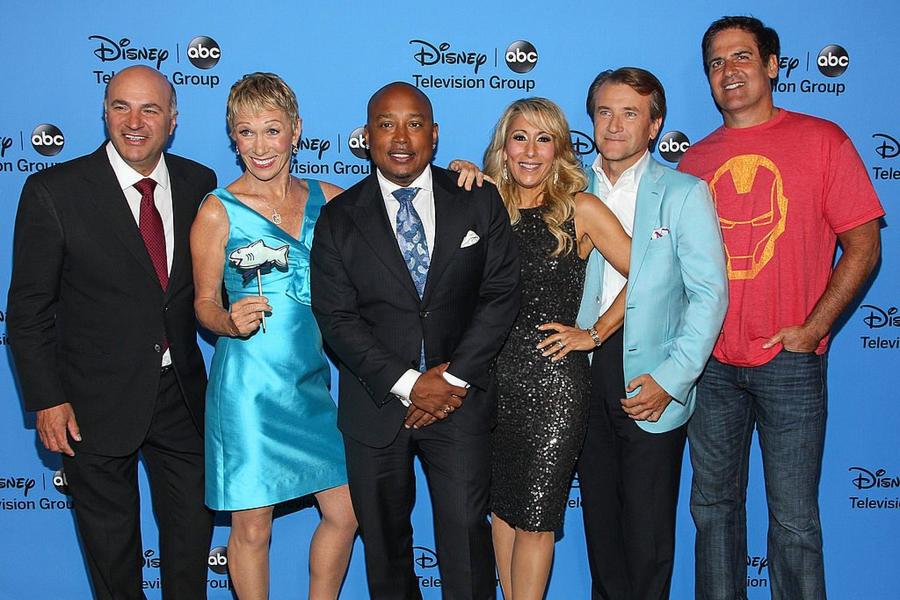
More than 17 years later, Barbara remains part of the “Shark Tank” lineup. ABC says she has invested in more than 120 businesses through the show, giving the woman who once needed a boyfriend to loan her $1,000 the opportunity to hand out startup capital to a new generation of entrepreneurs.
It’s difficult to imagine a more appropriate second act. Barbara Corcoran built her career by repeatedly turning rejection into fuel. She struggled in school, bounced through job after job, got abandoned by her boyfriend and business partner, and nearly got dumped from “Shark Tank” before filming even started.
Today, she has a net worth of $100 million. Apparently, she did just fine without him.