

Harmony is stuck. Working in her mother’s café, serving the same old customers the same old menu of toast, sausages, and beans, day after day since she dropped out of school.
She’s only 16 but life appears to be passing her by.
Staring out of the café window one day, what is passing her by is an impeccably dressed boy “moving through the world like he always knows what’s coming”.
While concentrating intently on his phone, the boy swerves to avoid a collision with a man opening a shop door into his path — before the door even opens.
He similarly anticipates the movements of a waitress balancing a tray of crockery, stepping around her before an accident occurs, again without looking up from his screen.
No one else pays the boy any attention, but Harmony — Harmie for short — notices things.
And the boy notices her. Though he announces himself haughtily as “the king of Dublin”, he heaps praise on her cookery skills and ostentatiously leaves a €100 note in payment for an omelette.
What he sees, Harmie perceives, is “a squat, solid structure of a girl who obviously doesn’t work out, hopping nervously from scuffed runner to scuffed runner in her black leggings, faded black T-shirt, and food-stained apron … brown split-endy hair held back by an elastic band. No make-up to hide the shadows around her brown eyes from staying up far too late watching shite on her phone, eating crap, waiting for something to happen that never does”.
Today, however, is the day when something does happen.
This posh boy may be obnoxious, delusional even, but he provides the spark that prompts Harmie to leave her kitchen ‘prison’ to confront him with her suspicion: That he is in a time loop.
No one has guessed the truth before and the boy, Liam, plants a seed of doubt in Harmie’s mind as to whether she too might be stuck in the loop.
There are so many questions, so few answers, and though Liam presents himself as the lord of all he surveys, offering to show Harmie the wonders of the loop, his theatrical cheerfulness masks the awful loneliness of his situation.
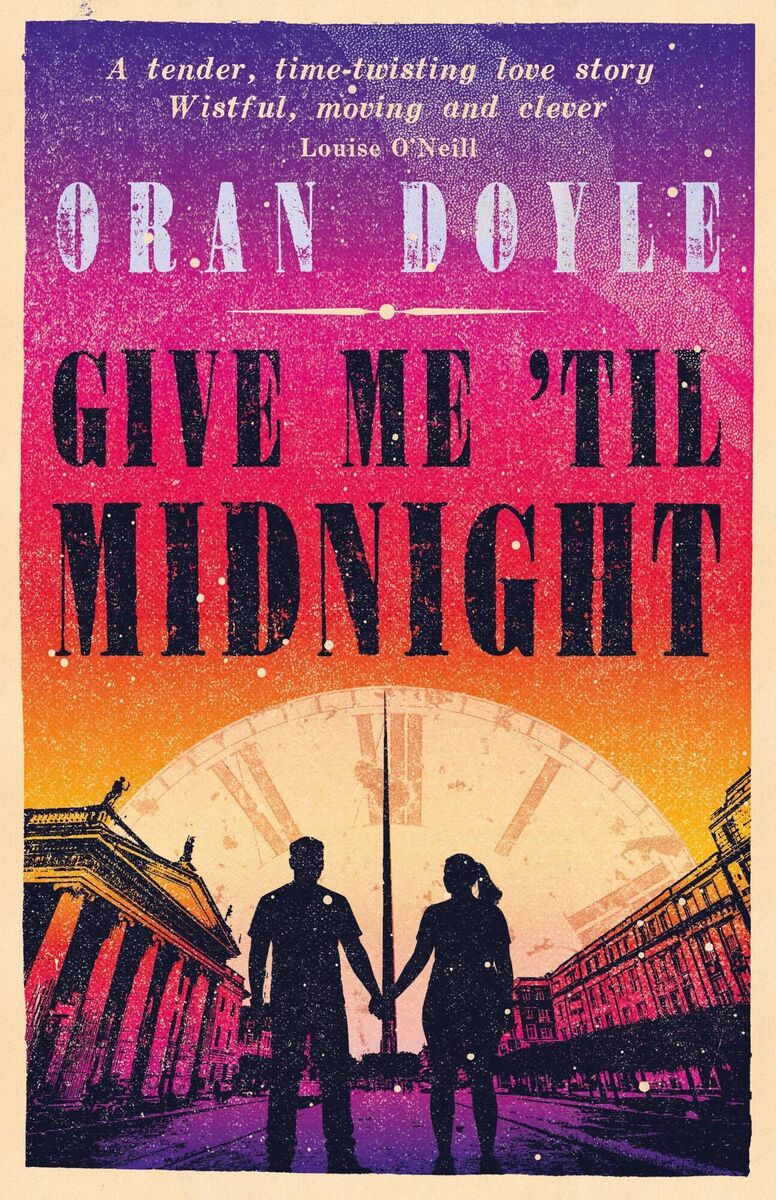
Liam doesn’t know why or how he has been doomed to relive the same 24 hours in May over and over, or how to free himself from the cycle, but Harmie determines to help Liam before midnight strikes and the same day begins again.
‘Loop goods’, as Liam calls them, are the expensive perks, the fine dining and entry to exclusive hotels he acquires by exploiting his knowledge of what will happen next, without fear of consequence.
Harmie, however, is uncomfortable at benefitting from these unearned trappings of wealth and the pair’s wanderings around Dublin illuminate the social divide between the two teenagers, as well as within the city itself.
Though Harmie becomes increasingly frustrated as all logical, scientific, and fanciful ways to alleviate Liam’s plight seem doomed to fail, it seems she might instead find the catalyst to liberate her own life from its loop of monotony.
Dublin-based Oran Doyle’s debut young adult novel presents an intriguing twist on the time-loop concept.
With no traumatic event as the trigger for Liam becoming stuck in a loop, no ancient magical curse or secret revealed, and therefore no discernible way out, there are shadows of the pandemic hanging over this story of a young life incarcerated because sometimes, shit just happens.
In the course of one remarkably expansive day, Doyle conjures cinematic views of the capital, a cameo role for Taylor Swift, the brilliantly believable character of Harmie, and a compelling love story between two seemingly incompatible characters, both lost in their own way.
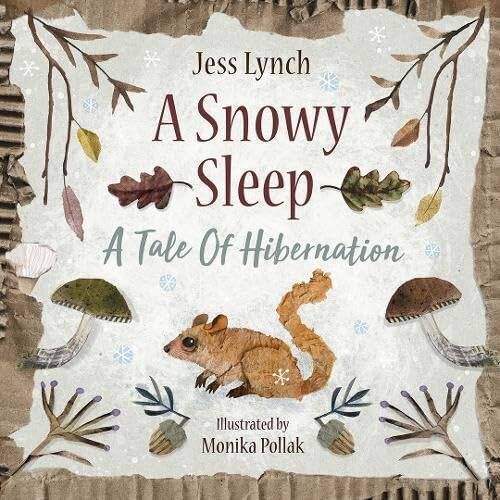
A Snowy Sleep: A Tale of Hibernation by Jess Lynch, illustrated by Monika Pollak (Natural World Publishing, €12)
It’s getting cold; there’s a chill in the air. As the days get shorter and autumn turns to winter, the woodland animals sense it’s time to find a place to settle down for the long sleep ahead.
A dormouse, red squirrel, hedgehog, a long-eared bat, and a brown-lipped snail search trees, leaves, logs, and caves for the best hibernation locations.
There’s much nesting and food-gathering to be done before the first snow falls and the creatures must curl up tight or huddle together for warmth until nature reawakens in spring.
Publishing in October, Cork primary school teacher Jess Lynch’s debut picture book tells a tale of hibernation in rhyming verse, beautifully complemented by the rich chestnut and copper hues of Monika Pollak’s artwork, cooling to sleet grey as the winter chill descends.
“I wanted to write a story about animals native to or living in Ireland,” said Jess, who includes a factual section on each creature’s hibernation patterns at the end of her book.
“We all grow up learning that bears hibernate, but not many of us know that snails hibernate and other animals at our doorstep.
“There’s something magical about nature for children and adults; it fills us with wonder.
“As a mam of three young boys, sleep is a foreign concept at times so the idea of hibernating for an entire winter is a magical one to me,” she added.
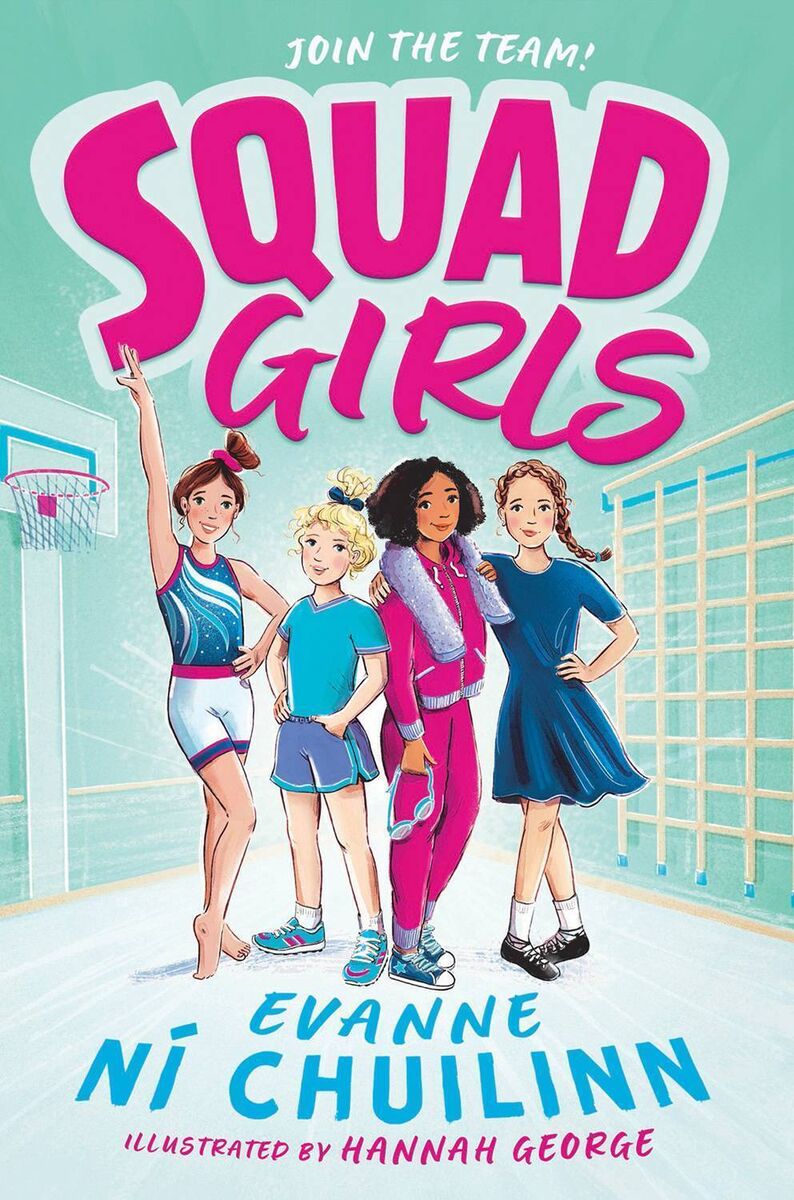
Squad Girls by Evanne Ní Chuilinn (Gill, €10.99)
Four sporty soul-mates, all with big dreams and each facing obstacles along the way.
Swimmer Tara, Irish dancer Ríona, sprinter Sam, and gymnast Penny have strong friendship bonds that stand them in good stead when the going gets tough.
They also share a common goal — winning the schools county football final in their last year before moving on to secondary education.
School commitments must be juggled and sacrifices made for sporting success, so Tara starts at 5.30am with an early swimming session, while Penny battles tiredness at the other end of the day to attend gymnastics training for three-and-a-half hours, five times a week.
Such dedication needs a release valve, and the friendship group that provides support for the girls’ sporting endeavours also serves as an outlet for pizza parties and dodgy karaoke singing.
The road to success is rarely easy, but while one squad member’s challenge is overcoming an in-growing toenail, for another a diagnosis of disability means a complete reappraisal of her sporting goals.
In a story inspired by her gymnast daughter Peigí, former sports broadcaster Evanne Ní Chuilinn, who presented the Paralympic Games for RTÉ, shines a light on the challenges faced by girls aiming for the top in individual sports.
If her characters are sometimes a little too worthy to be believable, it’s all in the name of positive representation — and is a welcome respite from mean-girl school stories.