
By the mid-1980s, anthology series had become a familiar fixture on television. Perhaps the most iconic of these early programs was The Twilight Zone, created by Rod Serling. Each week, Serling and his creative team presented standalone science fiction and horror tales that, while unrelated in plot, shared an intent to reflect on the social issues of their era, or simply to unsettle viewers. Naturally, this led to a new wave of anthology series focused mostly on horror and sci-fi, replacing the Westerns that had once dominated the format.
One such series was Steven Spielberg’s Amazing Stories. Airing from 1985 to 1987, Amazing Stories differed from the typical horror anthology shows. Instead, each episode played out as a short film crafted under Spielberg’s guidance, skillfully combining the fantasy, sci-fi, drama, and comedy genres. The series also attracted many of the decade’s biggest stars, who made guest appearances throughout its run. While it may not be the most famous show of the ’80s, Amazing Stories remains a hypnotic piece of TV history, full of hidden gems waiting for new viewers to rediscover.
Amazing Stories is a Criminally Underrated Sci-Fi Anthology Series

Despite only airing for two seasons, Amazing Stories released some of the scariest and most entertaining episodes of its time. As expected, each episode followed a completely different story, typically, however, with some form of horror or sci-fi element.
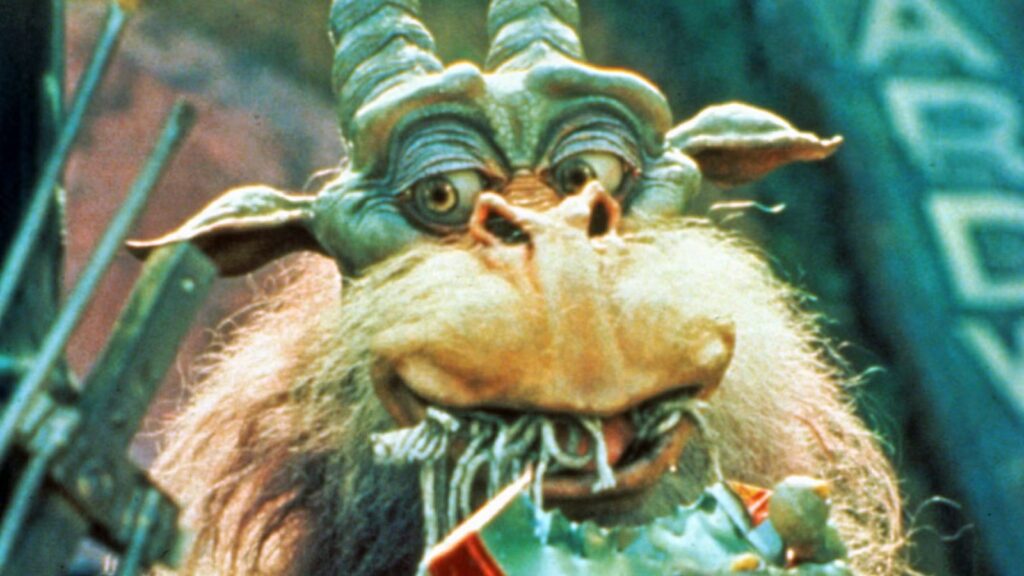
One of the best episodes was “Gather Ye Acorns,” which saw a young Mark Hamill as a high school graduate who rejects the traditional path of college and work. Instead, he chooses a life inspired by a childhood encounter with a mystical troll who told him to hold onto his childhood treasures, promising they’d one day prove valuable. As the years go by, he grows old, broke, and filled with regret.
Another great episode is “Ghost Train,” directed by Spielberg. A boy and his grandfather live above an abandoned railway. The grandfather caused a catastrophic train crash by falling asleep on the tracks, and now, 75 years later, he believes the ghost train is returning to collect him. With its emotional core, gentle pacing, and effects-driven climax, the episode carries all the hallmarks of Spielberg’s early TV work.
Other episodes include “Mirror, Mirror,” which follows a horror novelist tormented by a shadowy figure that appears only in mirrors, a haunting presence that slowly unravels his sanity. In “The Amazing Falsworth,” nightclub psychic Gregory Hines stumbles upon a serial killer during a live act, kicking off a tense mystery with a great twist.
“Go to the Head of the Class” delivers horror comedy at its best, as two teens use black magic to curse their teacher, only to face gruesome consequences when he returns from the grave. Then there’s “The Doll,” starring John Lithgow as a lonely man who forms an unlikely bond with a doll, a strange but touching story that ends on a surprisingly heartfelt note.
“Dorothy and Ben” tells the story of a man who wakes from a decades-long coma only to find himself psychically connected to a comatose young girl, leading to one of the show’s most emotional and memorable episodes.
Amazing Stories Featured Several Big Names

By the mid-80s, Spielberg was already considered one of Hollywood’s leading directors. With films such as the creature-feature masterpiece Jaws, Close Encounters of the Third Kind, Raiders of the Lost Ark, and E.T. the Extra-Terrestrial already under his belt, Spielberg’s name was becoming synonymous with blockbuster success.
Virtually everyone in the industry wanted to collaborate with him. Amidst producing hits like Indiana Jones and the Temple of Doom and Empire of the Sun, Spielberg also turned his attention to television, intrigued by the possibilities of telling stories within a concise 24-to-46-minute format. Crucially, his involvement meant the series could attract talent that few other TV projects could.
Spielberg not only produced the show but also directed two episodes. The series also benefited from the contributions of some of the ’80s’ most respected genre directors, including Robert Zemeckis, Joe Dante, Nick Castle, and Tobe Hooper. Future industry titans like Brad Bird and Danny DeVito also got a chance in the director’s chair, and Clint Eastwood and Martin Scorsese even directed a few episodes.
Amazing Stories naturally became a magnet for actors across the industry. Each episode featured at least one notable performance, often from actors playing central roles rather than fleeting cameos. The show showcased the talents of Kevin Costner, Kiefer Sutherland, Forest Whitaker, Charlie Sheen, Mark Hamill, Harvey Keitel, and “Weird Al” Yankovic, among many others.
Why Amazing Stories Was Canceled

As many fans of the show would likely agree, Amazing Stories is best summed up as wildly uneven. When it worked, it really worked. But when it missed the mark, it did so in spectacular fashion. Despite serious backing from some of the biggest names in the industry, many episodes were rushed, out of place, or, simply put, just not that great.
Today, the show is best remembered as a nostalgic piece of TV history, relived by fans with fond memories of gathering around the TV set every week. However, in the show’s defense, much of its failure came from NBC’s treatment of the show, not so much the minds behind it. Reportedly, it kicked off when Steven Spielberg casually mentioned to MCA’s Sid Sheinberg that he wanted to try a TV anthology.
Sheinberg wasted no time; he contacted NBC, and soon after Spielberg had a greenlit series. NBC, for its part, took a hands-off approach, assuming they could buy their way into prestige TV by throwing money at a big-name creator and then stepping aside. That gamble didn’t pay off.
NBC committed to two full seasons (44 episodes) without a pilot, each one costing $750,000 (more than they were spending on the wildly popular Cosby Show), with Universal TV covering another $250,000 per episode in budget overflow. In return for the hefty backing and freedom, Spielberg took writing credit on 18 episodes, reportedly pulling out a trove of old ideas he’d never used elsewhere.
However, not all of those ideas held up, and the series eventually lost its time slot to Murder, She Wrote. NBC limped through the second season out of contractual obligation, moving the show to a less competitive night and reportedly sending execs out to apologize in interviews. But by then, the damage was done. When it was canceled in 1987, no one batted an eye.
Despite this, Amazing Stories has some strong episodes that are most definitely worth the watch. It’s also worth noting that, while the show wasn’t all that popular in 1985, fans have since come to love bizarre old stories that were once deemed unconventional and silly. The Rocky Horror Picture Show was a critical and box office failure, now considered a cult classic.
Similarly, movies like Krull have since found a strong fan base, particularly among those who love classic 80s cheese. In 2020, Apple TV revived Amazing Stories for one season. Featuring Robert Foster and Dylan O’Brien, the show was a critical failure that lasted only five episodes.
Typical of anthologies, not every episode will necessarily please everyone, but there are plenty of hidden gems among its 44 episodes that are sure to at least resonate with nostalgic viewers looking for something different. And if nothing else, watching a project that functioned as an anything-goes playground for Spielberg’s filmmaker circle is a fun and worthwhile ride.