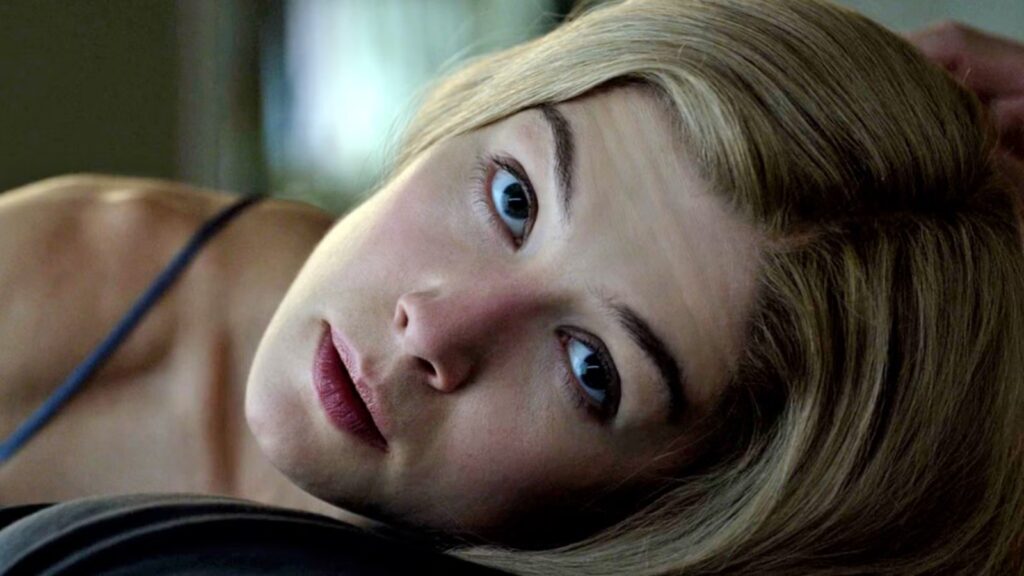

I’ll admit I picked up The Girl on the Train expecting a cheap Gone Girl knockoff, and it took maybe thirty pages to prove me completely wrong. Crime fiction gets that reputation a lot, one big hit comes out and suddenly every shelf is stacked with copies chasing the same trick. You can usually tell within a chapter or two which books are just cashing in and which ones actually have something to say.
These six actually built something of their own. You can see the level of research, details, and actual craft behind the twists, not just a shocking reveal slapped on at the end to sell copies. A couple of these came out years before the trend even existed, so calling them copycats wouldn’t even make sense anyway.
6
‘The Dry’ — Jane Harper

Aaron Falk, a federal investigator, comes back to his drought-choked Australian hometown for a friend’s funeral, one that looks like a murder-suicide on the surface but doesn’t sit right with him. Being back also drags up an old unsolved case from his own teenage years, a girl’s death he was once suspected of causing himself.
Jane Harper writes of the drought like a second suspect, cracked earth, dead livestock, a town slowly turning on itself from the heat and the debt. This was her debut novel, and it won multiple awards before getting adapted into a film with Eric Bana a few years later.
5
‘The Long Drop’ — Denise Mina

This one’s based on a real Scottish serial killer named Peter Manuel, and it splits between a boozy night he spends drinking with a man wrongly accused of murders Manuel actually committed, and the courtroom trial that eventually catches up to him. Denise Mina dug through actual 1950s trial transcripts while writing it, and that research shows how realistic the courtroom scenes feel.
The nighttime drinking scenes carry most of the dread, where two men are circling each other, but only one of them is aware which one of them is the killer. It’s noir in the classic sense, but built entirely from real events instead of an invented plot. This is why the book hooks you because of its setting development.
4
‘The Power of the Dog’ — Don Winslow

Don Winslow spent years researching this book, and it shows, the story covers decades of the actual war on drugs, real historical events like CIA involvement and the Iran-Contra scandal woven directly into the fiction. Art Keller, a DEA agent, in his entire career, he chases one Mexican cartel leader, and that obsession slowly costs him nearly everything else in his life.
It’s the first book in a trilogy, and it reads more like investigative journalism wearing a novel’s structure than a typical thriller. The violence in it is relentless and morally messy, and it refuses to hand out clean heroes or villains to the readers on either side of the actual drug war.
3
‘The Secret Place’ — Tana French

A photo shows up on a noticeboard at an Irish girls’ boarding school exactly one year after a boy’s unsolved murder, which claims that someone at the school knows who did it. Tana French tells the story across two timelines at once, the actual investigation happening in real time, and the year leading up to the murder among a tight clique of teenage girls.
That teenage friendship gets written with intensity that borders on something almost supernatural, the kind of closeness that feels bigger than life at that specific age. French shows you the girls’ inner world as seriously as the actual murder investigation, which is part of what makes this entry so different from the rest of her Dublin Murder Squad series.
2
‘Gone Girl’ — Gillian Flynn

Amy Dunne grew up as the real-life inspiration for “Amazing Amy,” a children’s book series her own parents wrote and profited from, an idealized version of her that never quite matched who she actually was. Gillian Flynn worked for years as a TV critic at Entertainment Weekly before writing this, and that media background shows up clearly in how sharply the book satirizes the news cycle around Amy’s disappearance.
Flynn wrote the screenplay for the film adaptation herself, an unusual move for an author, and it let her control exactly how the book’s twist got translated to screen. The anniversary scavenger hunt Amy leaves behind, clue after clue building toward her own elaborate frame job, is some of the most controlled plotting you might have seen in any thriller.
1
‘The Girl on the Train’ — Paula Hawkins

Rachel, an alcoholic narrator whose drinking leaves real gaps in her own memory, watches a couple from her train window every morning and builds an entire fantasy life around them without ever actually meeting them. When the woman she’s been watching disappears, Rachel gets pulled into the investigation despite having no reliable memory of what she actually saw the night it happened.
Paula Hawkins splits the narration between three different women, where none of them fully trust their own version of events. This keeps the reader guessing right alongside them. The book got compared constantly to Gone Girl when it came out, similar marketing wave, and similar unreliable-narrator structure. But Rachel’s specific unreliability, blackout drinking rather than deliberate lying, makes for a different kind of uncertainty.