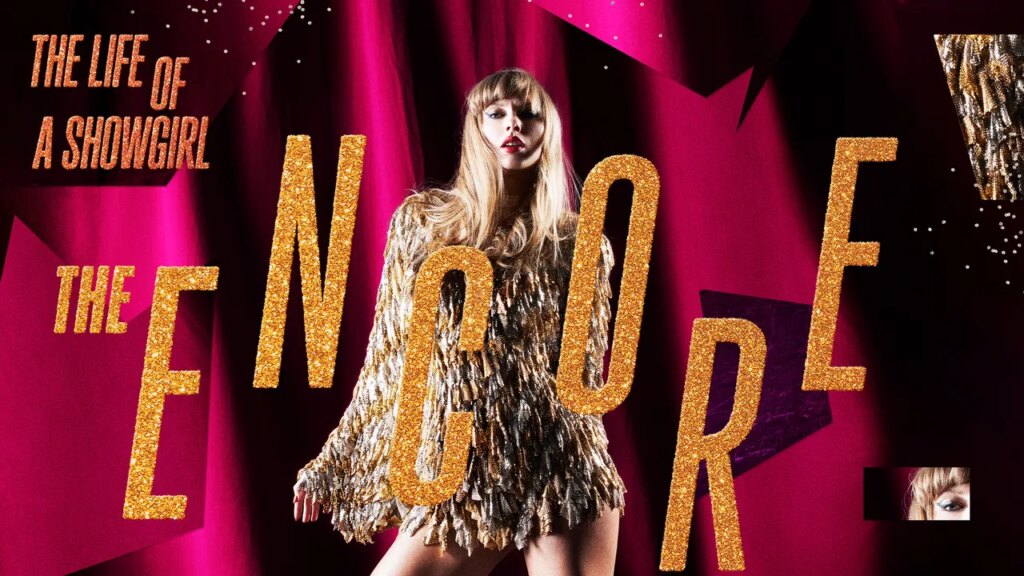

Taylor Swift will always have one of the greatest songwriting catalogs of all time. Nobody can take that away from her. But I listen to the first verse on “Patient Zero,” part of a four-song repack of last year’s The Life of a Showgirl called The Encore, and think, earnestly, openly: What the fuck? It is hard to draw a line between this dog’s breakfast of a song, about commiserating with the ex of an ex about his toxic patterns of behavior, and a track like, say, “Dear John,” which was released 16 years earlier and is about 16 times more clarified and more brutal in its evisceration of a duplicitous playboy. The concept of “economy,” in Swift’s world, seems to have been totally supplanted by “economies of scale.”
It is hard to write about Taylor Swift in 2026 because a lot of critique comes off bitter and condescending. She is, after all, one of the biggest musicians the world has ever seen, and she has so successfully inoculated herself from substantive criticism: Those questioning her marketing and release strategies simply don’t want to see a woman win, and the rest of the haters are probably just jealous. Mostly, it is hard to write about Taylor Swift in 2026 because her music has been almost entirely drained of depth and meaning. It has been a long time since she released a song like “The Archer,” which hummed with raw, nervous energy like an exposed wire, or “Call It What You Want,” a totally cheesy love song that is nonetheless totally believable in its hazy, lovestruck warmth.
No score yet, be the first to add.
The Encore has its own version of “Call It What You Want.” It’s called “Cleveland!”, and it may represent the absolute nadir of Swift’s catalog: More cloying than “ME!,” more smug than “CANCELLED!,” more cliched than “Bad Blood.” It’s a love song about Swift’s new husband Travis Kelce that is wholly fixated on Swift’s own antagonists, set to jaunty late-period Belles-meets-5-Minute Crafts production. The latent communal spirit of the “woah-oh-ohs” in the song’s chorus is snuffed out by the ugly, defensive solipsism of the lyrics, which celebrate the fact that Kelce “must not have read that/Scathing take ’bout how I’m fake.” It’s telling how many strawman critiques Swift is able to cycle through without reaching the critique I most often see from her own fans: that she has let the quality of her songwriting slide in favor of commercial domination.
I like “Call It What You Want” because it distills the wide-eyed, first-days-of-springtime feel of Reputation into one song. On that record, new romance was exciting not because it proved Swift’s haters wrong, but because it revealed that public sentiment did not matter as much as something more personal and real. The best song on The Encore, “Pink Clouding,” finds itself a stone’s throw away from greatness, although it is bogged down by the kind of lazy choices that I can’t help but feel some past version of Swift might scoff at. Cramming the names of a few different shades of pink into one song may be fun for the writer, but it does not create depth for the listener; unlike on “Red,” the shades mentioned have no real significance aside from their connection to pink clouding, an addiction recovery concept that I’m not certain Swift truly understands. I still kind of like the song, maybe because for the first time in a long time it feels like there is a sense of ambiguity in Swift’s writing; maybe because the bridge has a shivery, stop-start cadence that feels tight and precise, rather than sloppy and overwritten; maybe because it is better than the other songs it is forced to cohabitate with.