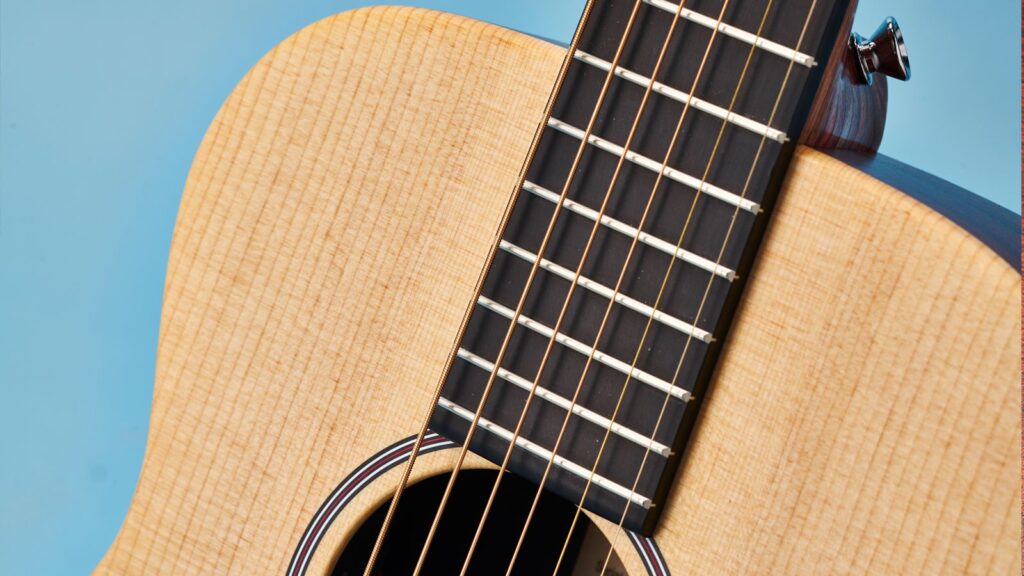

The fretboard of an acoustic guitar can be a lovely place to live – inspiring, rewarding, nice view et cetera.
However, when it comes to the number of frets that should ideally sit between the nut and the body join, there remains plenty of room for debate. In the following numerical stream of consciousness I’ll shed light on the two most popular choices and one increasingly prominent outlier.
From its classical roots to the first flat-top prototypes, the 12-fret neck-to-body join has been the original choice for an acoustic guitar. More traditionally entrenched players to this day continue to see any diversion as an evolutionary dead end. There are evidently pros and cons involved, of course. Let’s look at the good stuff first.
Latest Videos FromGuitar World
It is undeniable that the sound of a 12-fret instrument is one of the primary advantages. The architecture of these guitars involves a neck that joins the body at a nodal point and a bridge location on or near to the centre of the guitar’s lower bout. This lends a voice that players often describe as rich, sophisticated and complex.
You can certainly expect a more diffuse response that pushes the soundboard’s monopole and cross dipole in a different way from a 14-fret instrument, especially when playing fingerstyle. Some players – myself included – also enjoy the visual logic of each string meeting the body join at the octave as you sight down the neck, very helpful.
In the cons column we have to address the fact that many of us make extensive use of at least one capo. On a non-cutaway 12-fret guitar it doesn’t take long before things start getting cramped.
We should also add the fact that the majority of 12-fret instruments are built in the vintage style and that inevitably means a chunky old neck and the challenge of changing steel strings on a slotted headstock without bleeding out on the floor.

While cutaway 12-fret guitars do exist, they tend to be the preserve of bespoke acoustic luthiers such as Marc Beneteau and Michael Greenfield.
Some such as Casimi Guitars of South Africa go so far as to make 12-fret instruments almost exclusively (bar the 13-fret C5 Baritone in this case). As ever, the sublime comes at a price.
Numbers Game
Now let’s address the 14-fret guitar. Martin’s short-lived relationship with the banjo superstar Perry Bechtel is often credited with the introduction of the 14-fret guitar when he approached the company in 1929, but Gibson’s 14-fret Hawaiian models were released around the same time, following on from the success of its L-5 archtop, launched in 1923.
Ironically, Bechtel himself defected to an L-5 within a couple of years of Martin’s first 14-fret models leaving the production line. The perfidy of that banjo player may never be forgotten, but he did play a part in some wonderful guitars.

Let’s face it, the vast majority of flat-top steel-string guitars in the world today feature a 14-fret neck-to-body join. There are some very good reasons for this.
The 14-fret design addresses most of the 12-fret equivalent’s foibles, giving unfettered access to loads of notes (including a far more comfortable octave E blues scale), a solid headstock, a slimmer neck, and a voice that loves being driven with a pick and cutting through a band mix.
While the 14-fret dreadnought dominates in the acoustic guitar domain, there is now increasing love for Orchestra, Grand Auditorium, Grand Concert, Jumbo and Small Jumbo instruments that go up to 11 – plus three. If you’re reading this then the chances are that you own and love at least one similar instrument.

Now it’s time for our wildcard: the 13-fret acoustic guitar. Setting aside any latent triskaidekaphobia, we need to look back to the very first acoustic steel-string guitar signature model – the Gibson Nick Lucas Special – which in between its 12- and 14-fret iterations briefly saw the sun as a 13-fret model. But why?
Logic dictates that a 13-fret guitar should occupy a happy medium – a fine balance between the warm, intimate tones of a 12-fret and the muscular articulation of the 14-fret. So what went wrong? Well, things sometimes just don’t work out, and while the 13-fret Nick Lucas did not last as a production model, original examples are now highly prized by players and collectors alike. Bob Dylan had one, which helps.
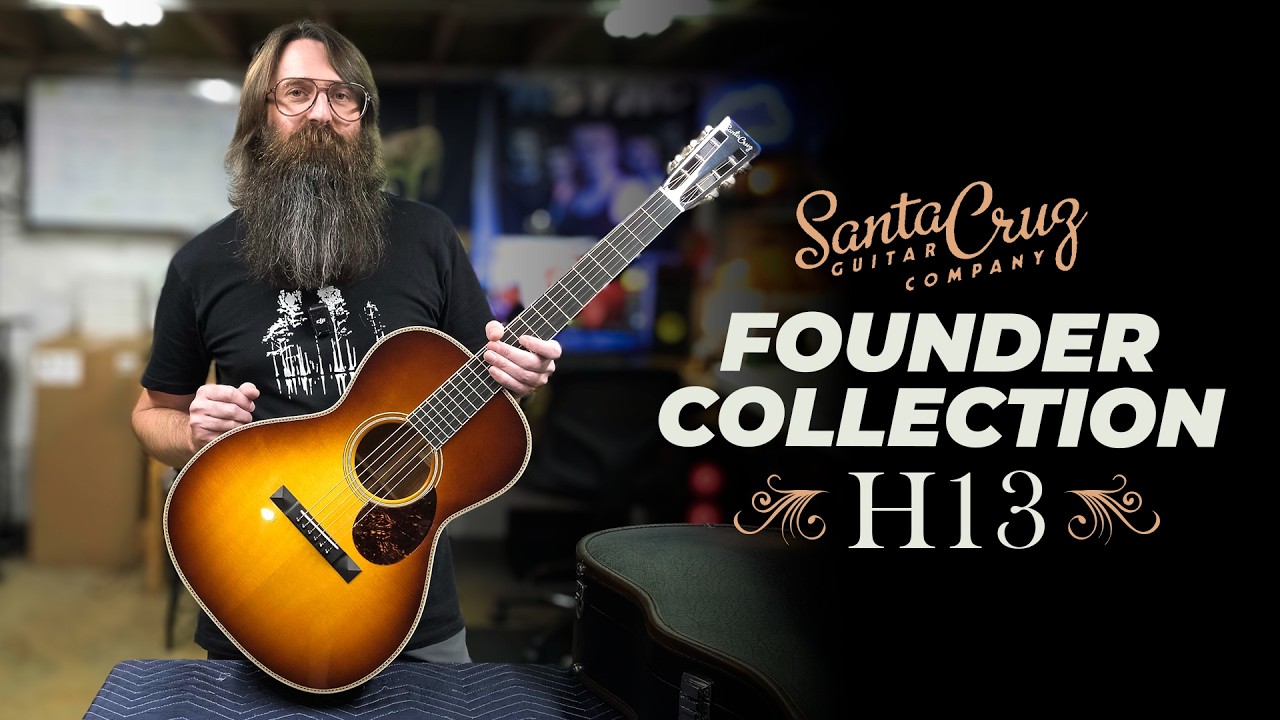
Credit for the current resurgence of interest in 13-fret guitars must go to the late Paul Hostetter who collaborated with Richard Hoover of the Santa Cruz Guitar Company to produce a deep-body 13-fret version of the Nick Lucas design under the H13 model. This is, it has to be said, a superb guitar.
The past few years have seen adoption of the 13-fret instruments by several prominent players – in fact, it seems like all the cool kids have got one. Martin Simpson and Louis Campbell can both be seen toting 13-fret Fylde instruments, and bell harmonic maestro Alan Gogoll has been melting faces around the world with a 13-fret signature model by Swedish luthier Ted Åstrand.
This reinvigoration of the 13-fret instrument’s popularity has led to some luthiers making standard models with this design. Regardez s’il vous plaît the elegant Blind Guitars B-24 model by French luthier Virgile Pilon (pictured above) we featured recently as one such example. That whole instrument was designed as a 13-fret guitar and Virgile is sticking to his guns – there are no plans for any other iteration.
In practice, what this all means for us – as lovers of the guitar and its music – is that once again we stand to benefit in this golden age of acoustic lutherie.
Choice is a beautiful thing, especially when it is guided by in-depth collaborations between guitar makers and the musicians who play their work. No matter what configuration you choose, the options for ergonomic joy, aesthetic depth of meaning and sonic splendour are more varied than ever before. Give thanks.
Three to get ready: From 12 to 14 in three easy steps
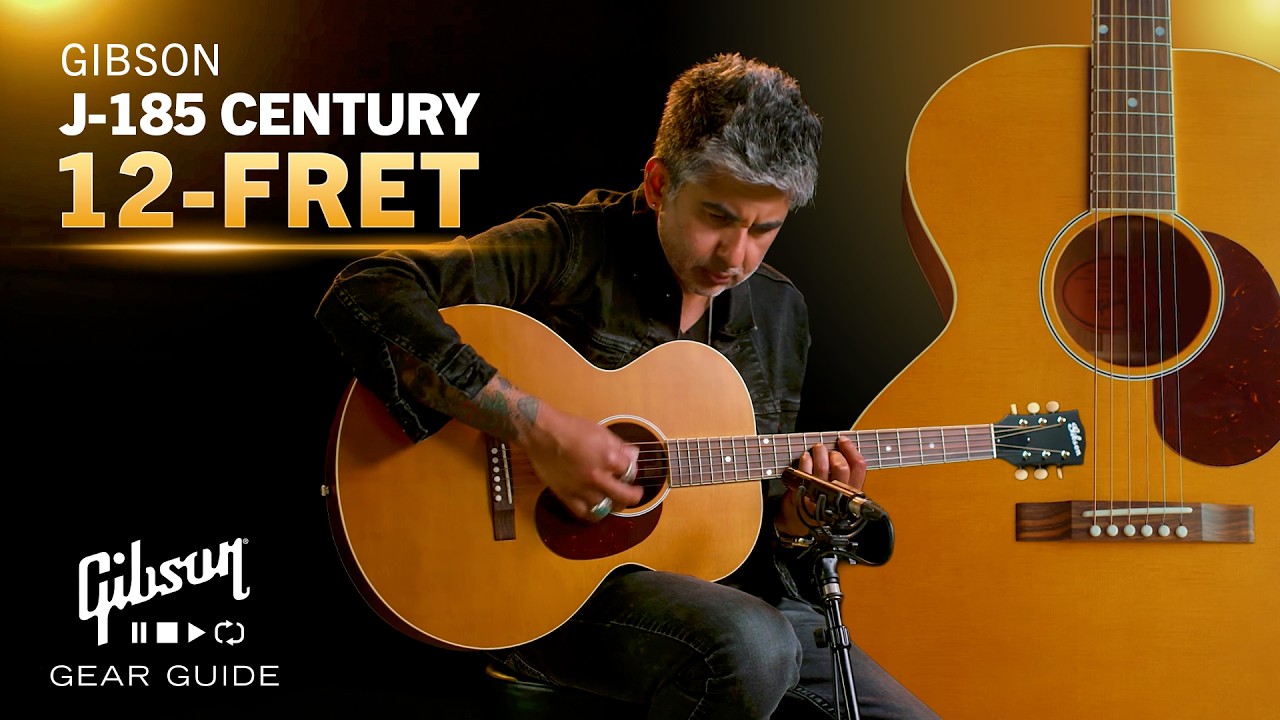
If you’re into the 12-fret idea then Gibson’s new Century Collection should very definitely be on your radar. As 2026 brings with it the centennial of the brand’s flat-top acoustics, Gibson has released 12-fret versions of the venerable J-185 small jumbo, small-body L-00 and slope-shoulder dreadnought J-45 (pictured) models. That’s a lot of tone to go for. Which to choose? That’s up to you. Maybe all three!
Åstrand Guitars – $21,000

While still rare and wonderful, 13-fret guitars are indeed out there. Among the finest I’ve heard recently was Ted Åstrand’s new 00 Signature Goldfish model for Alan Gogoll (both pictured above).
I had the pleasure of hearing this instrument in action while producing Alan’s album Echidna’s Parade at Hansa Studios in Berlin when it was only days old. A beautiful sound and the ideal starting point for a bespoke creation.
Greenfield Guitars G1 From $30,000

Looking for one guitar to rule them all with a choice of neck joins? Michael Greenfield’s G1 model is now available in both 12- and 14-fret configurations with no difference in base price.
Players from Keith Richards and Andy McKee to Tony McManus and Paul Stanley are devotees of this S-Tier Canadian luthier. There’s a waiting list, of course, but that could give you time to save up.