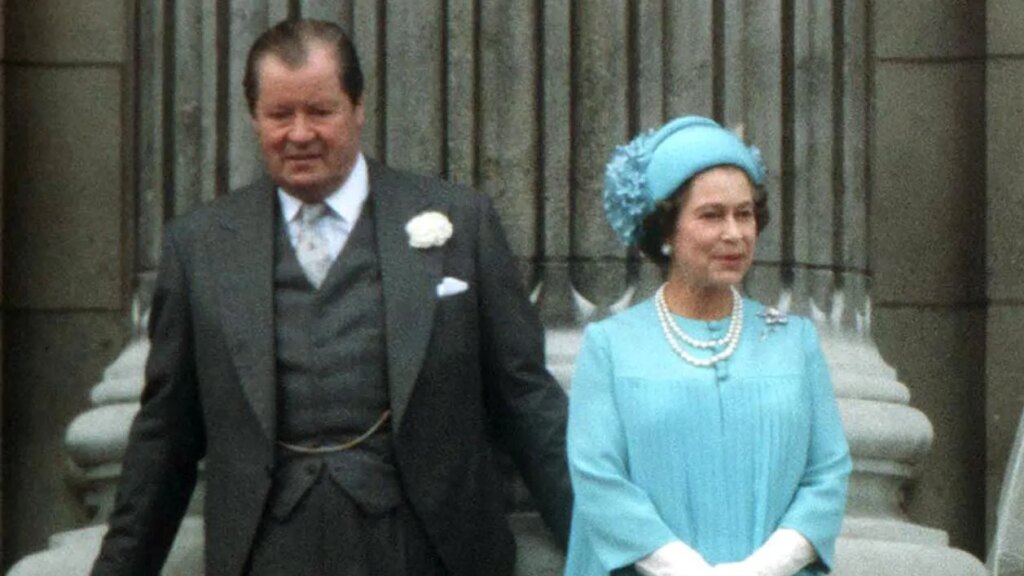

Before Prince Philip became Queen Elizabeth II’s husband, the history of the British royal family was on the verge of taking a very different turn. Or at least that’s what people in the Spencer family have apparently been saying for years. The claim was made this week by Charles Spencer himself, the ninth Earl Spencer, in Swan Song, his controversial memoir about his sister Princess Diana. In it he discusses an alleged relationship that his father, John Spencer, had in his youth with the woman who would one day become his daughter’s mother-in-law.
John Spencer, at the time heir to the Spencer earldom and styled as Viscount Althorp, was two years older than Queen Elizabeth II and descended from a long line of ancestors who served the British crown. In 1950 he also joined that list as a groom to George VI, and, following the king’s death, to Queen Elizabeth II, with whom, Princess Diana’s brother claims, his closeness led to an affair, thwarted by one of the most influential figures at the British court, Lord Louis Mountbatten.
“He summoned my father and told him that any ambitions he had for securing her affections were out of the question,” Charles Spencer recounts. “Perhaps Mountbatten was clearing the way for his nephew, Prince Philip.” (Philip’s mother was Mountbatten’s sister.) “Had my father and the Queen’s budding romance progressed exponentially to marriage, Diana (and Prince Charles) would never have been born.”
This account, however, clashes with newspaper archives and contemporary accounts. As British royalty expert Robert Hardman recalled in the Daily Mail, when John Spencer entered the service of Elizabeth II, the monarch had already been married to Prince Philip for several years and was the mother of their two eldest children, Prince Charles and Princess Anne. Even if Earl Spencer is referring to the years before that palace position, accounts from the time—such as those found in the diaries of Alathea Fitzalan Howard (a friend of the then Princess Elizabeth)—confirm that Prince Philip was the only love Elizabeth had since her adolescence. Hardman also explains that references to Princess Diana’s father in those diaries, by contrast, are isolated encounters, which places Charles Spencer’s account in Swan Song closer to “family folklore” than to biographical accuracy.
Whether or not that teenage romance was true, it seems certain that Lord Mountbatten would have put a stop to it. His plan to favor his nephew Philip began in the summer of 1939, when he ensured that the 18-year-old cadet would accompany a 13-year-old Princess Elizabeth on a visit to the Britannia Royal Naval College in Dartmouth. His efforts, however, encountered their greatest obstacle after World War II due to the suspicions aroused by Philip’s family’s uncomfortable ties to the Nazis. To counter that opposition, Mountbatten had to persuade a hesitant King George VI and a Queen Mother, who disparagingly referred to Philip as “the Hun,” as well as the distrustful general public. In January 1947, just 10 months before the royal wedding, a poll revealed that 40% of the British public opposed the marriage. Faced with this hostile climate, Lord Mountbatten carefully shaped Philip’s image, presenting him as a brave naval officer while also overseeing his conversion from Orthodox Catholicism to Anglicanism and the change of his German surname, Battenberg, to the English version, Mountbatten.