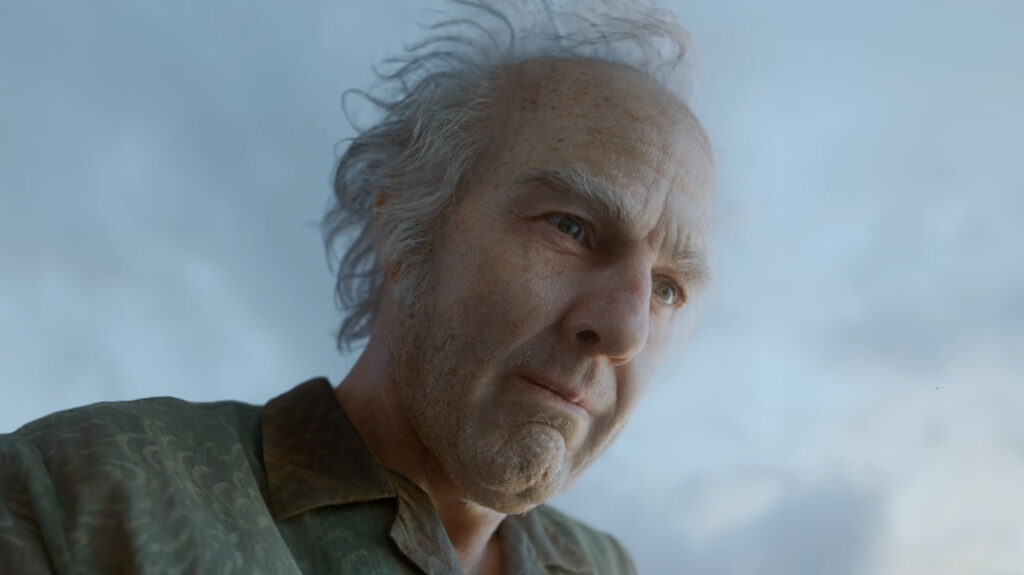

Tom Cruise has created one screen persona for himself that towers above all others throughout his 40+ year career. This persona is, for lack of a better term, a savior. Whether it’s Pete “Maverick” Mitchell from the “Top Gun” movies or Ethan Hunt from the “Mission: Impossible” series, Cruise’s presence in films usually involves him saving the world in one form or another. The initial trailers for Alejandro G. Iñárritu’s latest film, “Digger,” appeared to showcase Cruise in a role he’d largely never played before. He’s not just a villain, but a larger-than-life oil tycoon whose business practices send the world into a climate change calamity. These early marketing materials certainly demonstrated a dark, satirical tone to the movie that’s reminiscent of Stanley Kubrick’s “Dr. Strangelove.” Yet they also benefited from Cruise’s savior persona: could Digger “dig us out again” from the crisis, as John Goodman’s President Compson said?
There are several twists and reveals to be discovered in “Digger,” and one of them relates to that very question. To wit: No, Digger will not be getting humanity out of the crisis he caused, and in fact, he vociferously believes that nobody wants him to actually do that. Digger Rockwell becomes a dark mirror for Cruise’s savior persona; that’s something which Iñárritu revels in, as it’s a key element in the film’s satire. Yet the flip side of the film’s coin and its movie star is that Cruise is actually playing a dual role, and his other character is, in some small yet meaningful way, genuinely trying to help the world, if not save it. “Digger” is a film of many provocations, allegories, and layers, all of which work together to inspire the audience to both think and act upon the questions it raises.
What is really going on in Digger?
Spoilers for “Digger” follow.
“Digger” begins as Digger Rockwell (Tom Cruise) discovers that one of his oil drilling ventures in Greenland has caused a crack in the ice that is rapidly growing. Digger is hardly concerned and is much more invested in the health of his clearly dying pet cat, Maggie. Alas, the drilling soon causes an ice shelf 400 miles wide to split off of a glacier and begin careening toward Europe. Digger then attends a summit filled with the biggest movers and shakers in America, including President Compson (John Goodman). Digger’s own scientific advisor, Ganesh (Riz Ahmed), who hates him and everything he stands for, informs the group that if the shelf is not stopped, it will destroy large sections of Europe. Compson pulls Digger aside to privately inform him of his terminal colon cancer, inferring that he doesn’t care much about the fate of the world since he’s about to leave it.
At that moment, Alejandro G. Iñárritu pulls the rug out from under the audience, revealing that everything we’ve seen thus far has been part of a dramatized stage play about these events called “Fossil Fools.” Cruise is playing Digger as an actor named Curtis Markson, who openly struggles with his broad, makeup-enhanced performance of the real-life cultural villain. During the final rehearsal of these scenes, Curtis argues with the hip young director of the play, Hannah (Sophie Wilde), while backstage he frets over the whereabouts of his adult daughter, for it seems that air travel has become especially precarious. Thus, “Digger” is a dual drama about the events that shaped this dystopian near-future as well as the artists who’re trying to survive in and make sense of it.
What happens at the end of Digger?
The rest of “Digger” alternates between further scenes from “Fossil Fools” and the growing drama backstage. In the play, Digger doubles and triples down on his behavior, gleefully admitting the truth behind his oil drilling fiasco as well as revealing the complicity of other major world powers in irresponsible and illegal practices. His philosophy is that humanity, at this point, is too far gone to reverse climate change or wean off its reliance on fossil fuels, so we all might as well embrace the darkness to come. Meanwhile, in between the “Fossil Fools” scenes, Curtis frantically tries to do something about his lost daughter. That’s when Kenny (Jesse Plemons), the nephew of the real Digger, offers his company’s services to find her. Kenny is also the primary financier behind this production of “Fossil Fools,” and when one scene is derailed during rehearsal by Curtis worrying that it’s too cartoonish to matter, Kenny reassures him and the rest of the cast and crew that the play is not only important, but more accurate than one would assume.
Curtis and company put on a performance of “Fossil Fools” for a rapt and appreciative audience, and the play ends with Digger taking a swan dive off the oil rig he’d been forced to flee to in the wake of the ice shelf disaster. After the curtain comes down, Curtis reunites with his wife and daughter, and thanks Kenny profusely for finding the latter. Just then, an alarm goes off in the theater indicating that some safety metric has risen to danger levels, causing everyone to put on gas masks and file out of the building into a post-apocalyptic New York City.
Digger is a dark satire about climate change that either believes in satire or condemns it
On the one hand, you can argue that “Digger” is emphatically not a movie where Tom Cruise saves the world, but rather the exact opposite. The character of Digger is Alejandro G. Iñárritu’s stand-in for real-life political figures from George W. Bush to Donald Trump, and many others in between. He’s a deliberately theatrical caricature of the corporate billionaire in a position of power, someone for whom amassing wealth and influence is the entire be-all and end-all of their existence, and any consequences that result from their selfishness become secondary. While Iñárritu and his co-writers indulge in a large amount of ambiguity within the movie and blurring of the lines between “fact” and fiction, there’s little doubt about how it happened. As the fictional president intones, “Digger here got us into this mess.”
Where the film’s ambiguity becomes an issue is in the quality of the play “Fossil Fools” itself. Curtis is openly critical of the play and his portrayal of Digger, mostly due to how he feels that the tone is too broad, too caricatured, and so on. It’s not clear if Curtis feels a duty to portray Digger more honestly as a real person, or if he believes that the tone the play has is too frivolous toward such a weighty and uncomfortable topic. To put it in big-picture terms: is Iñárritu criticizing recent political satires like Adam McKay’s “Don’t Look Up,” or is he chiding the audience for rejecting that film’s message because its existence as a satire is subpar? Iñárritu appears to be invoking theatrical provocateurs such as Bertolt Brecht and Eugène Ionesco with the movie, given how he seems to support both observations.
Digger is also an impassioned ode to the power and value of art in dark times
Ultimately, “Digger” points a ton of fingers at just about everything and everyone it can, which feels proper for a satire about such a wide-reaching variety of topics. It’s a conversation starter, not a closer, providing an understandable point of view for the billionaires and corrupt politicians as well as depicting them as odious. Where “Digger” is less equivocal is in its subtext regarding the power and value of art. In a way, this is Alejandro G. Iñárritu defending his film within the movie itself, positing that the provocation and ire-raising of the film is its point. He wants us to get as angry as he is about these issues that are slowly killing our world and ourselves, and doesn’t care if he himself makes us angry in the process. In other words, the mere existence of “Digger” is the point, rather than the usual goals of most works of art.
Yet taken another way, the commentary on art and artists within “Digger” is exceptionally humanistic and positive. It’s in this interpretation where one could argue that Tom Cruise’s character does save the world, if only by intent and extension. Iñárritu appears to argue for art’s place amongst a daily deluge of increasingly dire incidents. The film says that believing art to be solely frivolous is inaccurate, just as it’s saying that art should take advantage of its freedom of dramatization; it’s not journalism, in other words. “Digger” believes in the way art can both provide a salve for bad times as well as light a fire in people to do better. Truth is, the world may never be saved, but keeping hope alive that it could be is what truly matters.