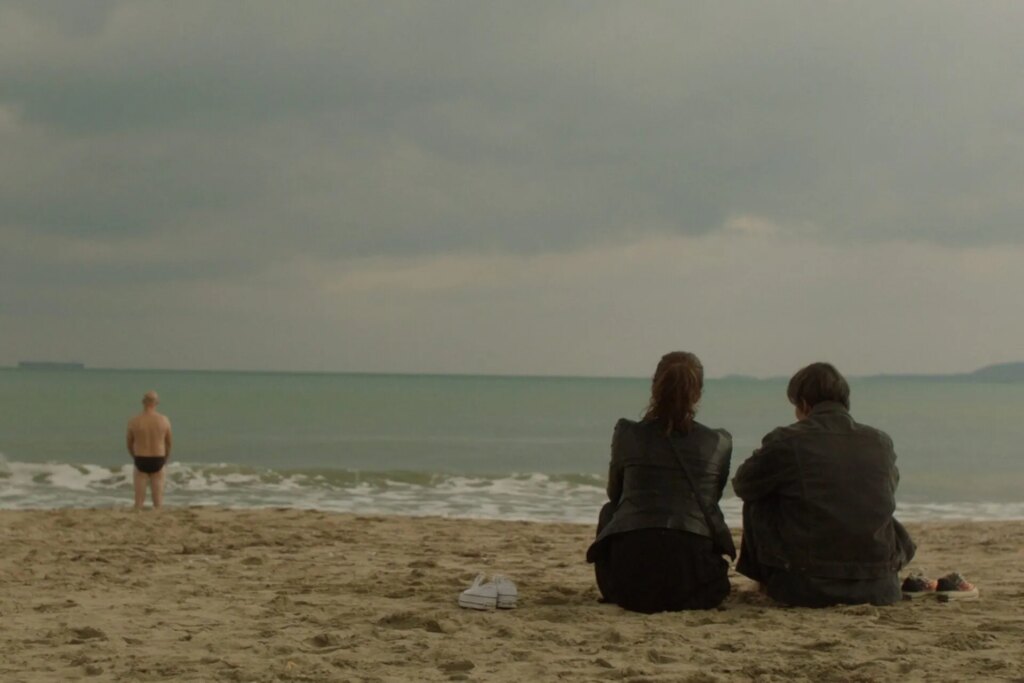

Set predominantly in the titular Beirut, Shadows of Beirut follows Lana (Tala Calil), a young woman who decides to return to Beirut after learning that her estranged father is dying. Lana has not returned to Lebanon in 25 years and is struggling to find the courage to face her father in the hospital after so many years. This will affect her personal relationships with the people she loves, including Ben (Michael E. Rodgers), her boyfriend who is waiting for her to come back to England.
“Beirut is a small village,” says one of the characters at the beginning of the film: he is referring to the way people know everything about one another, but as the movie go on, this seems to become the audience’s new reality. As the protagonist is thrown back into the reality she abandoned 25 years ago, the viewers learn how to navigate the streets of Beirut that were once familiar to her and the buildings that have been touched by wars and economic collapse in the past few years. What was once familiar to Lana is now unknown and yet she can find her way in the city easily and fit it with its population. Shadows of Beirut is as much about Lana and her relationship with the city and it is about Beirut itself which is heavily featured in the cinematography with many beautiful shots of the city that leave the audience longing for a version of it that doesn’t exist anymore.
The use of language is also fascinating in Shadows of Beirut. Lana mainly speaks English, even when she travels back to the country where she moves in. Even if she can speak Arabic, as the audience soon learns during the movie, Lana often goes out of her way not to do and only uses Arabic sporadically and exclusively when absolutely necessary. This may feel jarring at first, but her choice of language reflects her complicated relationship with her estranged father and her homeland, both of which she struggles to accept and acknowledge.
The film jumps between past and present in a very successful way. Shadows of Beirut also uses flashbacks in a really clever way. These are included in the narrative sparsely but during key moments to reveal Lana’s backstory and her complicated relationship with her father, and with the city of Beirut itself to a certain extent as well. The movie never explains too much and often lets the flashbacks speak for themselves, revealing just enough for the audience to understand the necessary information about Lana’s past to understand her behaviour in the previous.
However, at times Shadows of Beirut lacks pace. This becomes especially evident when the narrative jumps to Ben. With most of the story focused on Lana and the dual narrative of present and past, adding an extra story and point of view feels unnecessary. Instead of adding another layer to the narrative, the extra storyline simply takes away from Lana’s point of view, breaking away from Beirut and her character arch entirely. While Ben is an important character in her story, his part of the narrative could have easily been fulfilled without those extra scenes.
Overall, Shadows of Beirut is a beautifully shot film about the personal story of the protagonist that meets the history of Beirut and of a country that has gone through a significant amount of change in the last few years. It is equally an intimate portrayal of Lana’s narrative but also a reflection of the city’s cultural and political history at the same time.
Shadows of Beirut is out in UK cinemas now