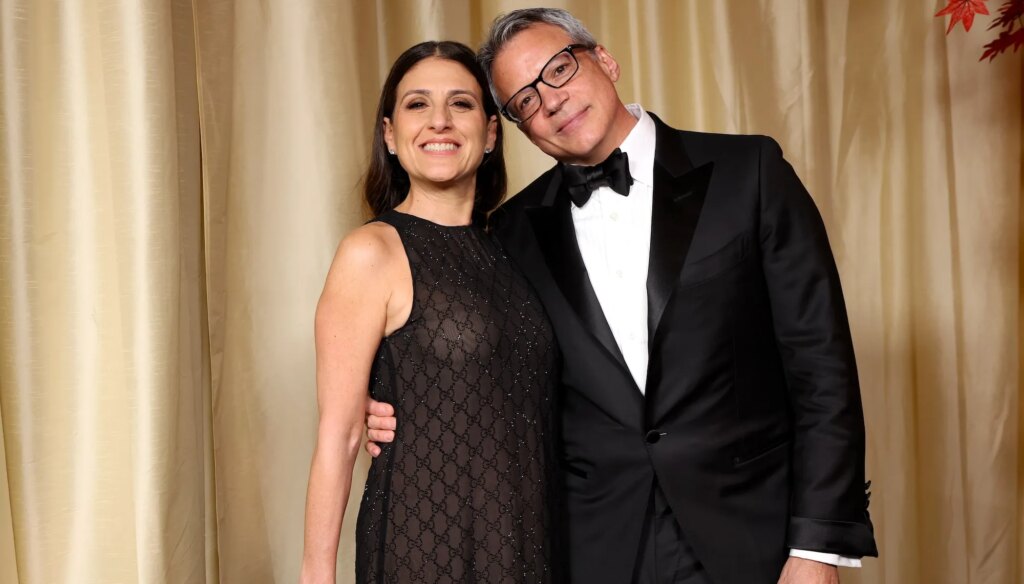

This is also a legacy that current WB co-chairs and CEOs Mike De Luca and Pam Abdy have fought to preserve in spite of the industry’s general state of consolidating upheaval, and WB’s own near-perpetual state of being in the midst of some kind of acquisition, merger, or crisis. A filmmaker himself, De Luca was the writer of the underrated John Carpenter cult classic, In the Mouth of Madness, as well as president of New Line Cinema during the glory days of Paul Thomas Anderson’s Boogie Nights and Magnolia, Austin Powers, and when Peter Jackson began work on Lord of the Rings.
De Luca and Abdy were brought into WB following what would prove to be its first of three contentious mergers (or near mergers in the Netflix boondoggle’s case) inside of five years. Tapped by Warner Bros. Discovery CEO David Zaslav, De Luca and Abdy spent the last four years attempting to quell the disastrous decisions of Jason Kilar, the CEO of the defunct WarnerMedia, who in 2021 burned bridges with the entire filmmaking community with the shockingly misguided “Project Popcorn” fiasco (where the studio released their entire 2021 film slate day-and-date on HBO Max without even consulting the talent they were screwing over). It cost the studio its relationship with Nolan.
To be clear, Hollywood has always been cutthroat, at WB or anywhere else. The same head of production who Nolan cites as a mentor for navigating the studio system, Jeff Robinov, is also the guy who tried to shut George Miller down on Mad Max: Fury Road in the early 2010s after the movie went over budget and schedule in the deserts of Namibia. De Luca and Abdy also had to carry out Zaslav’s dirty work when what is likely Clint Eastwood’s final film, Juror #2, got dumped to HBO Max beyond a cursory, miniscule theatrical release. This followed Zaslav infamously uttering, “We don’t owe any favors” to directors.
That kind of shortsighted mindset is probably why Zaslav seemed to publicly shop for replacements of De Luca and Abdy last year before their banner year netted WB $4.4 billion thanks in part to IP plays like A Minecraft Movie and Superman, but just as importantly filmmaker-led projects that helped eventize directors as the star, a la Ryan Coogler via Sinners ($370 million), Paul Thomas Anderson with One Battle After Another ($213 million), and Zach Cregger and Weapons ($270 million).
All of those were original stories, two horror movies and one an action-drama hybrid, and they each made respectable box office, won Oscars (including Best Picture, Director, Actor, Supporting Actress, and both screenplay awards between them) and, best of all, were great audience-building movies. Cregger became as much or more the selling point for this year’s Resident Evil reboot as the video game IP. And now, Cregger’s next original movie, The Flood, is set up at Warners with Jennifer Lawrence attached. Abdy and De Luca’s gamble paved the way for a partnership that could yield creative and commercial dividends for years.
Unfortunately, not every gamble pays off. And De Luca and Abdy’s bet on the combined talents of Alejandro G. Iñárritu and Tom Cruise making a high-wire act like Digger work didn’t pan out. Still, I’m happy a studio could take a risk like that, because last year a similar roll of the dice on PTA and Leonardo DiCaprio produced a new 21st century classic.