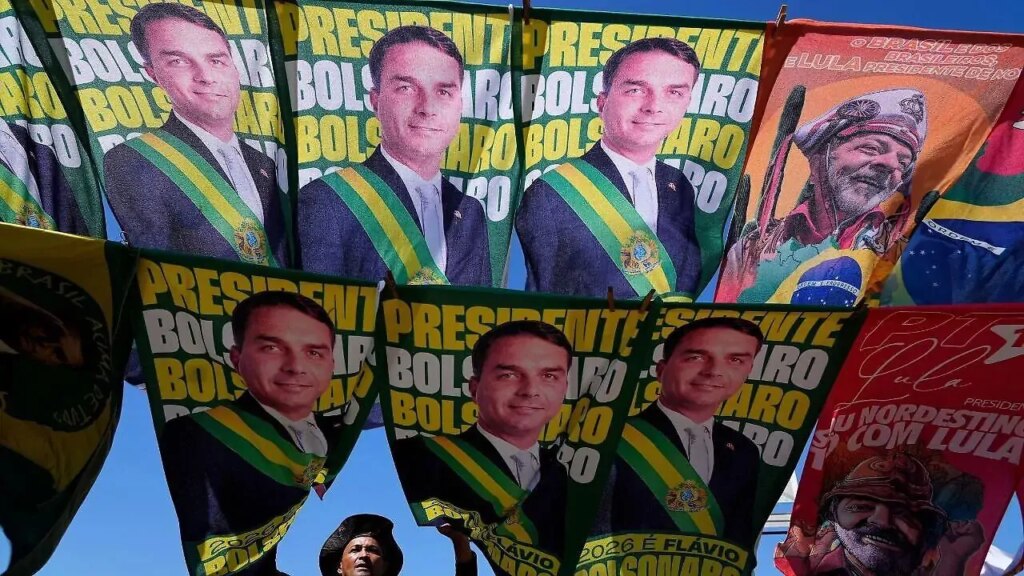


Senator Flavio Bolsonaro is ahead of President Luiz Inacio Lula da Silva in the first round of Brazil’s presidential election, but his lead has been shrinking as more votes come in. Neither man is on track to clear the 50% needed to avoid a second round.
With nearly 85% of votes reported, Flavio had 48.47% and Lula had 43.49%, Reuters reported. Earlier in the evening, when a bit more than half the ballots had been counted, his edge was bigger. Pollster Datafolha projects that the two top candidates will meet in a runoff.
The picture could still shift. Early returns came faster from southern states that tend to back Bolsonaro, while ballots from Lula’s stronghold in the northeast were tallied more slowly.
A result that defies the opinion polls
Surveys by private pollsters before election day had pointed the other way, with Lula expected to finish first by about 3 percentage points. Polls through Saturday did say he would probably fall short of an outright win.
Analysts told Reuters that part of Flavio’s support may be “protest votes” from people who are against Lula, not necessarily for the senator. Many of those voters had been expected to hold back until the second round.
Flavio, 45, is the son of former President Jair Bolsonaro and wants to bring his father’s right-wing movement back to power. He told reporters in Rio de Janeiro that he believed he could still win in the first round, pointing to voter frustration with Lula. Lula, 80, is going for a fourth term.
The runoff and what comes next
The second round is set for October 25. Surveys suggest the two are about even in that matchup.
The campaign was shaped by corruption scandals, economic worries and accusations of U.S. meddling. Despite concerns about Brazil’s public finances and slow growth, there was little serious policy debate, since both leading candidates skipped the main TV debates.
Why Washington is watching
A Flavio win would add to a run of victories by right-wing candidates in Latin America who are aligned with U.S. President Donald Trump. A Lula victory could be a headache for Washington, which has clashed with his government over trade and security.