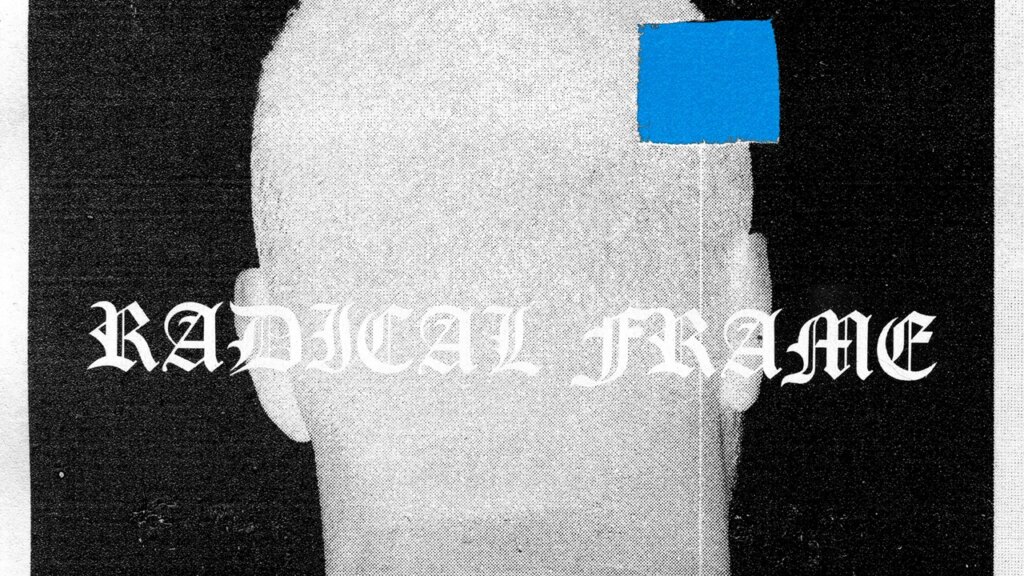

Actress’ music comes in fits and starts. That’s true of the songs themselves—which might be 20-minute slabs of ambient-leaning electronics or one-minute gasps of sharp, diffident funk—and for the way he releases them, with full LP campaigns punctuated by breadcrumb trails, short films, and download-only albums in between. His music follows its own strange, self-referential logic: Track titles are only vaguely comprehensible, and conceptual inspirations like chess and Milton’s Paradise Lost are flattened into his bit-crushed, hermetically-sealed sound world. The artist born Darren Cunningham is one of the most instantly recognizable electronic producers going, with a style—lo-fi, filtered, looping, limping—that has served him well for over 20 years. Enter Radical Frame, his 10th album. It’s brittle and uneven, beginning with two songs under 30 seconds long and ending with a 16-minute collaboration with Manchester rapper-poet Rainy Miller. Radical Frame is good, but it makes you work for it.
The album is immediately disorienting. The first track is a manipulated voice saying “The Experiment,” stretching across the stereo spectrum as though it were being squeezed through a sieve. That’s followed by a five-second tune with a deep voice intoning,“Gimme the fuckin money, man.” From there it swings into one of the most brutal Actress tracks in recent memory: “Live By You” begins as a hard-edged yet melancholy UK rap track with CASISDEAD before Cunningham throws the whole thing down the garbage disposal, with rapidfire handclaps and harsh static swallowing up the MC’s voice. Then comes “Overchord,” with a nice piano intro and a soulful, vibrato-soaked vocal performance that feels dangerously close to veering off key before the track turns into one of those awkward house beats that Actress does so well, the voice resurfacing every once in a while like an especially persistent earworm.
No score yet, be the first to add.
Radical Frame is also difficult, which seems to be on purpose. It’s presented with a provocative quote from American cultural theorist Fred Moten: “The idea of the black avant-garde exists, as it were, oxymoronically—as if black, on the one hand, and avant-garde, on the other hand, each depends for its coherence on the exclusion of the other.” Actress has always taken pains to stress the avant-garde nature of his own music, and avant-garde history seems to weigh heavily on Radical Frame: The way the voice swoons and melts on “The Experiment” reminds me of early electronic artists and musique concréte composers, whose work fixated on the strange effects you could wring out of primitive equipment and everyday sounds. Here, Cunningham pulls that experimental approach into the 21st century, so that the hard rap banger turns damaged and grotesque, or the soft garage-pop song dissolves into wisps. His lo-fi sonics stand in conversation with decades of people working through the limitations and possibilities of technology.
The other end of Radical Frame is the opposite of those short bursts of inspiration: a 16-minute collage of gorgeous downtempo, jittery electro, and desolate ambient dolefully narrated by Rainy Miller, whose distorted voice goes from mournful and unsure to upbeat and bittersweet as the music picks up. ”We can hold onto hope a little longer,” he mutters—one of the most uncharacteristically straightforward things ever featured on an Actress track (along with the calming pads and ocean waves that lead the album lazily towards its end). This isn’t the first extended Actress song, but coming at the end of the album it’s like whiplash in reverse, weighing the whole thing down and luxuriating in dulcet sounds after reveling in chaos.