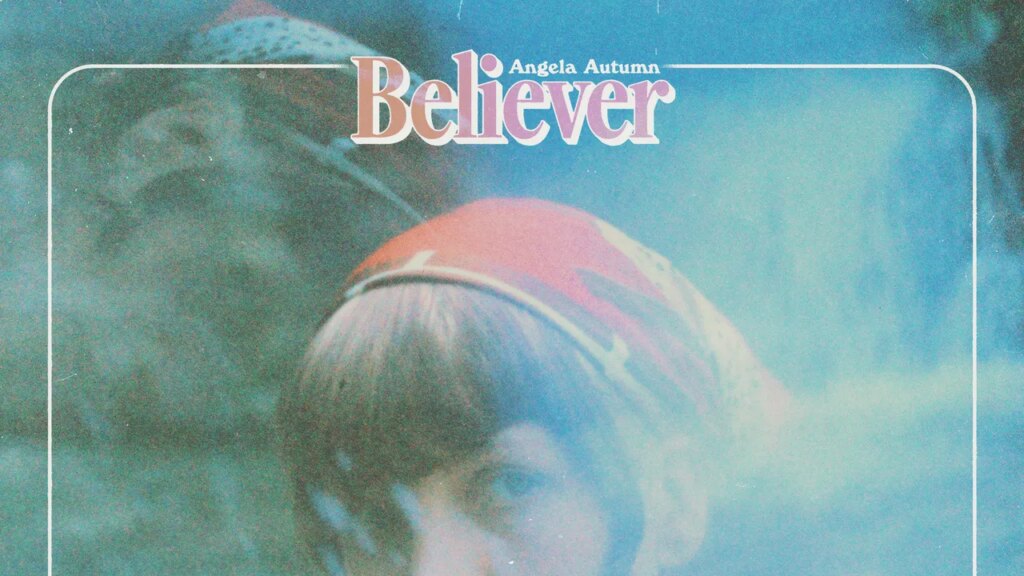

Maybe it’s dumb to be a believer. There’s no guarantee that your beliefs will hold up, and it’s unlikely the thing you reach out for will ever reach back. But to commit to this possibility, as Angela Autumn figures it, is to find connection: to the universe, to other people, or to God if you’re lucky. “I got to be a believer to take a ride,” she sings on the title track of her third studio album, Believer.
The people on Autumn’s album have faith in lovers who may not return, in money, in fame, and in nature as a refuge. Autumn herself has had to believe in her songs through an increasingly unstable music economy, moving from a book-your-own-shows independent musician toward a more formal recording career, while also moving further from the sturdy framework of meaning she grew up with. The album is about what belief can engender when certainty is gone, and the possibility of transforming that which is old and battered into something new.
No score yet, be the first to add.
Autumn grew up Catholic outside Pittsburgh, in the Allegheny region she calls the “Paris of Appalachia.” She was raised around music and nature: Her mother played didgeridoo and made instruments from gourds; her father and family sang together in church. She began playing guitar and banjo at 19, and mainly plays the latter these days, borrowing its open tuning and clawhammer playing style; she also tends to play in an irregular structure indebted to Appalachian music.
Influenced by contemporary roots musicians including Rhiannon Giddens, Allison Russell, and Gillian Welch, Autumn eventually moved to Nashville, writing songs that moved between country, indie rock, and grungegrass. She has an anti-purist and anti-revivalist approach to the traditions of Appalachia, but a great reverence for it all the same. Her voice is her music’s most recognizable “Appalachian” element: high, pinched, effortful; sometimes it sounds as if a sneeze could sing, elsewhere gravelly as a cough from a harsh hookah drag.
Autumn wrote Believer in isolation, in a treehouse outside Asheville, as well as in the Tennessee woods and in an empty warehouse near Chattanooga. Across the record, the physical world—the Blue Ridge mountains, woods, streams, changing weather—is where her songs go when human relationships become untenable. The record is warm, contented, and slightly psychedelic, without feeling devoid of tension. Its songs repeatedly move between claustrophobia and enormous space, between close portraiture and distant landscape. She places reverb between dry vocals and banjo, panning out and in. The arrangements can feel like painted landscapes that occasionally zoom in on a face.
Autumn’s guitar playing is brushy and scumbling, her banjo a bit more hard-edged. She can play a melody dead straight and then suddenly wind away from it, as on “Jesus Heist.” She can let a banjo figure establish a folk song’s gravitational center before throwing in a distorted electric guitar, a strange harmonic turn, a wash of reverb, or a rhythm that seems to trip over itself. On “I Don’t Think About You at All,” you can hear the interplay of guitar and banjo best, with both instruments taking the same track and showing off their similarities. She’s a tasteful arranger; you can hear it on a track like “Heavy Tobacco,” where her downstroked guitar evokes a sun between rise and set—as if it could be picked with a light switch—and steel guitar gives the song its horizon. Her harmony slips into minor before returning to its major beauty. The percussion is almost ascetic: a single cymbal strike in the bridge, followed by a great floor-tom thump. That restraint is one of the album’s great formal virtues.