
Everyone loves a success story: the festival premiere, the standing ovation, the awards. It’s easy to believe that once your short film starts collecting accolades, the next project will naturally fall into place. Lewis Taylor knows that feeling well. His award-winning horror comedy Sleep Tight (2019) exceeded every expectation he had for it: it premiered at FrightFest, screened at nearly 50 festivals worldwide, played Academy Award and BAFTA-qualifying festivals, received BAFTA consideration, and even aired on AMC in Los Angeles. “I set out hoping to get into one festival,” Taylor says. “Awards never even crossed my mind.”
When they did arrive, they offered the validation every filmmaker needs after spending years obsessing over a project: “When you make a film, you don’t really see it the way an audience does,” he explains. “You see it as a culmination of sacrifices and decisions. When you win an award, you think, ‘OK, at least I know I made a film and not just a disastrous collection of mistakes.’”
Like many emerging filmmakers, Taylor assumed festival recognition would trigger conversations with agents, managers or investors. At the same time that Sleep Tight was touring festivals, his feature scripts were also collecting awards in screenplay competitions. “That made me think I might get some interest from a literary agent or manager,” he says. “Sadly, nothing really transpired. Unless you’re nominated for a BIFA, BAFTA or Academy Award – the big three – no one is really interested. Recognition proves you can make something high quality, but it doesn’t automatically mean people have an interest in you. There are people winning festival awards every year.”
Originally studying animation, Taylor graduated into the aftermath of the 2008 financial crash, when animation studios were closing, and jobs were disappearing. He found work in television post-production before becoming a script reader, which unexpectedly pushed him towards writing. “I realised a lot of scripts weren’t actually very good,” he says. “I’d always written short stories and comics when I was younger, so I thought, ‘I can absolutely be a bad writer too.’” Fortunately, that wasn’t quite enough for him: “It turns out I actually wanted to be good.”
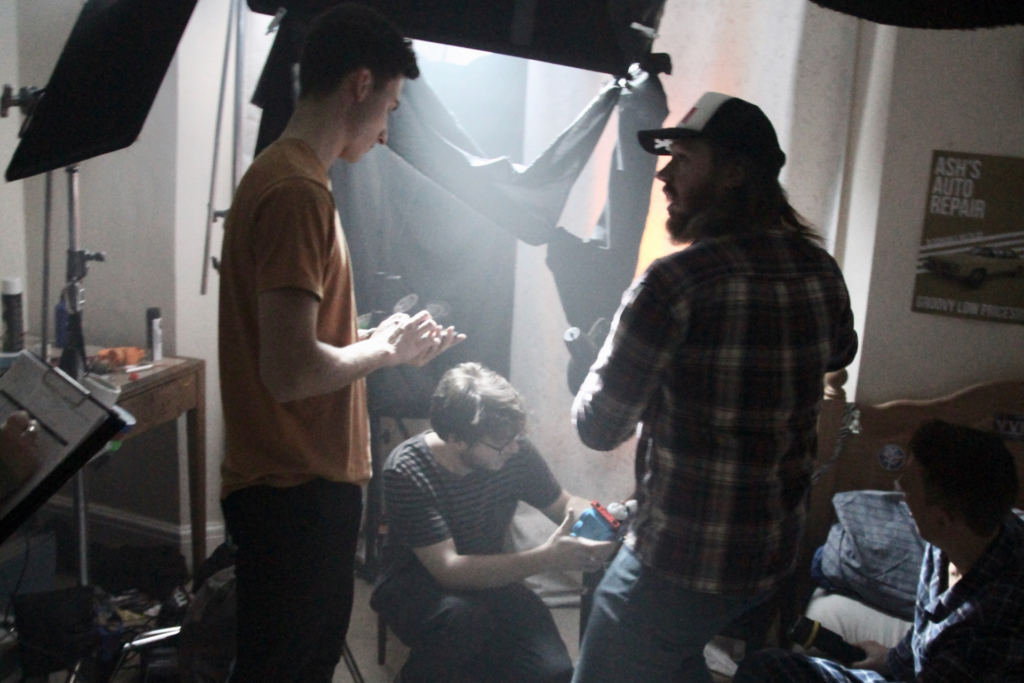
Working as a runner led him onto film sets, where he spent years moving between departments, from assistant directing and camera to sound, art, props and even making costumes for Transformers: The Last Knight (2017). That broad experience gave him the confidence to make Sleep Tight with a professional crew of people he’d met on productions over the years. “When you work on a huge budget film, there are so many people that everything becomes segregated,” he says. “On an indie film everyone gets stuck in. You can actually watch the director work, learn from different departments and understand how a film gets made. Every day is a school day.”
Independent filmmaking has only continued to grow more difficult in the years since Taylor graduated. COVID, the writers’ and actors’ strikes, the cost of living crisis and the rapid emergence of AI have all made it one of the most difficult sectors to strive in. “The game is a total mess right now,” Taylor says. “A film that cost £15,000 six years ago would probably cost £25,000 to £27,000 now.” Locations are more expensive. Equipment deals are harder to secure. Crew members need paid work. Contingency budgets have increased. “I think people don’t realise that about 80 per cent of short films aren’t backed by film funds at all,” Taylor says. “They’re self-funded or backed by independent funders, which is often just code for the Bank of Mum and Dad. The cost of living crisis means people just don’t have spare money. Crowdfunding is much harder because people have less to give. As a result, I’ve personally seen an increase in incredibly wealthy young people making shorts.” Taylor admits: “You will doubt yourself but you have to remind yourself that you’ve made things before and people have liked your work. Most of the time, it’s not you. Those with the most finances and connections survive.”
So what should filmmakers do once the awards have been handed out? Taylor believes the answer isn’t in chasing more trophies, but taking advantage of the opportunities that come with them. “You have to network at festivals,” he says. “Being an award winner makes people more willing to chat to you.” It’s advice he wasn’t able to follow himself. During the pandemic, Sleep Tight secured a syndicated run on AMC in Los Angeles, but travel restrictions meant he couldn’t attend: “I missed all the networking.”
Taylor says projects now have to be almost ready to shoot before funding arrives. Scripts need to be polished, storyboards completed, budgets prepared and pitch decks assembled well in advance. The challenge is that many of those factors rely on having money in the first place. “It becomes a chicken-and-egg scenario,” he says. “Actors and locations won’t look at you if you don’t have a budget, and financiers won’t look at you unless you have actors and locations.”
Despite the frustrations, Taylor hasn’t lost sight of why he started making films. “I think if you’re making a film because you want a BAFTA or you want to play a certain festival, you may as well stop there,” he says. “There’s no guarantee you’ll get those things, and your work will become less honest. Make something because you want to make it. You have to like the project enough to say, ‘I’m going to get up at four in the morning for this.’” He’s now developing several feature screenplays, writing a novel, and seeking funding for his next short, a home-invasion thriller that explores immigration in the UK through the lens of genre cinema. “I’d love to write and direct a low-budget feature,” he adds.
To anyone celebrating festival success, he says: “First of all, congratulations. You obviously did something right. Awards aren’t the be-all and end-all, so keep your expectations realistic. Above all else, enjoy it.” Just remember, the trophy isn’t the finish line; it’s simply proof that you’re moving in the right direction.