
“You want to know which Beatle I play, huh?” Barry Keoghan says. We’ve been talking, over Zoom, about his latest film, Lemonade, which premiered last week at the Toronto International Film Festival, but as our time ticks down, I’m hoping to ask him about the full-time job he’ll return to after this rare day off—shooting four Beatles movies directed by Sam Mendes. When I suggest to Keoghan that we know he’s playing Ringo, his response is mysterious and mischievous: “Do you, though?”
The 33-year-old actor’s disposition is notably upbeat, even as we discuss Lemonade, a devastating independent drama about the foster care system in Ireland. Keoghan executive-produced the film, directed by Kim Bartley, through his Wolfcub Productions shingle; it’s a deeply personal project for the actor, who was raised in foster care himself.
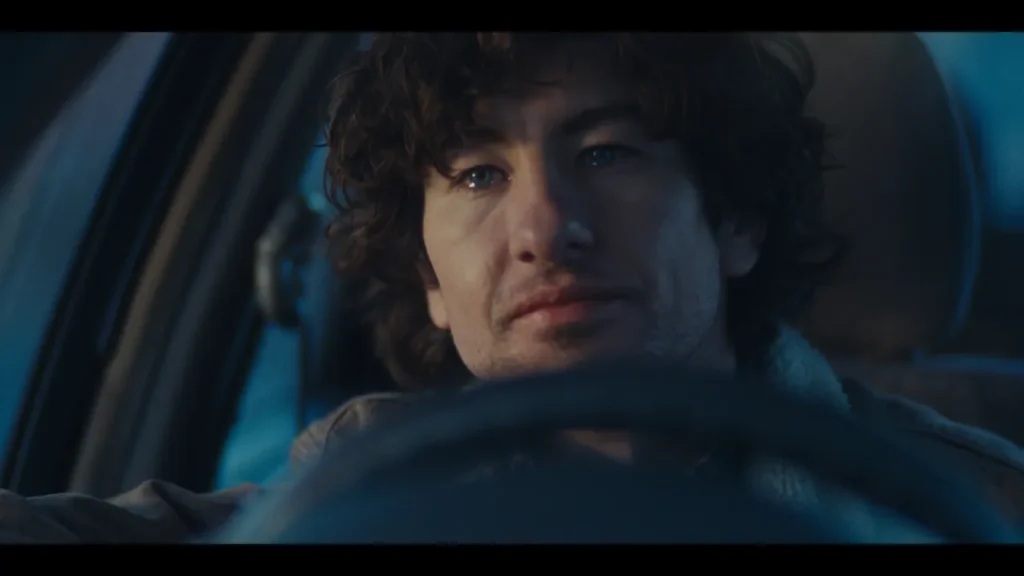
Lewis Brophy plays protagonist Danny, an 18-year-old aging out of the foster care system; Keoghan plays Danny’s former social worker, who re-enters his life and attempts to mentor him. For the role, Keoghan found himself tapping into his own memories of the social workers who shaped his experience in foster care: “I was just digging deep,” he says, “because I remember them being very gentle and caring figures to me when I didn’t have those parental figures around.”
GQ: I’m so happy to be speaking with you about this film, which I understand is very personal for you.
Barry Keoghan: It’s a very, very personal story. With Lewis Brophy, the connection with Lewis is, he’s from the area that I’m from, but the way I started acting was, I seen a notice in the shop window. I’ve always spoke about this. And funny enough, that shop window is Lewis’s auntie’s shop window. So it’s quite a full circle moment to be honest.
A lot of the cast and crew, including you, have spent time in the foster care system. If you’re comfortable talking about it, were there particular parts of this story that resonated with your experiences?
I’ve touched on it before and I’m quite open about it. But yeah, those parts of the script and moments in the script, especially the moments when Lewis’s character is his younger self [in flashbacks], and he’s in the back seat. And one thing that really resonated with me and really got me was I remember those car journeys of being in the back [myself], and social workers bringing me to the new home or back to the office to ‘rehouse’, if you use that term. I always remember the stickers on the back window and having a Pink Panther teddy with me and always looking up at the moon. And obviously I didn’t know it was cliché then or a common phrase, but “your moon is my moon” was the kind of thing that was drilled into me.
So there’s moments like that—just even looking back in the car seat and back in that scene and being beside him, it really got me. And there was moments that was very, very surreal and just gave me a lot to draw from. And it was nice to embody the incredible social workers I had. Mary Payne, God rest her soul, from Daughters of Charity, and I had a social worker called William and a social worker called Liz. And to embody all of those [people] and give back in that way—I was just digging deep because I remember them being very gentle and caring figures to me when I didn’t have those parental figures around. They definitely were that for me.