
Director-general Matt Brittin said ‘if you move to something which every household pays, you can charge everyone less’

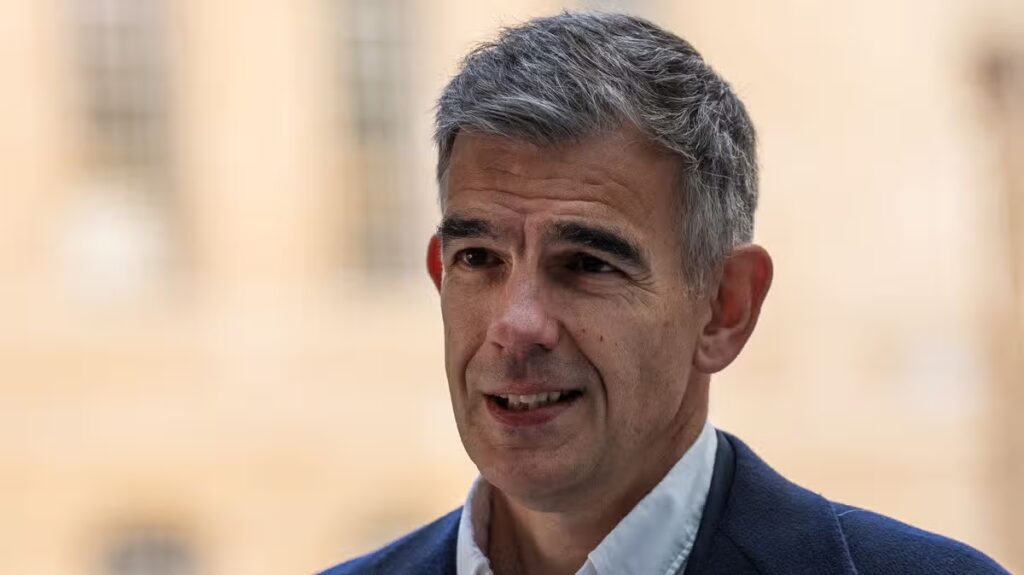
Matt Brittin has declared his ambition to make BBC News available on Youtube, Netflix, Instagram and Tiktok(Image: Getty Images)
BBC director-general Matt Brittin has declared his ambition to make BBC News available on streaming platforms such as Netflix, as part of a wider shake-up of how the broadcaster’s content is accessed and funded. The BBC relies primarily on the licence fee for its income, which climbed to £180 per year earlier this year, though it faces scrutiny ahead of the charter renewal in December 2027.
Brittin has previously argued that the corporation is “held back” by the TV licence fee, which he believes is “no longer fit for purpose”, and has floated the idea of a household levy as an alternative funding solution.
Appearing on the Sunday With Laura Kuenssberg programme, he stressed the urgency of overhauling the existing funding model to make it fairer and more reflective of modern viewing habits.
He said: “What we need to look at is the current model. You pay the licence fee if you watch live TV or you’re on iPlayer.
“I’d like to see reform that allows us to be where audiences are. I think BBC content should be on Netflix, on YouTube, on TikTok, on Spotify, and Instagram, and everywhere where audiences are. Particularly news, actually, which I think is part of disinfecting misinformation. It’s our job to be everywhere.”
Brittin pointed out that a household levy is already used across numerous countries to finance public broadcasting and would create greater fairness. He continued: “There was a report just this week saying that if you move to something which every household pays, you can charge everyone less.
“Collections costs are lower, there’s limited evasion, but we’re living at a time of really difficult costs of living for everyone, and that’s quite a big shift from where we are today.”
When questioned about why everyone should contribute to the proposed charge regardless of usage, he explained: “Ninety four per cent of households every month are consuming BBC content. That’s incredible, but yet only 80% are paying.
“So there’s a fairness issue there in terms of how we fund the BBC and I think that the principle is if we want a BBC that’s for everyone, then it needs to be funded by everyone, and how you get that modernisation is critical.”
He made clear that this particular universal household levy model isn’t his personal recommendation, but simply one option under consideration.
Brittin stated: “What we’re advocating is reform that allows us to offer the services universally and that is modernised towards where people are watching today.. The standard TV licence is legally required in order to watch or record television on any channel or service, watch live on streaming services and to use BBC iPlayer.. The BBC’s licence fee income has dropped by more than £1 billion in real terms over the past decade, with the 2026 BBC annual report revealing TV licences fell by more than half a million in the 2025/26 financial year. The royal charter sets out the arrangements for the governance of the corporation, including how the corporation is funded.. It currently has to be renewed every 10 years and is set to end in December 2027. It came as Culture Secretary Lisa Nandy was asked: “.
A standard TV licence is legally mandatory for watching or recording television on any channel or service, viewing live content on streaming platforms, and accessing BBC iPlayer.
The BBC’s licence fee revenue has plummeted by over £1 billion in real terms during the last decade, with the 2026 BBC annual report showing TV licences dropped by more than half a million during the 2025/26 financial year. The royal charter outlines the framework for the corporation’s governance, including its funding mechanisms.
It currently has to be renewed every 10 years and is set to end in December 2027. This came as Culture Secretary Lisa Nandy was asked: “Is the license fee finished?” She replied: “No, I don’t think the license fee is finished, but we are looking at a number of options through the charter. It is our firm intention to put the BBC on a sustainable financial footing and it hasn’t been for over a decade.”
When reminded that the director general had described it as a busted flush, she responded: “Well, the director general is in a difficult position and I have real sympathy with him. He came into an organization that has had to deal with a decade of falling revenues partly because of changing viewing habits, fewer people paying the licence fee, but also because of successive government decisions, whether it’s to freeze the license fee or to load additional responsibilities onto the BBC.
“And I think he’s right to say that you cannot expect the BBC to be able to do everything on a limited budget. However, there are certain things about the BBC that are absolutely essential to the life of this country. Whether it’s regional programming, children’s programming, or news content, the BBC is one of the most trusted outlets in the world. And for us as a government, Whilst we will work with the BBC to put it on a firm financial footing through this charter, those those services for us are non-negotiable, they’re provided to people in this country as of right. Uh and we’re working with the BBC leadership on that basis.”