On April 10, 1925, the day was published, F Scott Fitzgerald observed to the literary editor Max Perkins: ‘I’m sure anyhow that at least two critics Benét & Mary Colum will have heard about the book. I’d like her to like it — Benét’s opinion is of no value whatsoever.’
That Fitzgerald valued more the opinions of the fiercely independent-minded Irish critic over that of her fellow reviewer, William Rose Benét — editor of the influential — was testimony to Colum’s high standing in the American literary scene at the time.
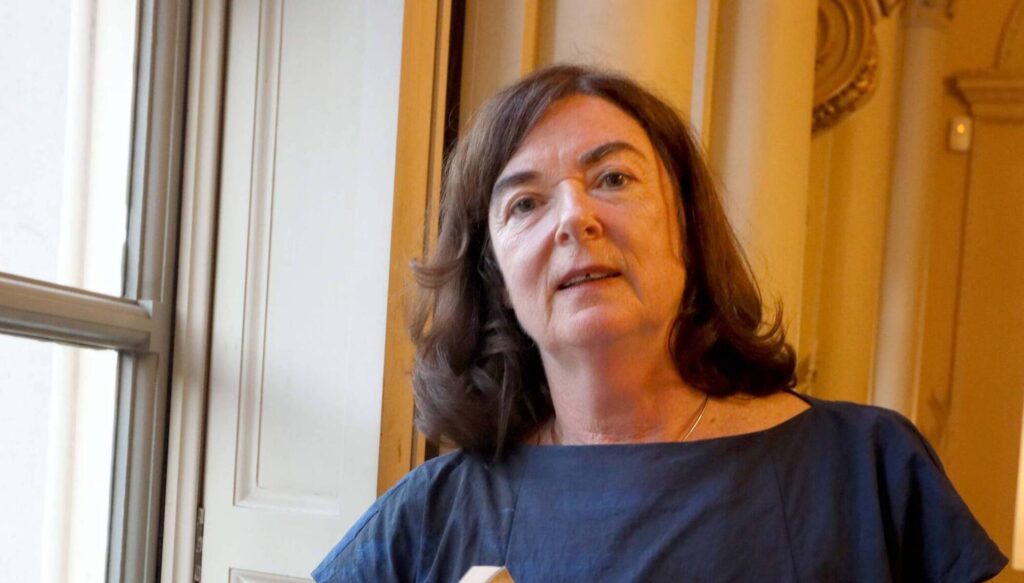
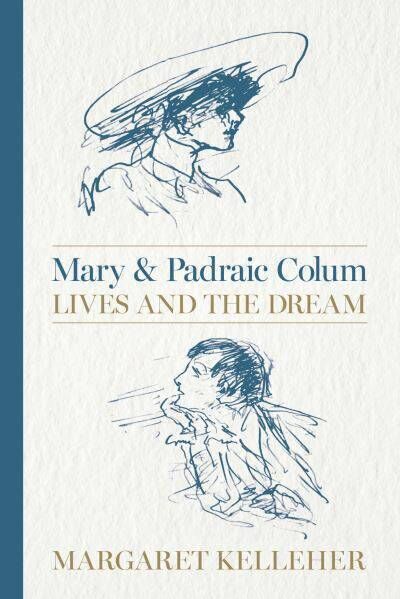
Margaret Kelleher, in this joint biography of Mary and Padraic Colum — wife and husband for 45 years — explores the nature of posthumous reputation, suggesting that the cruellest fate for writers is to be remembered not for who you were or what you wrote but for whom you knew.
And between their sojourns in Ireland, France and the United States, they got to know just about everybody from Patrick Pearse and Roger Casement to Eugene O’Neill, Ernest Hemingway, and Sylvia Plath.
In her revealing account, based on significant new material, Kelleher wants to bring new readers to the Colums’ work, rescuing their achievements to more than merely walk-on parts in the lives of others.
If Padraic Colum is still remembered, it is by an older generation of school-goers for poems like and .
For contemporary readers, he is largely unknown, although music fans might be familiar with Sinéad O’Connor’s rendition of Colum’s version of the Donegal folk song, .
Mary Colum has slipped even further from popular memory, and her remarkable memoir, (1947), is no longer in print.
The daughter of an RIC sergeant in Sligo and a of mother whose family had known better days, Mary Colum née Maguire was a precocious child who excelled at her studies in St Louis’ convent school in Monaghan.
She went on to study Modern Languages and Literature at university level and was one of the first graduates from the National University of Ireland Dublin in 1909.
A background in European languages was crucial to her repeated insistence on adopting a comparative perspective on writing.
In a later work, (1937), a study of the roots of literary modernism, she stresses the European dimension to the Irish Literary Revival, discussing the influence of Baudelaire on Synge and engaging in a contrastive analysis of the work of Joyce and Proust.
As a poet and dramatist, Padraic Colum was of course intimately involved in the revival and its key players. Dublin being such a small place, such intimacy was not without its drawbacks.
WB Yeats, for example, gave evidence in court against Colum’s father who was charged for his part in the riots against the Abbey Theatre’s staging of Synge’s .
What was true for literature also obtained in politics.
Thomas MacDonagh, for instance, was an intense rival of Padraic’s, having proposed to Mary before the Colums’ marriage.
When she turned his proposal down, in a fit of pique, MacDonagh threw the ring into the fire only for it to be retrieved by Padraic, returned to its owner, and end up on the hand of Muriel Gifford whom MacDonagh ultimately married in 1912.
Mary Colum was an active member of the Irish Women’s Franchise League and a founding member of Cumann na mBan.
Both she and Padraic were unstinting in their support for the national cause and, upon relocating to New York, continued their advocacy for Irish independence.
This was not without professional consequences, where criticism of British policy was increasingly seen as a pro-German stance in a country preparing to enter the war on the Allied side.
Intending to go to the US for only a short period in 1914, they would not return to Ireland before 1922; and, even then, it was only on a visit, as — apart from periods in France in the 1930s and intermittent stays in Ireland — they would spend the rest of their lives in the US.
Mary Colum would go on to establish herself as one of the most formidable post-First World War literary critics in the US, but in later years, due to a combination of poor health, difficult relationships with publishers, and the increasingly ideological polarisation of criticism, her work met with less receptive audiences.
She passed away in 1957, the only material trace of her presence in Ireland now being her gravestone in St Fintan’s Cemetery in Sutton.
Padraic Colum, in addition to his involvement in a number of leading US literary magazines, would develop a very successful career as a writer of children’s literature.
He was three times recipient of the prestigious Newbery Honor Book prize.
A lifelong advocate of the work of James Joyce, when such a position was neither popular nor profitable, he was unfailingly loyal to friends and family.
Towards the end of his life, his poetry would undergo something of a rebirth under the aegis of Dolmen Press.
Margaret Kelleher, with a fluency and captivating style already on ample display in her Maamtrasna Murders (2018), has brought this singular couple back to life and shown how in matters of intellectual courage, tenacity, and depth of feeling, they demand to be our contemporaries.