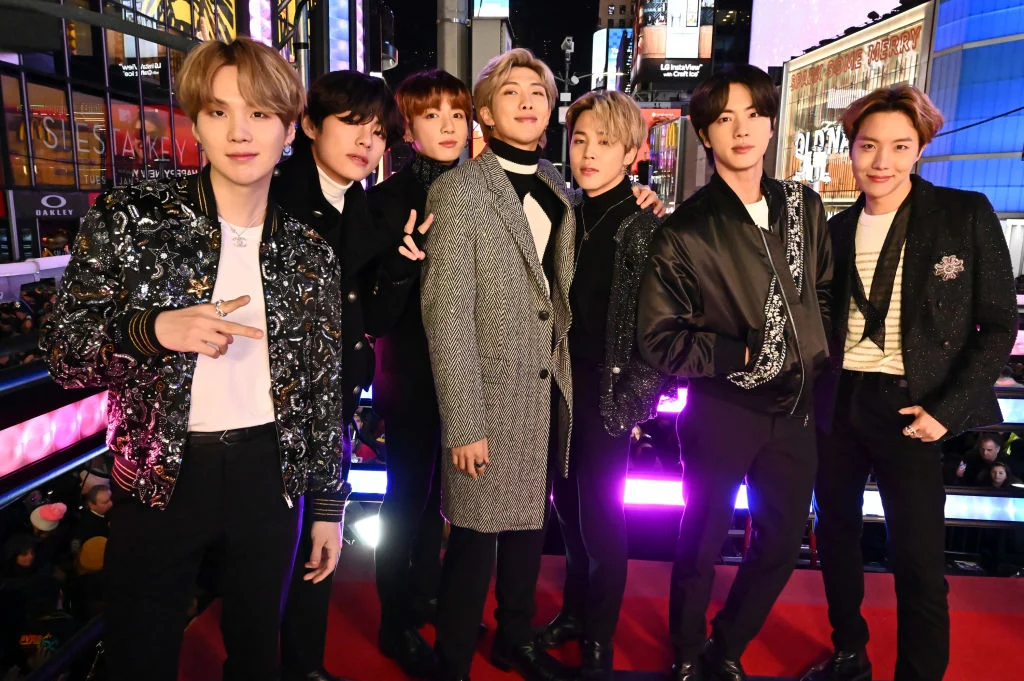

Back in 2020, we published an article marveling at the fact that BTS had grossed $170 million from concerts in a single year. At the time, that number seemed almost unbelievable. Six years later, it looks surprisingly modest compared with what the South Korean supergroup has gone on to accomplish.
BTS has grown from a massively successful K-pop act into one of the most powerful entertainment businesses in the world. Between stadium tours, paid livestreams, album sales, streaming royalties, merchandise, concert films, sponsorships and the individual careers of RM, Jin, Suga, J-Hope, Jimin, V and Jungkook, the BTS machine has generated billions of dollars in consumer spending.
Perhaps the best way to understand the scale is to look at just a handful of publicly reported numbers. Major BTS tours, livestreamed concerts and concert films have already generated roughly $1 billion in reported grosses. And that deliberately incomplete total leaves out enormous categories of revenue, including most album sales, streaming, merchandise, publishing royalties, endorsement deals and the members’ solo careers.
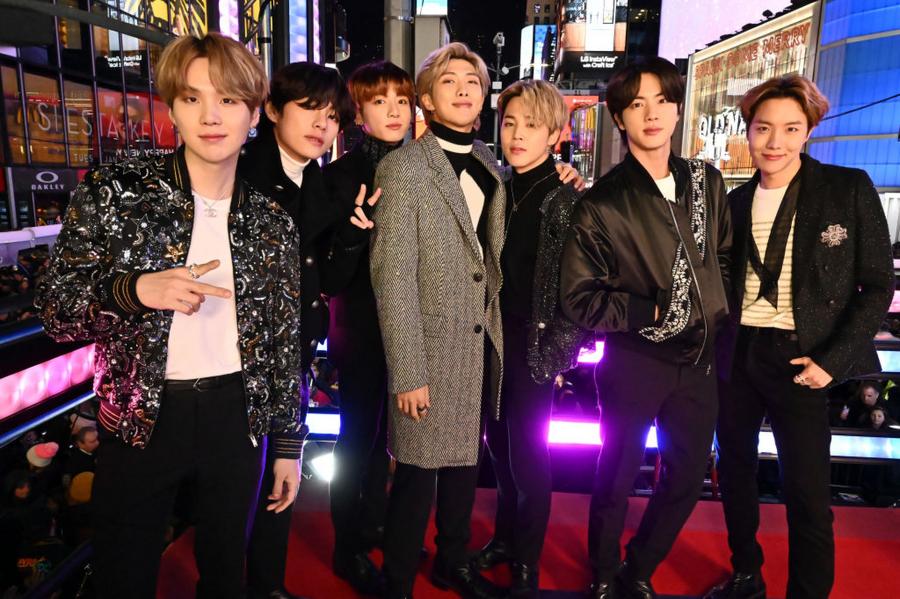
Astrid Stawiarz/Getty Images
The First Quarter-Billion-Dollar Tour
BTS debuted in 2013 under Big Hit Entertainment, the company founded by songwriter and producer Bang Si-hyuk. Within a few years, the group had broken out of the traditional K-pop market and built one of the largest and most devoted fan bases in music.
The group’s live business quickly became enormous. The 2018-2019 “Love Yourself” tour and its “Speak Yourself” stadium extension encompassed 62 shows across Asia, North America, Europe and Latin America and generated $246.5 million from nearly 2 million tickets sold.
Those concerts included appearances at some of the world’s most prestigious stadiums, including the Rose Bowl, MetLife Stadium, Soldier Field, Wembley Stadium and Stade de France. BTS was no longer simply a successful international pop group. It had become a global stadium act capable of selling hundreds of thousands of tickets on multiple continents.
Around the same period, Forbes estimated that BTS earned $57 million in pretax income during one annual measurement period, much of it fueled by touring. Merchandise, endorsements, recordings and sponsorship arrangements with major international brands added additional revenue.
BTS Made Tens Of Millions While Stadiums Were Closed
BTS was preparing to launch an even larger stadium tour in 2020 when COVID-19 effectively shut down the global concert industry. For most musicians, the disappearance of live touring meant the temporary loss of their most lucrative business.
BTS found another way to monetize its audience. In June 2020, “Bang Bang Con: The Live” attracted 756,000 paying viewers from more than 100 countries. With ticket prices ranging from roughly $24 to $32, the event generated at least $18 million in ticket revenue.
Four months later, BTS staged the two-day “Map of the Soul ON:E” livestream, which drew nearly one million paying viewers. The group’s two major 2020 virtual concerts generated an estimated $65.5 million in combined ticket sales.
The following year, BTS pushed the virtual-concert model even further. Its two-day “Muster Sowoozoo” event attracted 1.33 million paid viewers and generated an estimated $76.7 million. Even without being able to fill physical stadiums, BTS had created a digital concert business capable of generating revenue comparable to a major arena tour.
“Permission To Dance” Added Another Fortune
When BTS returned to physical performances, demand had not diminished. Four “Permission to Dance on Stage” concerts at SoFi Stadium in Los Angeles grossed $33.3 million from more than 213,000 tickets, while four subsequent shows in Las Vegas generated another $35.9 million.
Billboard ultimately credited BTS with $75.5 million in box office revenue from just 11 physical concerts during its 2022 touring-year measurement period. The group also continued selling paid livestream access to concerts, allowing fans around the world to watch performances without being physically present.
That became one of the most impressive features of the BTS business model. A single major concert event could generate money through stadium tickets, online viewing passes, merchandise and later theatrical or home-video releases. The same core performance could effectively be monetized several different ways.
Then The Seven Members Became Seven Separate Businesses
BTS eventually slowed its group activities while the members fulfilled South Korea’s mandatory military-service requirements. Instead of disappearing from the music business, however, the seven members increasingly developed solo careers.
J-Hope launched the 2025 “Hope on the Stage” tour, which Billboard credited with $79.9 million in gross revenue from 33 shows and more than 500,000 tickets. Suga‘s “D-Day” tour generated $57 million, while Jin‘s 2025 solo tour grossed another $46.1 million.
The members also produced major solo recording successes. Jungkook’s debut solo album “Golden” sold more than 2.4 million copies during its first week, while his single “Seven” reached #1 on the Billboard Hot 100. Jimin also reached #1 with “Like Crazy,” while V and RM developed successful solo recording careers and major endorsement relationships.
In other words, BTS did not stop generating money while the group was temporarily less active. The business effectively divided into seven separate solo operations, each benefiting from the enormous audience BTS had spent years building.
The BTS Reunion Changed The Math Again
When BTS reunited for a new album and world tour, the group’s commercial power became even clearer. The comeback album “Arirang” sold 3.98 million copies on its first day, but even that massive figure has been overshadowed by the group’s return to touring.
Through August 11, 2026, the “Arirang” world tour had already grossed $433.2 million from 38 reported shows and sold 2.3 million tickets. In May alone, BTS generated $127.8 million from 12 concerts, setting a Billboard Boxscore record for the largest monthly touring gross ever achieved by a group under its current chart methodology.
Eight July concerts generated another $102.5 million, while two shows at Stade de France in Paris grossed more than $30 million. The tour still had numerous dates remaining, meaning its ultimate gross could finish dramatically higher than the numbers already reported.
Before the tour began, analysts cited in the financial press projected that the complete run could potentially generate as much as 2.7 trillion South Korean won, or roughly $1.8 billion in ticket revenue. That figure remains a projection rather than money already earned, but a tour that crossed $400 million after fewer than 40 reported shows makes the scale of that forecast easier to understand.
More Than $1 Billion From Just A Slice Of The BTS Empire
Consider just some of the publicly reported revenue figures from the group’s career. The “Love Yourself”/”Speak Yourself” tour generated $246.5 million. Two major virtual concerts in 2020 generated an estimated $65.5 million. “Muster Sowoozoo” added an estimated $76.7 million. The “Permission to Dance” era produced well over $100 million when major physical concerts and livestream revenue are considered, while the first 38 reported dates of the “Arirang” tour generated $433.2 million.
Those numbers alone bring BTS very close to $1 billion. Concert films push the total even higher. “Burn the Stage: The Movie” grossed tens of millions worldwide, while “BTS World Tour: Love Yourself in Seoul” and later theatrical releases added additional revenue.
Taken together, publicly disclosed grosses from only a selection of BTS tours, livestreams and concert films have already crossed roughly $1 billion. And that calculation still leaves out the majority of the group’s album sales, Spotify and Apple Music streams, YouTube revenue, merchandise, fan-club subscriptions, licensing, publishing royalties, sponsorships and endorsements.
It also excludes much of the money generated by the members individually.
How Much Did The BTS Members Actually Keep?
There is an important distinction between the revenue BTS generates and the amount of money the seven members personally receive. A $400 million tour gross does not mean RM, Jin, Suga, J-Hope, Jimin, V and Jungkook simply divide $400 million seven ways.
Concert revenue has to cover promoters, venues, elaborate stage production, transportation, crews, dancers, insurance, commissions and numerous other expenses. BTS also operates through Big Hit Music and HYBE, and the precise economics of the members’ contracts are private.
One useful reference point comes from 2019. During a period when BTS was generating around $170 million from concerts, Forbes estimated the group itself earned $57 million in pretax income. The following year, Forbes estimated another $50 million in BTS earnings.
The members also received an unusual financial benefit that very few musical artists ever get: equity in their management company. Before Big Hit Entertainment went public in 2020, Bang Si-hyuk gave each BTS member 68,385 shares of the company. At the IPO price, each block was worth roughly $8 million. The company later became HYBE, and the value of those holdings fluctuated substantially with its stock price.
Jin, J-Hope and RM subsequently sold portions of their holdings, while the original stock grants gave all seven members a direct ownership stake in the corporate empire their popularity had helped create.
BTS Has Become One Of Music’s Most Powerful Money Machines
When we examined BTS’s financial success in 2020, a $170 million annual concert gross seemed extraordinary. Today, the group can generate more than $100 million from concerts in a single month.
The group’s publicly disclosed grosses from major tours, livestreams and concert films already total roughly $1 billion, and the full scale of the BTS economy is considerably larger once recordings, streaming, merchandise, sponsorships and solo careers are taken into account.
None of that means the seven BTS members personally pocketed billions of dollars. Gross revenue and personal wealth are two very different things. But it does demonstrate the astonishing scale of the business BTS has built.
A group assembled by what was once a relatively small South Korean entertainment company grew into a global phenomenon capable of generating hundreds of millions of dollars from a single tour. And if the current trajectory continues, the money BTS generated during its first decade may eventually look small compared with what comes next.