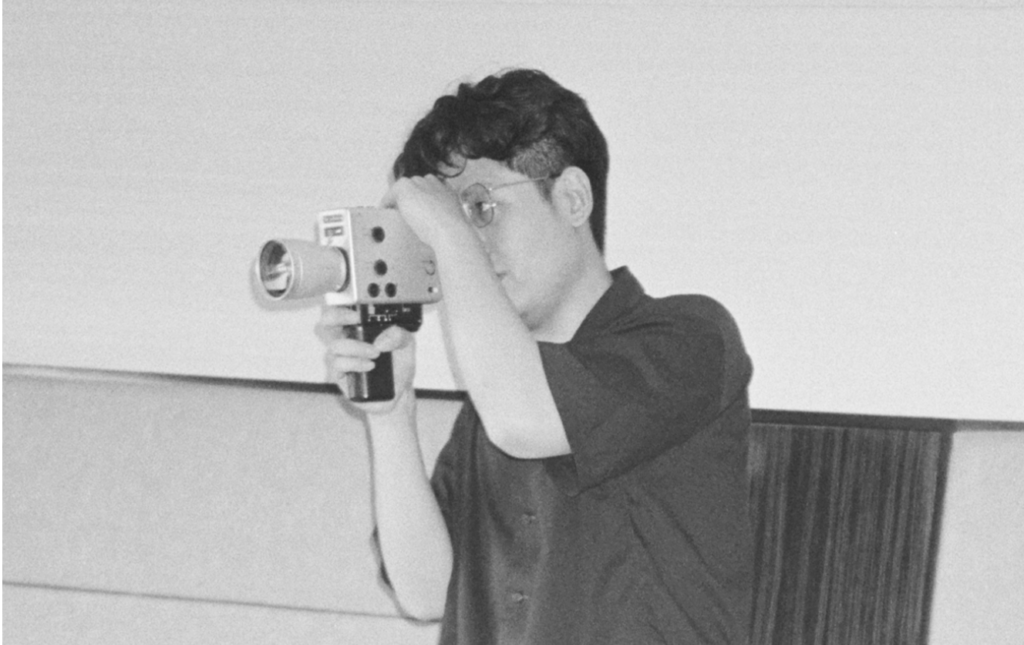

The experience of living abroad and the identity struggles faced by today’s transnational youth have increasingly become a central subject explored by Chinese-language filmmakers. The independent feature film Jet Lag in Summer offers a nuanced and authentic reflection of this contemporary reality, following a young Chinese couple who pursue their filmmaking dreams in the United States while navigating the complexities of love, creative ambition, and the challenges of building a life in a foreign environment.
With its sincere storytelling, delicate emotional texture, and distinctive visual language, the film has gained recognition on the international festival circuit. Following its world premiere at the 2025 Pingyao International Film Festival and its European premiere at the Far East Film Festival in Udine, Italy, Jet Lag in Summer was selected for the 2026 New York Asian Film Festival, where it made its U.S. premiere at Film at Lincoln Center in New York City. The film has since emerged as a notable new-generation Chinese independent work receiving growing attention from the international film community.
Rather than amplifying the anxieties often associated with stories of displacement or relying on heightened emotional drama, Jet Lag in Summer finds its power in the quiet rhythms of everyday life among young Chinese filmmakers living overseas. Through a restrained and intimate cinematic language, the film captures the unsettled existence of a generation navigating life across borders: moments of hesitation, subtle shifts in relationships, and the paradox of feeling deeply connected to a vibrant city while never becoming completely rooted within it.
Cinematographer Tonghuan Zhao’s distinctive naturalistic visual approach serves as one of the film’s essential narrative forces. Through carefully controlled compositions, character-driven spatial blocking, and a thoughtful use of visual breathing room, Zhao transforms the intangible sense of “distance”—between individuals, between people and the city around them, and between personal aspirations and reality—into a tangible cinematic experience. The characters’ unspoken emotions and quiet feelings of displacement are embedded within each frame of the film’s everyday imagery, creating a recurring visual motif that runs throughout the story.
In the following interview, Tonghuan Zhao discusses the creative principles behind the film’s cinematography, exploring how he developed its naturalistic visual style through framing, blocking, camera movement, and lighting design. He also shares how he balanced a carefully constructed visual framework with the spontaneity and unpredictability of filmmaking on set, allowing the cinematography to serve the characters, emotions, and broader generational experience at the heart of the film.


Q: How and why did you wind up being the cinematographer of Jet Lag in Summer? What led to your involvement in the project?
A: The story of Jet Lag in Summer really drew me in from the beginning. Kunao, the director, shared an early version of the script with me and asked what I thought. I was drawn to it right away. There was something very familiar to me in its world and its characters, especially because it grew out of a lot of experiences and observations from the years we had both spent living in New York.
From there, we talked about everything—the characters, the story, sometimes even individual lines. I already felt very close to the material, and I think that was probably a big part of why the collaboration felt so natural.
Q: What were your artistic goals on the film, and how did you realize them?
A: I think the main thing for me was finding the right distance from these characters, and that gradually became one of the central ideas behind the visual language of the film.
They’re always trying to figure out their distance from other people—from their friends, their relationships, New York, even from home. There’s a particular kind of loneliness in feeling very connected to a place but never completely rooted in it. I understood that feeling personally, and I wanted it to sit quietly underneath the cinematography.
On set, it was really about keeping that feeling in mind. Before settling on a camera position, I would often look at a scene from a few different angles through a viewfinder and try different compositions. Once you compare them, you start to feel which position is right for the character at that point in the story. I wasn’t necessarily looking for the most beautiful frame. I was looking for the one that felt most honest to the scene.

Q: How did you want the cinematography to shape the way we experience the characters and their world?
A: So in general, the camera is pretty restrained and observational. We were careful with close-ups, and with the wider shots I didn’t want them to feel like they were just there as masters or coverage. I wanted the space around the characters to actually tell us something about them.
Blocking became a big part of that too. Kunao and I spent a lot of time thinking about how people would naturally move through a space instead of arranging everything around the camera. I guess I wanted it to feel less like we were filming a performance and more like we were just watching these people live their lives.
Q: Were there any specific influences on your cinematography, whether films, visual art or photography?
A: We talked a lot about Edward Yang, Ryusuke Hamaguchi and Hong Sang-soo.
It wasn’t really about saying, “Let’s make this shot look like this movie.” What I love in their work is the confidence to just stay with a space or a performance. They don’t always need to push the emotion toward you. The framing, the blocking and the duration are already doing a lot.
I also started out in documentary photography, and I think that still affects the way I shoot. It taught me to observe first—to notice gestures, available light, how people relate to a space, and the little things that can happen during a take that you could never really plan for. That was especially important on this film. Sometimes an actor would do something unexpected in rehearsal that suddenly made the scene more interesting, and I wanted to stay open to that. So maybe we’d adjust the framing, rethink the shot, or change the coverage a little. I never want the cinematography to force the performance back into something we planned before we saw what the actors were actually giving us.

Q: How did you approach camera movement on the film?
A: I was really interested in moments where the camera movement didn’t come directly from the actor. Maybe the camera notices something somewhere else, or gets pulled toward something in the environment. Sometimes it’s a very small shift, but suddenly the frame feels like it has a life of its own.
That felt right for this film because New York has such a strong presence in it. These characters are living there, but they’re also constantly figuring out how they relate to the city. Sometimes they feel close to it, sometimes completely disconnected, and sometimes it just keeps moving without them.
SoSo, I wanted the environment to feel alive too. Camera movement was one way of letting the world around them have a presence of its own.
Q: Describe your approach to lighting.
A: A big thing for me was making sure the lighting didn’t lock the actors into one exact spot. I wanted them to be able to move around and really use the space.
Some of the film’s most important scenes happen in the apartment where the couple lives, and I wanted it to feel like a real home. SoSo, I worked pretty closely with our gaffer and production designer. We started with the practicals—what lamps would actually be there, where the light would naturally come from—and then hid small fixtures around the set, like Aputure MCs, small LEDs and tube lights. We’d tuck them behind furniture or work them into the production design. That gave us some control, but hopefully you never really feel the lighting being imposed on the space.
And with independent filmmaking, you really have to pay attention to what the location is already giving you. I try not to walk into a space and immediately think, “What are all the problems here?” Sometimes the strange or unexpected thing about a location ends up being exactly what makes the image interesting.

Q: How does your background as a director and screenwriter affect your work as a cinematographer?
A: Usually, before we talk about how something should look, I like to talk with the director about what’s actually happening in the scene. That could be a lot of things—what the character wants, what changes, whose perspective we’re in, what the audience should know at that moment, and how the scene fits into the rest of the story.
I think my background in directing and writing has made me very aware that a beautiful image on its own doesn’t necessarily mean much. I’m always asking what the image is actually doing for the character, the scene and the story.