
Platforms: PS5, Xbox Series X|S, PC
The first Control game, released in 2019, was a work of unhinged genius, taking a set-up that was broadly “X-Files meets Twin Peaks meets unknowable cosmic horror” and mixing it with exquisite action and Metroidvania-style exploration. It also – subtly at first, then with an explicitly connected expansion – built a shared universe with developer Remedy Entertainment’s Alan Wake games, framing the horrific events there as merely one of countless bizarre cases investigated by the Federal Bureau of Control.
At the end of the Control, protagonist Jesse Faden, newly promoted to Director of the FBC, placed the organisation’s headquarters – an extradimensional tesseract known as The Oldest House, which may paradoxically contain the entire universe within its confines – in lockdown, in a desperate last effort to contain the Hiss, an invasive force from another reality. It didn’t work.
Seven years later, the Hiss have broken out, Jesse is missing, the FBC is in disarray, and reality is warping all around Manhattan. As Dylan Faden, Jesse’s brother, you’re out to find your missing sister and maybe help put the world back in order – the only slight issue being that you used to be possessed by the Hiss, no-one trusts you, and the voices of the Board, unknowable entities from the Astral Plane, keep yapping in your head. Still, you’re the best option the FBC has so, partnered with reluctant handler Zoe, and with a bomb wired into the back of your skull just in case you break bad again, you might be the last hope for existence itself. No pressure.
Unlike its predecessor, Resonant shifts to something closer to an open-world RPG, but like so much of the Control-verse, it does things its own way.
It would be great to be able to say you don’t need to know any of that complex backstory going into Control Resonant, but sadly, you do – there’s even an omnipresent “Control Recap” option on the game’s menu. Narratively, at the very least, this is not newcomer friendly. Mechanically, it’s not the most welcoming either – but that’s actually one of the game’s charms, if you give it time.
Unlike its predecessor, Resonant shifts to something closer to an open-world RPG, but like so much of the Control-verse, it does things its own way. At a glance, the twisted version of Manhattan that Remedy has created here looks to offer the same sort of experience as you’d expect in a modern Assassin’s Creed, an assortment of zones to freely explore, with a host of activities and objectives scattered around the map to check off. However, as soon as you start wandering the streets, you realise it all works entirely differently.
Rather than roaming around whacking enemies for experience points for Dylan, completed objectives level up the zone they take place in. Each level both improves resources available within that zone – more health drops, better items at stores, extra markers on the map pointing towards further activities – and gifts Dylan a Talent Point to spend on abilities. It’s a small shift but totally changes how you approach the game.
Dylan’s play style is an even bigger shift. Where Jesse was armed with the Service Weapon – a shapeshifting super-pistol that paired with a growing assortment of “parautilitarian” skills to emphasise a mostly ranged playstyle – Dylan wields the Aberrant, a mysterious shaft of metal that reforms itself into various melee-focused forms. That materially changes how combat is approached, forcing players to wade in and take down increasingly horrific monsters, up close and personally.
It also allows for a lot more variety in how you fight. The Aberrant has three primary forms (balanced Cleave; speedy sword Strike; and the scythe-like Glaive for wide attacks), three secondary (heavy-hitting hammer-like Crush; whip-like Extend; and the devastating Drill), and six combo finishers, all of which can be mixed and matched, allowing you to tailor exactly how you want to fight. However, you’ll only have one to start with, while Dylan’s innate abilities are slow to arrive. Unlocking more of either leads to one of Resonant’s bigger challenges – progress.
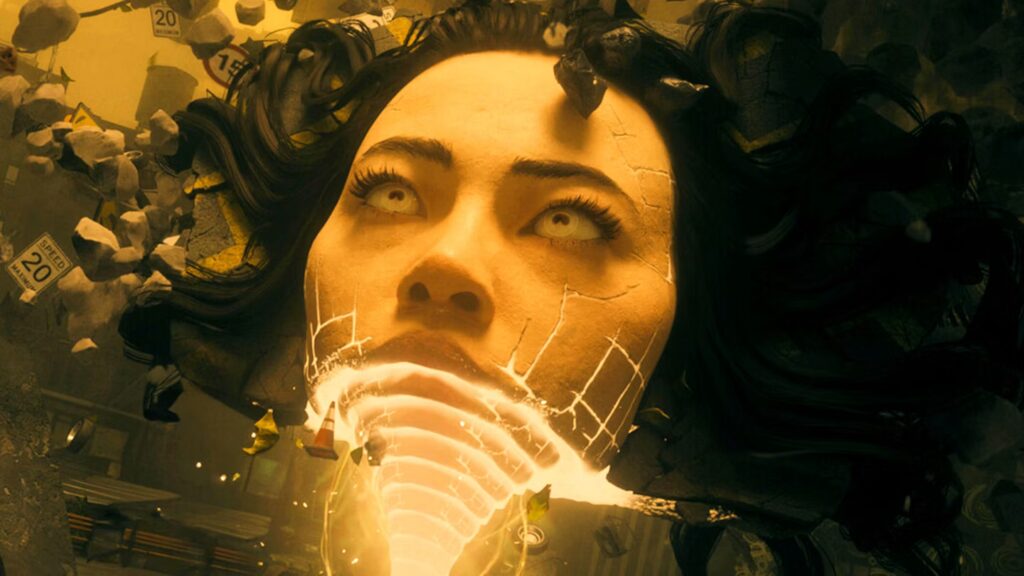
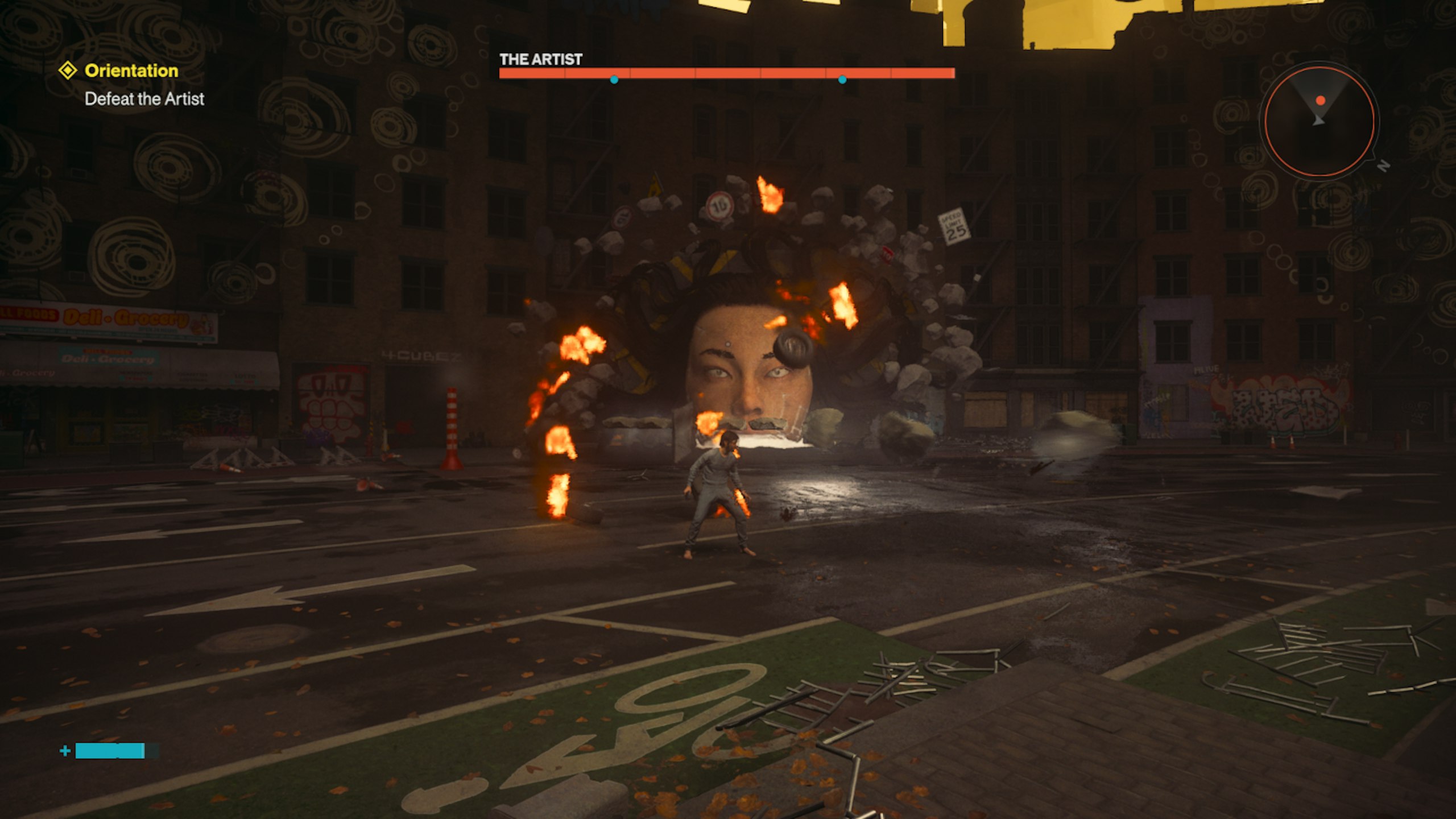
Left to explore, you might farm basic resources to upgrade the Aberrant or earn those zone levels to get Talent Points, but to acquire Dylan’s super abilities, you need to hunt down the titular Resonants. These colossal monstrosities, corrupted by whatever’s escaped from The Oldest House, are signature boss fights against some of the strangest creatures imaginable – a titan of fire, skewered by molten pipes, lurking beneath a steam plant; a dancer stretched to grotesque extremes, her arms replaced by wings of serrated blades; a giant head that was once a photographer, her eyes her main weak spot. They’re also ridiculously tough endurance battles that, with the game’s emphasis on physical combat, can turn into what feel like button mashing affairs. Beating your first Resonant will likely be down a mix of zone grinding to level up Dylan’s stats as much as possible and sheer luck.
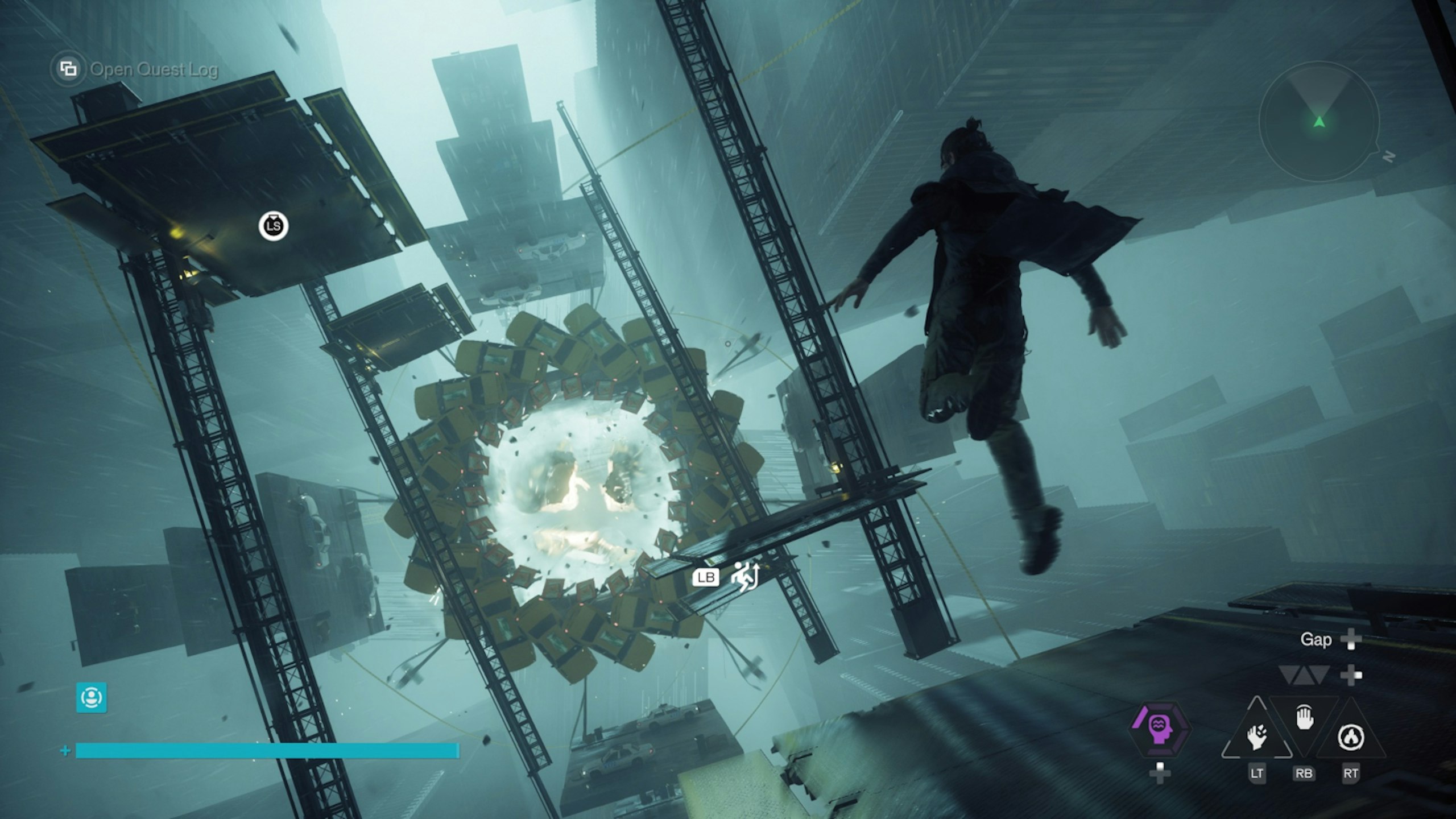
However, after you do start acquiring some of those more interesting abilities – telekinetic shields, summonable orbs of energy that help attack enemies, burning strikes, ground pounds, and more – the flow of the game really comes together. With navigation abilities allowing you to float, grapple, and invert gravity to better explore the surreal urban landscape, all earned by fleeting interactions with a runaway Jesse, Resonant really begins to click.
This all still ultimately feels like the unspeakably vast, eldritch universe that so successfully mesmerised players in the first Control.
Once it does, you begin to really get a feel for the scale and depth of the game. Being able to fully explore a New York folded in on itself, Inception-style, returning players will realise Resonant is no less imaginative or weird than Control. You’ll stumble on side missions where residents have been possessed by otherworldly karaoke machines, or investigate suspicious dogs, or have to play (probably) haunted video games. Remedy’s world-building remains second to none, with ambient dialogue from other FBC agents adding flavour and detail to the world and its recent events, while a library’s worth of lore notes expand on key details.
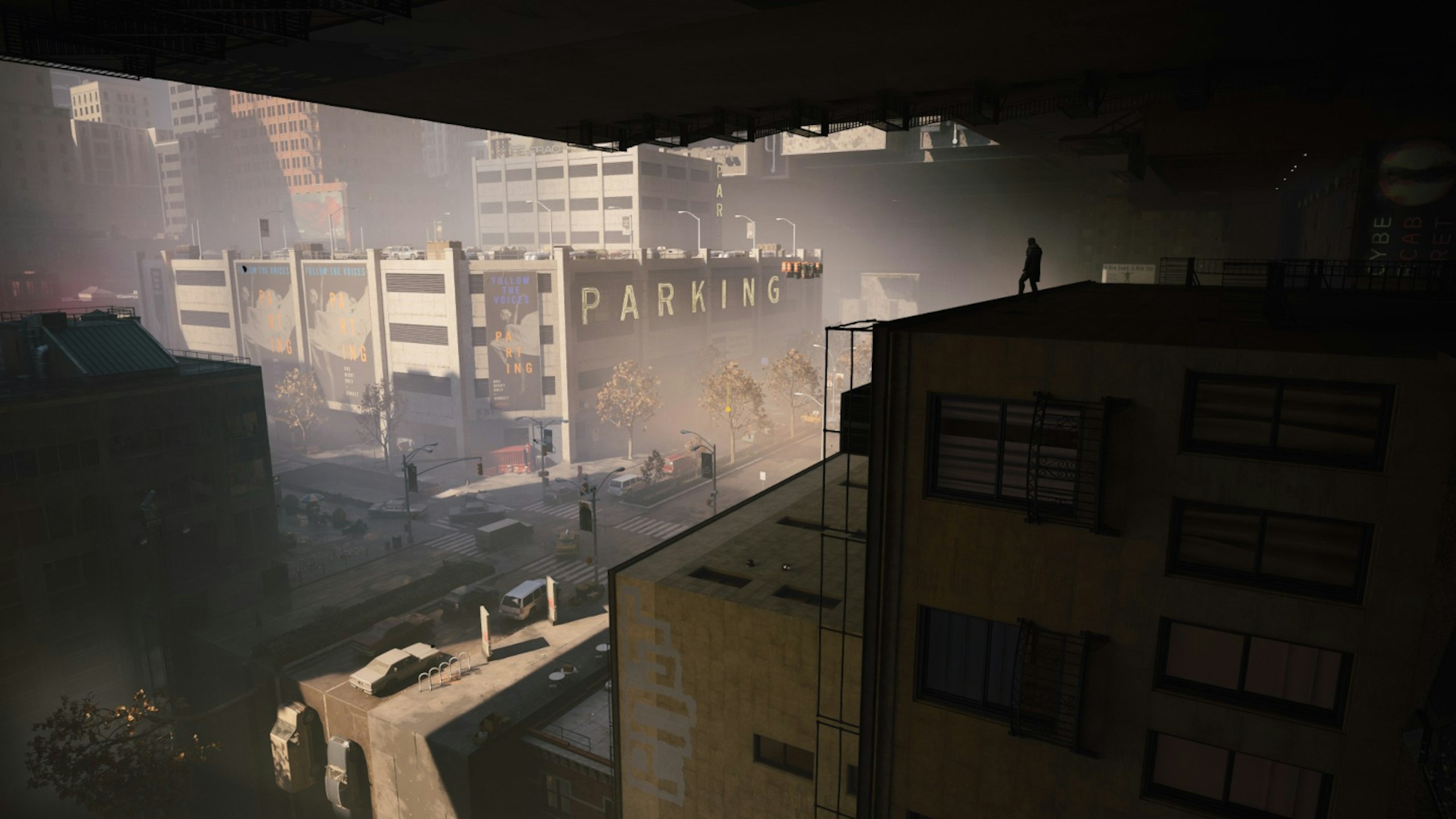
Resonant does lose a little of its visual identity by having to trade the brutalist confines of The Oldest House from the first game for a vaguely recognisable New York, but it still knows how to impress, and often distress, players. Space itself tears into maddening fractals where reality is cracking, often to beautifully deranged effect during key moments (although some of these moments do feel like Remedy is “playing the hits” in places – one moment in particular feels like a weaker repeat of Control’s brilliant Ashtray Maze sequence), while other areas are infected with mold that’s spread between planes of existence. This all still ultimately feels like the unspeakably vast, eldritch universe that so successfully mesmerised players in the first Control.
Resonant being so deeply and directly connected to the original Control does make it less accessible than it could be, as does its unique approach to game design and progress. Its early hours especially can feel like a real slog where progress just isn’tbeing made. Yet for those who persevere, this emerges as another brilliant slice of high concept sci-fi gaming tinged with transcendental terror.