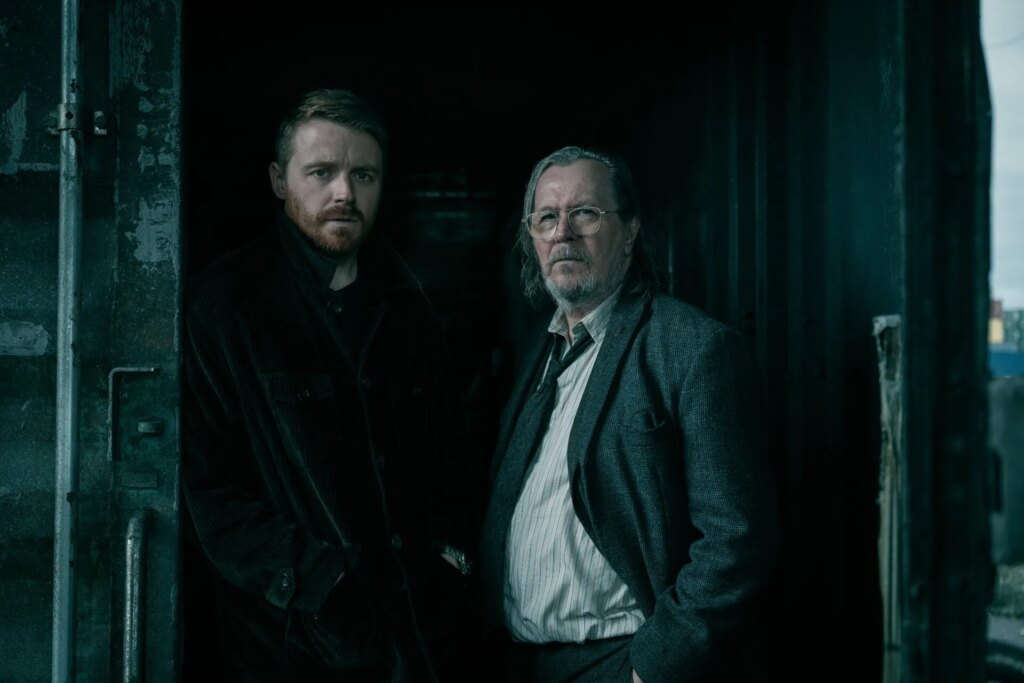

Having gained a loyal following in recent years for taking the usual sexy, suave archetypes of traditional spy thrillers and turning them on their head, Slow Horses returns for its sixth season in only four years. With it, the stakes are higher than ever before. Jackson Lamb’s agents are in grave peril, and the MI5 veteran finds himself under immense pressure to try and save their bacon before time runs out.
A seasoned director on the show, having taken the reins for Slow Horses’ fourth season, as well as sitting in the director’s chair for series six and the upcoming season eight, Adam Randall sat down with FILMHOUNDS to discuss Mick Herron’s novels, keeping the series engaging six seasons in, and balancing the humour and the emotion of the show.
Thank you for talking to us today. How are you feeling about the release of Slow Horses season six?
It feels pretty amazing because we actually finished it almost a year ago. When we shot it, we wrapped in March 2025, and we finished all of post-production in late autumn. So I’ve just been waiting for almost a year for it to get out into the world, and we’re very, very proud of it. So it’s really exciting that the time is here and everyone gets to see.
You were the director for season four of the show, but this season you’ve also been involved in the writers’ room and come on board as the executive producer. How much did that change your experience compared to the last time you worked on the show?
It changed it a lot, actually, because I got to be very involved in the shaping of the story and working with the writers. I’ve worked with writers before, and I’ve written before, but I’ve never really been a part of a writer’s room so that was an amazing experience and where a lot of the fun happens. There’s so much imagination and creativity that happens every day there, it was really incredibly informative, but it also helped because I could start imagining and figuring out sequences very, very early, and actually working the scripts to fit with those sequences and there were certain locations that I really wanted to film in, so I was able to push the scripts towards them. Things like the service station and the bowling alley were locations I just really thought would be brilliantly suited to the Slow Horses world for them to be on the run, so I was able to be a big part in the shaping of that. With season four, I arrived and there were six very good scripts. Obviously, as a director, you’re involved in helping shape the scripts at a later stage, specially once you start getting locations and cast involved, but to start with, you had these two books and then a blank page. It was a very different experience, so I loved it.
How does the comedy aspect of the show fit in with the more serious themes at play here?
Well, I mean, again, a lot of that’s in Mick’s [Herron] books. It’s just Mick’s brilliant, brilliant dialogue. He’s created these very, very funny characters and this wonderful humour, so that’s where we get it from. And then we also have very funny actors who always are finding humour, and then, on the day, we’re coming up with ways of playing with things, and “Oh, you know what would be great is just suddenly take a left turn and have a gag in here.” Although it always wants to stem from the characters and their behaviour rather than just for the sake of it.
How do you keep the show so engaging compared to other spy thrillers, which can be very serious and very hard to keep up with?
Well, that’s a tough question in some ways. I guess to keep it engaging is really about the characters. I think fundamentally it’s caring deeply about them, and I guess some spy shows and films, there’s a barrier between you and the spies and what they’re doing. They’re sort of aloof, and you’re watching them from a slightly more objective standpoint whereas Slow Horses, I think it’s all about the characters and understanding the characters and relating to the characters, so it all stems from there. I think if you’re engaged with them, then you’re engaged in the story. And there’s obviously some complicated plotting happening, but I always think as long as you understand the basics, and as long as you understand why characters are doing what they’re doing—So, you know, Taverner has done something, and the world is closing in on her, and she’s trying to survive that—Now, whether you know exactly what happened or understand it at each point, as long as you understand that, you can be fully engaged, and hopefully by the end of the season, you’ve got all the information and it all makes sense. But I think it’s got to work, fundamentally, on an emotional level rather than a plot level.
I do feel as though this series is more emotional than previous seasons of the show. Would you agree?
I do agree, and that was something that we set out to do from the writers’ room from the very beginning. I thought season four had emotion in it but I felt like we could push that further. I feel like these characters have earned it. Inherently there are a number of storylines that just call for that emotion. I mean, we’re starting off and River’s grieving, so he’s immediately in a very difficult and emotive place, and quite a dark place, and it feels like you’ve always been able to, with this show, combine great tension with humour. Then it’s like, “Well, can we also add real emotion to it? How far can we stretch the tone of the show before it breaks?” It felt like the audience cares about these people if they’re still watching by season six. So I think that we have the leeway to do that. So I think you know, from River’s perspective, it’s definitely emotional. I think for Lamb, who’s not an emotional character at all, but I think underneath it, or underneath this mask, he cares about his Joe’s, and when they’re under such threat, you get glimpses of that, which I think is really, really powerful.
Slow Horses Season Six airs weekly on Apple TV