
If Christopher Nolan thinks it’s a big deal, then you’re probably onto something.
On Thursday, September 24, the U.S. Congress introduced a bipartisan bill that would provide film and TV productions a federal filming tax incentive to make movies and shows in the U.S. Nolan, as president of the Directors Guild of America, called the Motion Picture, Television, and Entertainment Revitalization Act,” “the most significant legislative effort in a generation to promote domestic film and television production, and the hundreds of thousands of jobs it supports.”
The idea that we’re even at this point is already seismic. For years, decades even, advocates have been pushing for some sort of federal support for the film industry to bolster production. States have offered their own tax credits and incentives at increasingly aggressive rates, but they’ve found they’ve been unable to compete with the likes of entire countries throwing their weight behind a push to get Hollywood productions to film there. A 2025 report in Prod Pro found that in Q1 of that year, the United States’ share of overall productions had fallen to 39 percent, down from 51 percent in 2022, so a decline of 12 percent in just three years. The urgency was clearly there to do something.


In terms of what this bill actually offers, the Motion Picture, Television, and Entertainment Revitalization Act firstly provides a 20 percent base tax credit on any qualifying film or TV productions that have a budget of at least $1 million and shoot at least 75 percent of principal photography within the United States. The credit includes above-the-line talent, which is often the biggest expense for indie productions especially, and you can get additional bonus credits of 5 percent, with a max of 30 percent, if you qualify as an indie production, if you work in at least 10 or more states, or if you film in a rural area or a federally declared disaster area. By the way, Los Angeles County is a federally declared disaster zone after last year’s wildfires and will be considered one for five years.
The federal tax credit is also fully stackable on top of other state credits, which have already gotten pretty aggressive. Places like Canada have federal and local incentives, but they tend to offset rather than be truly stackable the way this is. So think for a second that if you can qualify for a 30 percent credit on the national level and then a 35 percent base credit for shooting in California, we’re talking about your crew getting up to 65 percent of their money back? Look out, Bulgaria.
“It would be an absolute game-changer for the crews working in the U.S. and production companies,” said Ryan Broussard, VP of Sales and Production Incentives with the production finance platform Wrapbook. “To put a federal stackable incentive on top of that is pretty monumental. The way it’s written, I’ve never seen anything like it in terms of what it’s incentivizing. To include things like above-the-line across the board…is amazing.”
Broussard called the legislation introduced today “too good to be true.” He was stunned by the fact that the bill also includes post-production and VFX work as well as writers (something almost no incentives do) and it’s providing numbers that are higher than what we see in most if not all other countries. He even was impressed that this bill makes a point to try and win back not just domestic production but to attract foreign production as well with these incentives, to one day get international talent to consider moving and working here because of the incentives offered. Seeing how that develops will be an under-appreciated benefit of this legislation.
The MPA released a study earlier this month outlining the potential impacts if such a federal incentive were to be advanced. The numbers it used weren’t identical to what’s in the bill, but they’re a very close model. It estimated we could see the addition of 143,500 jobs and an extra $125 billion in production spend over the next eight years. Broussard feels those numbers, based on what he’s seen today, feel largely accurate and believable.
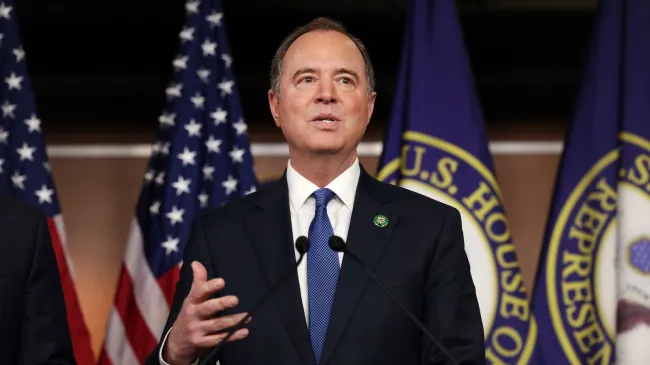
Part of why we got to this point is because it’s the culmination of years of effort and work from the labor unions, studios, independents, film commissioners, small businesses, and lawmakers who actually listened to the concerns at hand. So if there are no real surprises in what this bill offers or does not offer based on what has been expected, it’s because everyone is truly on the same page and swimming in the right direction to get this passed. It can’t be said enough how wild it is that a bill sponsored by Adam Schiff actually has the backing of President Trump, and that’s a credit to Jon Voight bending the president’s ear in all the right ways, backing him down from his initial call for a 100 percent tariff on the film industry.
The bill has specifically been drafted to incentivize compensation and creating jobs. Other states offer credits for being green or other perks, but this bill is strictly about jobs jobs jobs. It’s also designed to think about all 50 states, not just the ones where filming is most prevalent. Mike Lebia, the CEO of production finance platform GreenSlate, says the bill seems especially well designed to be an uplift for other state programs and will be very impactful for independent productions shooting all over the country. For instance, in states like New Mexico where an above-the-line credit isn’t offered, getting a federal one on top of that could make shooting there much more viable. For states like South Carolina (Republican Senator Tim Scott is a sponsor of the bill) that have minor credits and relatively small filming hubs, the addition of the federal incentive could make production viable there as well and raise all boats.
“Because this is a national bill, it allows the creative decisions to drive where productions are going to go. Oftentimes incentives are really the primary factor; this will shift the power back to creative,” Lebia said. “I’m hoping that will be a big factor in getting this bill across the finish line. It seems to have really strong support…and it’s getting support across the spectrum and is designed to support the entire country.”
Local leaders even know how much a film shoot can impact shopping on Main Street or the lumber yard that can hire extra people because of the added work required. With sponsors of the bill from Texas, Georgia, South Carolina joining ones from California, it’s clear this isn’t just a bill for the coasts, even if convincing the rest of Congress of that is a hurdle that will still have to be cleared.
What really moves the needle in getting this bill passed is that it will have an immediate impact, even if other incentives sometimes take years to manifest. California saw a surge of applications when it changed its production credit allowance, and it will be clear almost immediately that Hollywood will green light movies to shoot in the U.S. specifically because they can now qualify.
One question and concern Broussard raises is whether other countries will sit idly by or if there will be an arms race now to keep the production they already have. Could the UK or Ireland raise their own aggressive incentives even more in an effort to keep up with America? That will be an interesting development should it happen.
But the next step is getting this bill passed, and this Congress quite literally has not passed anything. If the bill does not pass prior to the next Congress being sworn in at the top of the year, it will have to be reintroduced again and start from scratch. Congress is out of session until the midterms, but there’s optimism this could get passed in the lame duck period and could even be dated to take effect as early as January 1, 2027. Step one was getting it introduced, and now the work truly begins.
“The average American does not fully grasp the severity of the moment and the importance of getting a bill done,” said Cameron Woodward, the co-founder of Wrapbook. “This allows us the capacity to maintain the industry that we’ve invented. Filmmakers want to film in America. I’ve spoken with people making a movie about America, but they are unable to make that project here because the math simply does not work. This allows us to preserve film infrastructure that we’ve been building for over 100 years, and if we lose it, it will be gone forever.”