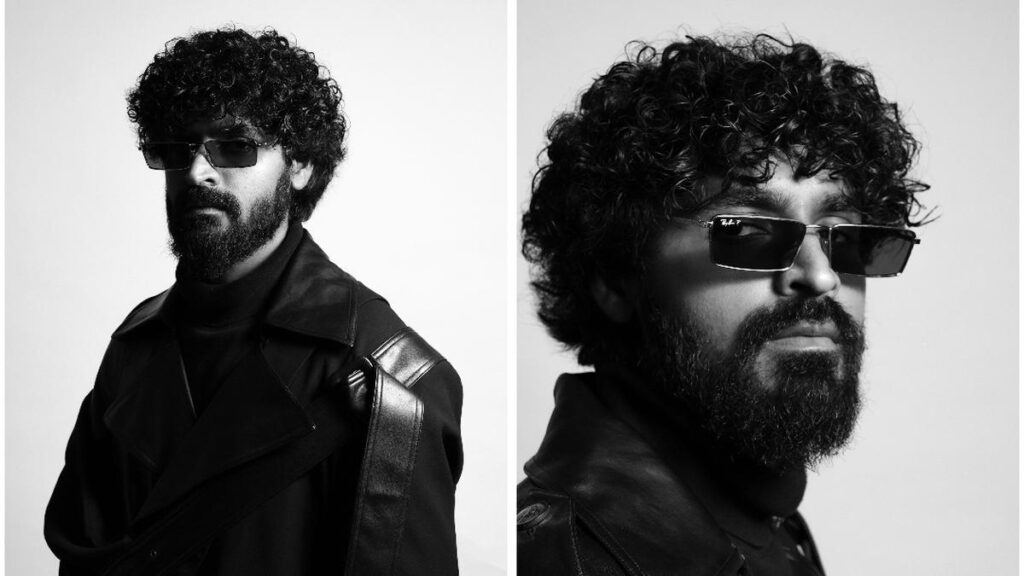

Emiway Bantai calls himself the G.O.A.T. (Greatest of All Time). Or, in his own words, “fans bolte hain GOAT, toh waqt ke saath GOAT ho gaye apun” (Fans call me the G.O.A.T, so over time, I became the G.O.AT.).
It is a typical Emiway take on his journey — a mix of humour, swagger, and self-awareness. Over the past decade, the Mumbai rapper has gone from independently putting out music to becoming one of Indian hip hop’s most recognisable voices. Born Bilal Shaikh, he took his stage name from two of his early influences, Eminem and Lil Wayne. He began releasing music in 2013, with ‘Aur Bantai’ which put him on the map. In 2019, ‘Machayenge’ became a breakout hit.

For Season 4 of Red Bull 64 Bars, Emiway returns with his new single ‘Safal’ co-produced with Memax, in collaboration with Def Jam Recordings India. The series brings together artistes who draw from distinct regional identities, something Emiway believes has always been intrinsic to Indian hip hop. “Indian hip-hop has always been diverse from day one,” he says. “It’s not like rap is not made in Hindi. Some are doing it in English, some in Hindi, even Marathi, Gujarati, and Punjabi.”
What has changed, he says, is visibility. “Every language is getting its own shot. Especially since Red Bull’s 64 Bars is a heavy platform, where all languages are getting the limelight properly, along with the emerging artistes.”
He wanted the track to work for his existing audience, while also introducing new listeners to the mechanics of rap. “I aimed to make sure my fans could understand it, while also helping the new audience coming in understand how we engage people through our words, our flow, and our skills.”

Let the beat speak
So what comes first when Emiway writes? “For me, it’s different every time.” For instance, his upcoming project is entirely freestyle. “I put on the mic, played the beat and didn’t write anything. Nothing on paper, nothing in my notes. The beat was playing, and I was freestyling straight into the mic. Beat batata hai ki humko kya chahiye” (Beat tells us what we want).”
The other source is the street. A random conversation, a stranger’s sentence, can also become material. “You think, ‘Arre bhai, what an interesting thing he said.’ It stays in your mind. When you get back to the studio, you put those words down on paper,” he says.
Mumbai street slang has long been central to Emiway’s music. But as Indian hip-hop entered the mainstream around 2019-20, with the success of tracks such as ‘Machayenge’ and the release of Zoya Akhtar’s Gully Boy, did Mumbai rap risk losing some of its identity in the race to reach a wider audience?
Emiway doesn’t see it that way. “When ‘Aur Bantai’ came out, not many people were using slang like that. The Bombay street slang I was putting into my songs was very new for the scene. Now I see so many people rapping using the slang from their own gullies, streets, and areas. Everyone has their own style, and I really like that,” says Emiway.

Emiway Bantai
| Photo Credit:
SPECIAL ARRANGEMENT
The ‘diss’ way
His first official diss track, ‘Samajh Mein Aaya Kya’, released in 2018 in response to his fellow rapper Raftaar, became a huge controversy as well as applause. While diss tracks have always been a popular aspect of every rapper’s career, Emiway thinks otherwise. “Many rappers think that doing a diss is marketing or promotion, that will take us forward. But I don’t believe in that.” For him, a diss needs a reason behind it. “ If something has happened to you, and you felt bad about it, then you obviously need to give an answer. But if you think that without any reason I will make a diss and become famous, that won’t happen.”

Emiway’s international collaborations, with Snoop Dogg and Macklemore meanwhile, have given him a different perspective on how Indian hip-hop is viewed outside the country. “In the market, there are numerous options where you can monetarily give money and make these collaborations. But I have never taken that path. Jo approaches aaye, woh saamne se aaye,” he says.
He believes Indian audiences themselves have helped change that perception. “Here you have the audience, and the numbers. People from outside have finally realised that the Indian audience is dangerous.”
For Emiway, that reach also comes with responsibility. Since the beginning of his rap career, he has used his music to address issues including sexual violence, women’s rights, and environmental concerns. More recently, he released ‘Bolra Hai Sadak’ in connection with the CJP protest at Jantar Mantar. “When you have such a large audience, and you have the pen in your hand, you automatically have that responsibility. Mera manna hai ki main janta ke liye hoon,” he says.
“There is also no political angle Here I am just the voice of the people,” he adds.
When he started, he remembers watching his music go from 100 views to 1,000, with a lakh views feeling like a dream. Today, the numbers are vastly different, but he thinks newer rappers have an opportunity he did not have. His advice is simple: “What you are, be that. Do your own style and keep it real.”
And do not quit your day job too quickly. “Having a side hustle is very important. Until you can support your entire household through rap, keep working on the side. Just because you’ve become famous or got a million views doesn’t mean you should quit your day job,” he says.
“Emiway Bantai ko jo banaya hai wo Almighty hai,” he says. “Put God first. That’s it.”

Published – September 24, 2026 07:00 am IST