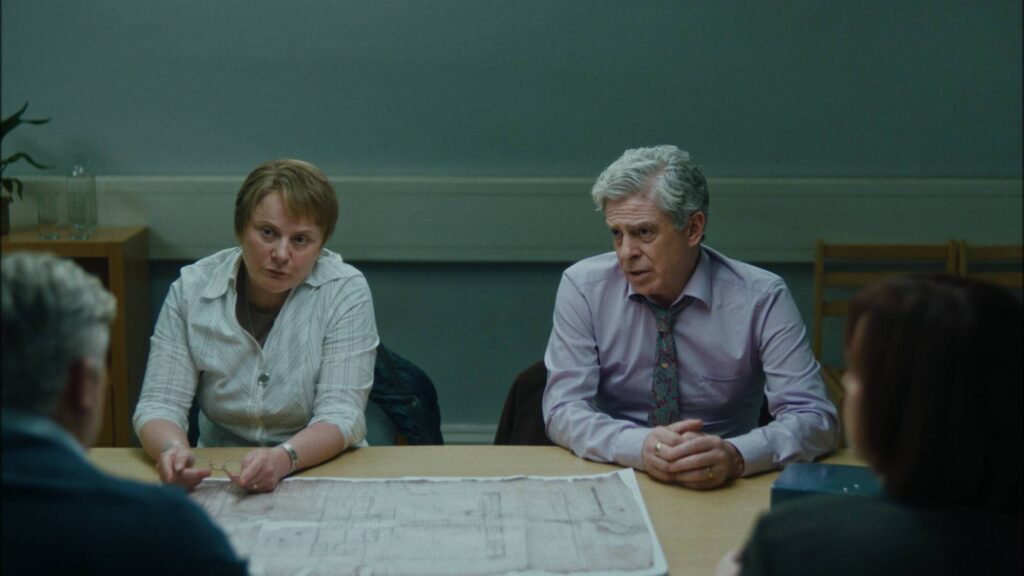

We all know how Catherine Corless became a national figurehead through her extraordinary work uncovering wrongdoing at Tuam Mother and Baby Home. Now, director Frank Berry brings her fight to the screen.
The Lost Children of Tuam (12a), based on Dan Barry’s New York Times article, adapted by Rebecca Lenkiewicz, and produced by Liam Neeson, has heavyweights behind it, but Berry’s light touch keeps things understated.
In 2010, Catherine Corless (Monica Dolan), who is studying history at a community college in Galway, chooses to research the Tuam Mother and Baby Home, which operated from 1925 to 1961.
Catherine’s research reveals little information. A phone call to the nuns at Bon Secours, who had run the home, is not fruitful. She checks the records and interviews locals to see what they remember about the home. She hears the story of two men who discovered the remains of infants when they were young boys.
When she meets with the men, what Catherine hears doesn’t quite add up. Everyone says the bones belonged to victims of the Great Famine, but her research suggests otherwise: The burial site wasn’t old enough to date to the Famine.
Further research reveals something far more horrifying. The place where the remains were found was, in fact, a septic tank.
Filled with growing unease — and quiet anger — Catherine digs deeper. She seeks burial records from the local county office. She gathers personal memories of life inside the institution.
She starts calling burial grounds and cemeteries, trying to trace the graves of some of the children whose deaths she has found recorded. One by one, she searches the names. She finds no graves.
As the scale of what happened emerges, Catherine’s fight escalates. She studies maps, demands to meet with people in authority, and meets face-to-face with two nuns who give out to her for upsetting their elderly members.
As the story begins to gather national attention, survivors land on Catherine’s doorstep, hoping their stories might help her find where their children were buried. Children born in the home come to share their memories of living there when they were young.
All the while, Catherine’s husband Aidan (Andrew Bennett) remains steadfast by her side, quietly worrying as she becomes more exhausted, but always resolute in his belief that, despite her shyness, she is the right person to speak for the 796 lost children.
We all know the story, but seeing it told makes it no less devastating. Dolan is superb, capturing not just Corless’s accent, but every nuance of her character. Bennett brings warmth and softness to Aidan. Together, they embody the couple’s gentle resolve.
Lenkiewicz’s script isn’t flowery. There are no great speeches or heightened dramatic moments. It honours the truth of the story: That Catherine Corless is just an ordinary woman, but one who found herself uncovering Ireland’s greatest shame.
Berry keeps things real and unshowy, resulting in a film that is quietly devastating and gently powerful. Vital stuff.
Sense and Sensibility
★★★★☆
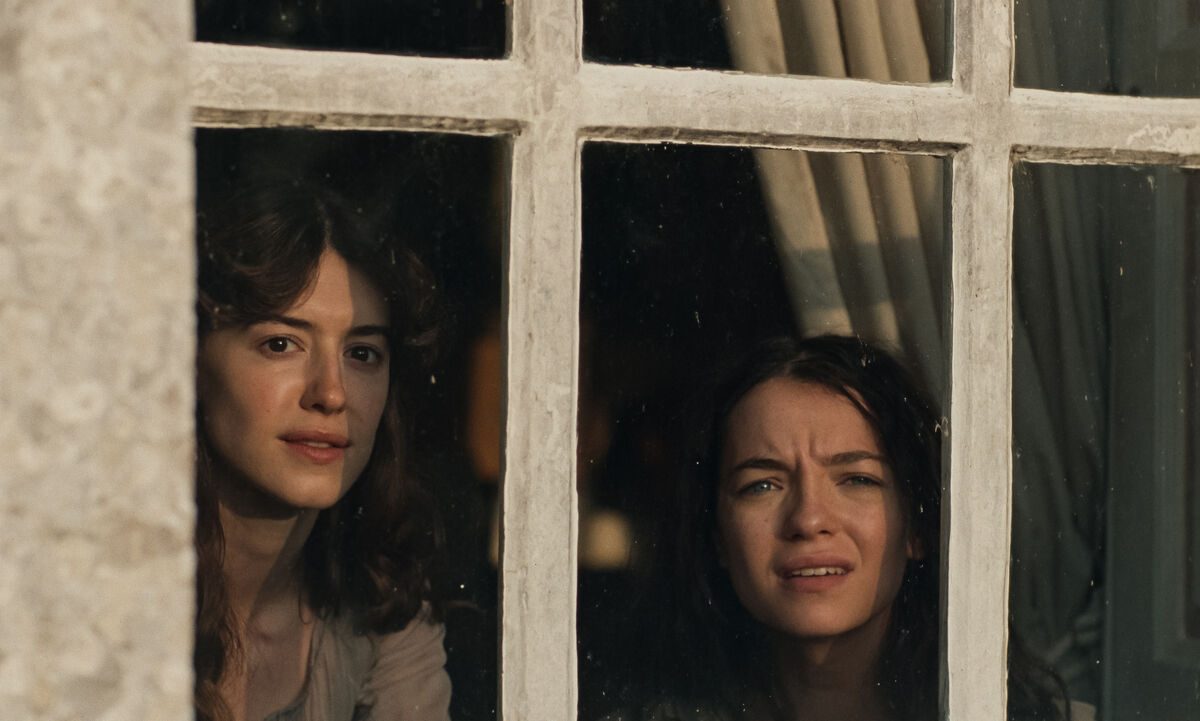
Another adaptation of Sense and Sensibility (PG), you ask? Why, yes, there is always room for more Jane Austen.
When the head of the family dies, Mrs Dashwood (Caitríona Balfe) and her daughters Elinor (Daisy Edgar-Jones), Marianne (Esmé Creed-Miles), and Margaret (Bodhi Rae Breathnach) are left penniless and soon to be homeless.
Before they leave home, Elinor meets Edward (George MacKay), who forms an immediate bond with her, a woman who keeps her emotions and thoughts close to her heart. She is vastly different to Marianne, who is open and free with her thoughts.
When the family relocates to their new home, they must get used to a much simpler life, but they have a generous benefactor in Mrs Jennings (Cork’s Fiona Shaw), who is determined to find matches for the girls. She picks Colonel Brandon (Herbert Nordrum) for Marianne, but Marianne is far more interested in the charismatic Willoughby (Frank Dillane).
Meanwhile, Elinor must make do with letters from Edward, as the course of any Austen love story never runs smoothly.
Directed by Georgia Oakley, from a script by Diana Reid, this new outing is rich in sisterly love.
Balfe is a more restrained Mrs Dashwood, putting the family dynamics front and centre while ensuring the love stories are not forgotten.
Indeed, Elinor and Edward’s subtle love burns all the brighter for the yearning we see in Edgar-Jones and MacKay’s eyes. Both actors are terrific, with Edgar-Jones giving her best performance yet.
Dillane lacks the effortless charm needed to play the rakish character, while Nordrum struggles with Brandon’s perfect English accent.
However, these are small grumbles in a film that is otherwise an absolute delight. Gorgeous casting, costumes, and score make this a feast for the senses.
The Love Hypothesis
★★★☆☆

Based on Ali Hazelwood’s bestseller The Love Hypothesis (NA), the story follows Olive (Lili Reinhart), a PhD student unlucky in love and friendship — until she meets her soon-to-be best friend, Anh (Rachel Marsh), on her first day of college.
Olive is shy around guys and, as a demisexual, only feels attraction with a strong emotional bond. This makes casual dating hard. She has developed feelings for her classmate Jeremy, but he has fallen for Anh.
Olive wants Anh and Jeremy together, but knows Anh won’t act while Olive has feelings for Jeremy. So, Olive grabs the first guy she sees and kisses him, starting her fake boyfriend plan.
The guy is Adam Carlsen (Tom Bateman), a brilliant but intimidating professor. After Olive explains her plan, Adam sees that pretending to date will also help his career at Stanford. They agree to fake a relationship for mutual benefit.
Can they have a fake relationship and make everyone believe it? And what are the probabilities that it might become something real?
Reinhart and Bateman have huge chemistry, as do Reinhart and Marsh. The romcom elements are formulaic, but there is enough charm to make this an entertaining romp through love and laboratories. It may not break any new scientific ground, but the formula works, and the results are surprisingly charming.