
From Astoria and Ritzy to Venus and the Cookie Club, revisit Nottingham’s nightclub scene of the 80s and 90s.

(Image: Ed Dexter)
Which Nottingham nightclubs were the go-to spots for a night out during the 80s and 90s?
The answer will vary depending on who you ask. However, certain iconic venues – whether you loved or loathed them – remain etched in everyone’s memory.
So, whether you frequented Zhivago’s or Hippo’s, preferred indie music or disco beats, we’ve compiled a list of the most memorable clubs from that era to help you reminisce about those glory days.
We’re keen to hear your favourite recollections of nights out in Nottingham. If any of these venues bring back fond memories, or if we’ve overlooked any, please share your thoughts in the comments section below.
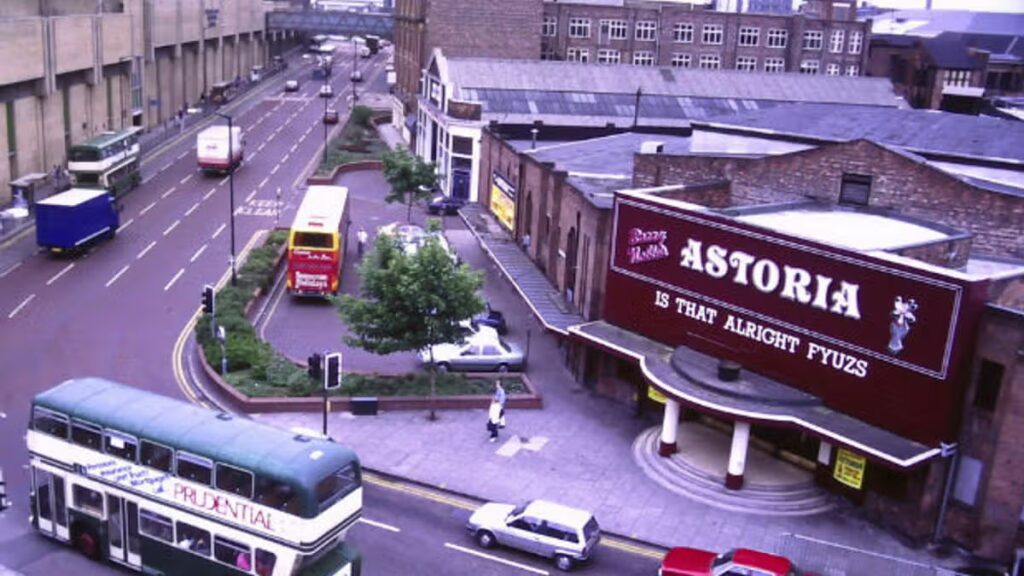
Astoria in Greyfriar Gate (also MGM, Ocean)
To use its full title, Barry Noble’s Astoria. In 1984, he purchased what had previously been the Astoria Ballroom and later the Sherwood Rooms from Mecca, transforming it into one of the era’s most iconic clubs – complete with its ‘Is That Alright Fyuzs’ slogan displayed on the building’s facade.
So who exactly was Barry Noble?
It’s fair to say he lived life in the fast lane and died young. The millionaire had a penchant for naming venues after himself – such as Barry Noble’s Roxy in Sheffield – and at his peak owned eight vehicles, three properties, 40 amusement arcades and seven nightclubs.
He passed away on the Isle of Man in 1985 aged 43 following a heart attack. The venue retained his name until the 1990s when it was rebranded as MGM, before becoming Ocean in 1999.
Beatroot, Broadway
Beatroot in the Lace Market held a certain appeal, despite an incident in 1999 when over 350 patrons evacuated after gunfire erupted during an altercation. The venue became the inaugural home of the Spectrum club night in 2001, though it soon shut its doors.
By 2004, the space had been transformed into Evasion – described as an “over-21s’ night club offering soulful grooves for well-dressed patrons”, no less.
Black Orchid, Redfield Way (also Isis)
In 1992, a fledgling Take That performed at the Black Orchid, a substantial nightclub near the Showcase. The band were so taken with local promoter Johnny Moore that they invited him to join their team.
Did he accept their proposition?
He did not. With only 300 attendees, the promoter suffered a £15 loss that evening and decided against pursuing the opportunity.
The Black Orchid shut down in 1998, with the premises later becoming Isis, which itself ceased operations in 2009.
Cookie Club, Pelham Street
This iconic establishment opened its doors in 1990 on a site formerly occupied by The Pelham Club, a gentlemen’s venue. Following a decade of fog machines and premier indie tunes, the Cookie Club relocated to St James’ Street (see Pieces, below), while the Pelham Street location was reborn as blues venue Tilt.
Easy Street, Masonic Place, off Goldsmith Street (also New York New York)
Easy Street’s tagline proclaimed, ‘More than a nightclub, it’s a way of life’. That rather sums it up.
The establishment subsequently became New York New York.
The Garage, St Mary’s Gate (also Kool Kat, Lizard Lounge)
The heritage of this venue is somewhat perplexing. During the 1980s, it operated as The Garage, featuring indie music downstairs while more dance-focused sounds played upstairs.
The early 1990s saw it transform into the Kool Kat, before reverting to The Garage once more, and subsequently becoming Lizard Lounge.
Each incarnation proved popular, though. Perhaps that explains why recollections remain rather foggy.
In any case, it later became BZR, which shut its doors in 2015 following a stabbing incident.
Hippo, Bridlesmith Gate (also the Bomb)
A superb basement venue boasting at least two notable distinctions. Notable distinction number one: This was the birthplace of influential Nottingham band Tindersticks, when vocalist Stuart Staples spotted violinist Dickon Hinchcliffe performing on stage.
Notable distinction nunmber two: Comedian Lee Evans once performed at the Hippo. He remembers battling to make himself heard above the din from the adjacent room whenever someone opened the connecting door.
It transformed into the Bomb (below) in 1997, and subsequently became Coco Tang.
Liberty’s, Upper Parliament Street
Opening its doors during the mid-1990s, it ceased trading 15 years later in 2009 after sustaining serious fire damage.
That was likely welcome news for the city’s courts – at times it appeared as though half the individuals appearing on Monday mornings at Nottingham Magistrates’ Court had been drinking here the previous Saturday.
Italian eatery La Salute launched on the premises in 2013.
Madisons, Goldsmith Street (also McClusky’s)
This venue had its fair share of turbulent history, though not necessarily during its time as Madisons, a spot fondly recalled by a particular generation of Nottingham nightlife enthusiasts. It subsequently became McClusky’s, before reopening in 2003 as Mode following a £1m refurbishment.
When the 1,150-capacity Mode applied for extended opening hours in 2005, police identified it as the second-worst venue in the city for alcohol-related violence and disorder, surpassed only by The Works. Further trouble followed after Mode rebranded as Halo, ultimately leading to its closure in 2010.
Pieces, St James’ Street (also Deluxe, Cookie Club 2)
In the early 1990s, you would go there just to be able to say, “Yep, I went to Pieces last night.”
Or maybe that was just me. More notably, there is strong evidence to suggest that a considerable number of Nottingham residents met their future partners at this iconic club.
Following Pieces’ closure, the venue transformed into Deluxe, one of several city locations to host the legendary Detonate club night. In 2001 it reopened as the Cookie Club, which had previously been situated on Pelham Street.
The Cookie Club shut its doors at the end of 2015, before relaunching as Retro Rooms in 2016.
Ritzy, Parliament Street (also the Palais)
Perhaps the most iconic of all Nottingham’s nightlife venues, it has traded under several names – the Palais, Ritzy, the Palais once more, then Oceana, and finally PRYZM.
Venus, Stanford Street
Despite only operating for four years between 1990 and 1994, Venus achieved near-mythical status owing to its strong association with the rave music scene. Occupying a venue known as The Club, it became Nottingham’s equivalent to the legendary Hacienda.
During its four-year run, the establishment welcomed renowned DJs including Pete Tong, Brandon Block, Jeremy Healy and Fatboy Slim.
Zhivagos, Milton Street (formerly Tiffany’s)
How should we describe this one?
For certain people, visiting this venue was considered a milestone. For others, it was somewhere they wouldn’t dream of setting foot in.
Opening on the former Tiffany’s site, its unexpected closure came in 1989. (Though the new proprietors, who established a Vision Express there, presumably anticipated it).
*The dates listed above are accurate to our understanding – though occasionally varying dates appear across different sources. If you believe we’ve made an error, please inform us in the comments section.
As always, several venues didn’t make our list. Arabella’s on Wollaton Street; The Monastery on Broadway; Barracuda in Hurt’s Yard, Dubble Bubble (and Eden?) on Greyhound Street – if you possess photographs of these or other establishments not featured, please contact us at newsdesk@nottinghampost.com.