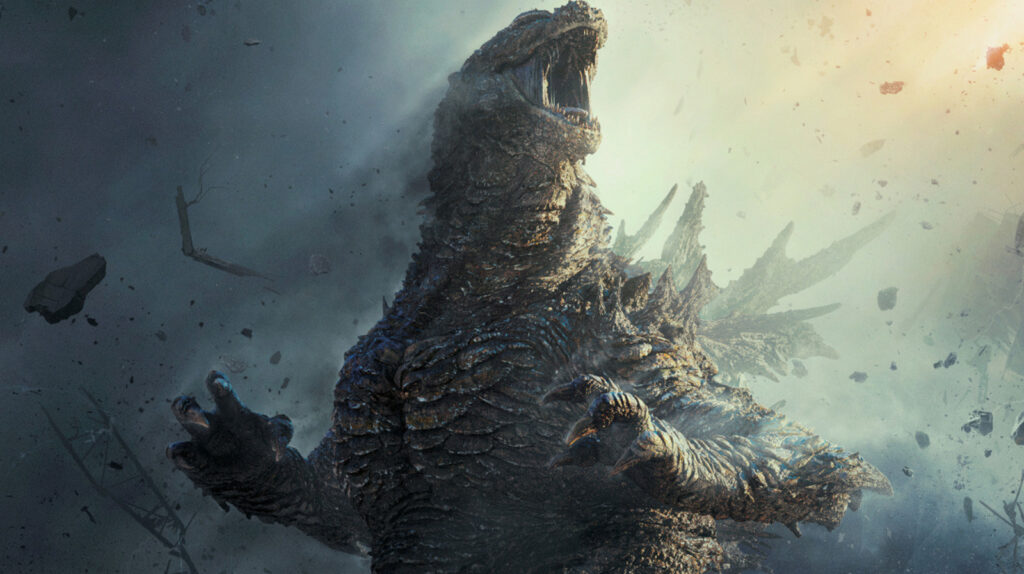

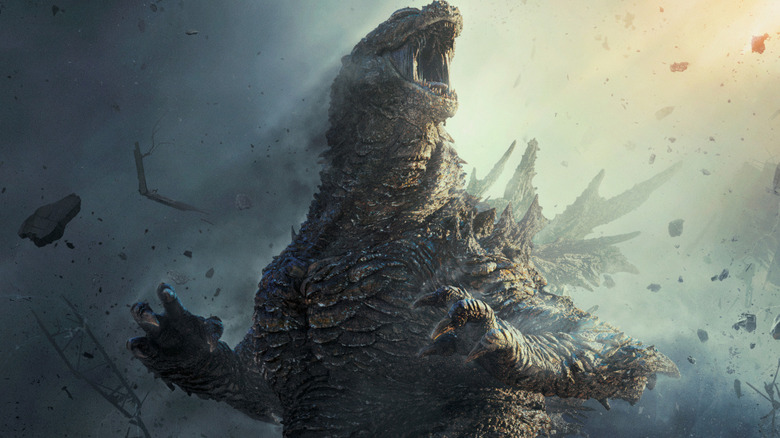
There’s just something uniquely enduring about Godzilla. For all the atomic-breathing havoc he likes to wreak, the King of the Monsters has always symbolized nuclear anxieties coming home to roost. Sure, sometimes spectacle is the point. Outside of 2014’s “Godzilla,” American blockbusters sure have done their best to strip away any inconvenient subtext in favor of lizard-brained nonsense instead. (I enjoy pink, bisexual-lighting Godzilla and his mech-gauntleted frenemy Kong as much as anyone, but it gets to a point.) And, to be fair, Japanese studio Toho practically invented the blueprint for this approach half a century ago. But the one-two punch of “Shin Godzilla” and 2023’s “Godzilla Minus One” marked a turning point. These didn’t merely bring us back to the potency of the 1954 original; they raised the bar sky-high for the existential demons that Big G is capable of exorcizing.
“Godzilla Minus Zero” takes that thematically rich baton and … well, it doesn’t run with it so much as it stomps its way straight through Matsumoto, Ginza, and the wider Tokyo metropolitan area. Writer, director, and VFX supervisor Takashi Yamazaki returns for his second round in the ring and does so with the conviction of someone with a point to prove. Nowhere in Hollywood will you find a big-budget sequel that so effortlessly combines breathtaking visuals of mass destruction and death with the rich, emotional poignancy of a family drama. This is what movies were made for.
“Minus Zero” aims higher, dreams bigger, and branches out even wider than “Minus One” ever did — but such ambitions come at a cost. Inevitably, this leads to a somewhat shaggier sequel that sacrifices intimacy for intensity. While not a death blow by any means, what we’re left with is a very, very good film falling just short of greatness.
Godzilla Minus Zero brings back our favorite characters — along with some new ones
Set two years after the events of “Minus One,” the action picks up in 1949 Japan and unfolds in classic “Godzilla” fashion: with a terrorized populace running for their lives from yet another kaiju calamity. “Minus Zero” turns on the afterburners right out of the gate and never bothers giving viewers a chance to ease in. After all, why beat around the bush? The showy tracking shot that opens the film and immediately depicts an apocalyptic nightmare is an early hint of Takashi Yamazaki’s mischievous tone. Even before revealing the gargantuan villain of the story — which, unavoidably, we must treat as a “spoiler” for now — “Minus Zero” plays with our typical expectations of a “Godzilla” movie and provides an early appetizer of the immersive, visceral, and shockingly R-rated violence to come.
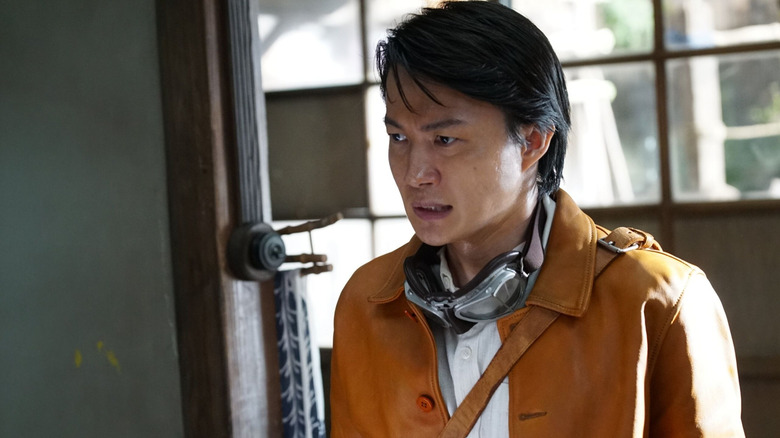
That sense of ever-prevalent danger also extends to our ensemble. Former kamikaze pilot Kôichi Shikishima (Ryûnosuke Kamiki) takes on a more passive role this time around, enlisted as a simple “advisor” by returning doctor and Disaster Response Bureau chief Kenji Noda (Hidetaka Yoshioka, oftentimes serving as our de facto lead). Kôichi has since married his co-parenting partner Noriko (Minami Hamabe) and, together, they’ve raised young orphan Akiko (Sae Nagatani) as their own daughter. Conflict arises when both are tempted to heed the call to war, making this trouble in domestic paradise feel as urgent and pressing as the impending end of the world as we know it.
When “Minus Zero” widens its perspective, however, things begin to sag. Scientist Makoto Aoyama (Masami Nagasawa) and professor Kanji Murakami (Min Tanaka) are given full-fledged arcs of their own. Unfortunately, their ill-fitting material can’t help but feel oddly superfluous.
The best part of Godzilla Minus Zero is its exploration of post-war Japan in a world of kaijus
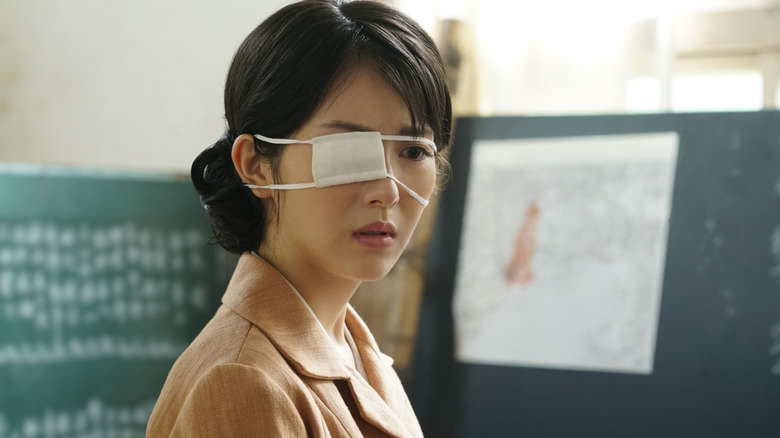
Giant, radioactive kaiju will literally lay waste to entire cities and epitomize the tortured psyche of a collective nation grappling with atomic annihilation instead of going to therapy. You know what, it’s fair to say that movies like this actually are therapy. Takashi Yamazaki isn’t necessarily breaking any new ground in this regard, but the filmmaker finds true innovation in his purposeful approach to post-war Japan.
Clouds of smoke and the stench of death intrude upon nearly every frame of “Godzilla Minus Zero” (a title referencing the “negative” state the island nation is clawing back from following World War II), but regret and trauma and the desperate need to avenge their losses loom even larger. This isn’t just emphasized by flashbacks to memorable moments from “Minus One,” but by scenes set amid the grisly aftermath of the Hiroshima bombing — a permanent scar that parallels the United States’ role in the narrative, as well. While we wait for Godzilla to make his first proper reappearance (a pivotal, goosebump-inducing sequence that takes an impressive amount of the film’s 135-minute time to arrive), the script dives even deeper into themes of isolation, distrust in authority, and the prevailing fear of making the same mistakes all over again.
If the human drama once again remains a strength, that’s only outdone by the bombast and grandiose sense of scale backing it up every step of the way. “Minus Zero” almost seems stubbornly resolved to dial up the action to heights rarely seen in this franchise. Even the Hollow-Earth silliness of the recent MonsterVerse movies pale in comparison to the eye-popping visuals conjured by Takashi Yamazaki. This is blockbuster filmmaking done right.
Godzilla Minus Zero is a visual treat and technical wonder, but falls slightly short of Minus One
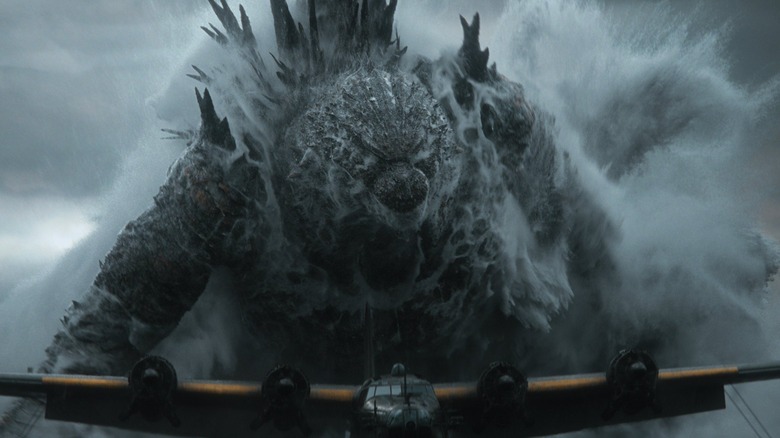
Like its predecessor, there’s no denying the fact that “Godzilla Minus Zero” is designed to be experienced on the largest possible canvass. The film frequently makes full use of the screen throughout its biggest moments, living up to all the IMAX-sized hype as Japan’s first production filmed in the format. To wit, Takashi Yamazaki stages one jaw-dropping set piece with the meticulousness of someone who’s taken note of the dire state of most studio blockbusters in the Western Hemisphere these days — and taken it personally. Between composer Naoki Satô foregrounding the score with siren-like strings and blaring horns (including an almost overwhelming arrangement of the classic Godzilla theme) and cinematographer Kōzō Shibasaki constantly evoking a gods-eye perspective and a dizzying sense of scale, “Minus One” is a visual treat and technical wonder.
So, after so much effusive praise, why wouldn’t Gojira’s latest at least be on par with “Minus One”? As with anything, that distinction will ultimately come down to taste and preference. By comparison, the 2023 film feels leaner and more zeroed in on Kôichi’s arc as a stand-in for the plight of Japan in the macro, an elegant simplicity that the sequel can’t fully match. As two halves of a whole, both films pair nicely with one another when viewed as a two-part family saga of Kôichi, Noriko, and Akiko … although, despite the trailers suggesting otherwise, the ending strongly implies that a third film wouldn’t be entirely out of the question.
Either way, “Minus Zero” still ranks among the better franchise installments — even if this King can’t quite take the crown.
/Film Rating: 7.5 out of 10
“Godzilla Minus Zero” hits theaters November 6, 2026.