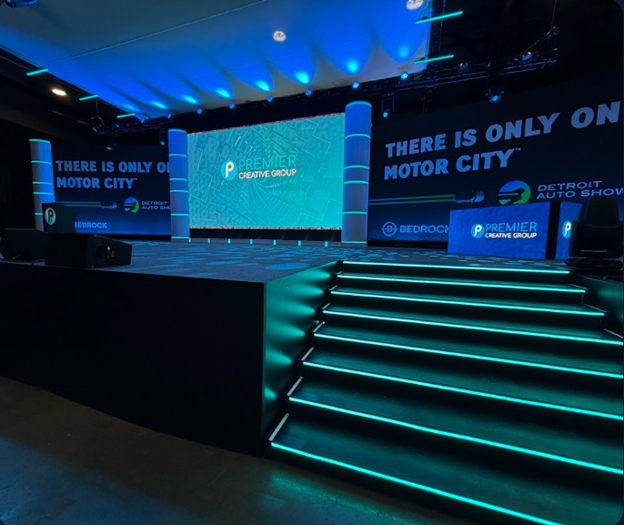

A great live show feels like it happened on its own. The lights change on cue, the vocal sits cleanly above the band, and the video wall shifts at the exact moment the song turns. None of that is luck. It is the product of a live show production plan that was drawn, argued over, and rehearsed long before anyone in the audience found a seat.
The people responsible for that feeling almost never get named in a review. They are audio engineers, lighting designers, video techs, riggers, and stage managers. Their work is judged by how invisible it stays. When an audience notices the production, something has usually gone wrong.
Live entertainment has also grown more technical every year. Audiences arrive having already seen tour clips, camera plots, and lighting looks on their phones. The expectation in the room is set before anyone walks in, and a crew has to clear that bar live, in one pass, with no second take.
How the load-in sets the limits for live show production
Every room has hard limits. Ceiling height, rigging points, available power, sightlines, and the size of the load-in door decide what a show can physically be. A production team walks the space early and measures those limits against what the artist or the client wants on stage. That conversation happens on paper first, then in a 3D drawing, then in the building itself.
Skipping that step gets expensive fast. A truss position that clears the ceiling by inches in a drawing can miss by a foot in the room. A speaker array aimed for a flat floor can wash out a balcony. Fixing either problem on show day burns crew hours nobody budgeted, and it comes straight out of the rehearsal window, which is the only part of the schedule that makes the show better.
This is why touring shows carry a production design built to be adapted room by room. Stadium runs such as the Love Yourself tour hold together because the show was designed to be torn down and rebuilt every night without losing the thing that made it feel like one show.
Audio, lighting, and video work as one system
Three departments shape what an audience feels, and all three want the same real estate. Audio needs a clear path from the speakers to the crowd. Lighting needs clean angles and no unwanted shadows. Video needs a surface big enough to read from the last row. Any one of those needs can block another.
Strong teams settle that conflict early, in one meeting, over one drawing. The alternative is three departments each solving their own problem well and delivering a show that feels stitched together. Audiences cannot name why that version feels off, but they feel it when the sound arrives from one direction and the eye gets pulled somewhere else. Someone has to decide which department leads each moment, and which two get out of the way.
The same rule governs keynotes, award shows, and touring theater. We plan audio, video, lighting, and scenic design as a single system instead of four separate rentals, because the seams are what an audience remembers.
What rehearsal catches before doors open
Rehearsal is not a formality. It is the first time the cues, the timing, and the room all meet. A lighting cue that looked right in software runs slow when a presenter walks faster than expected. A microphone that sounded clean in an empty hall changes character once a few thousand bodies absorb the reflections.
Crews use that window to catch small problems while they are still small: mic swaps, cue timing, camera framing, playback levels. By the time the doors open, the goal is a show that can run the same way twice, even though it never quite does. None of that work is dramatic, and all of it is the difference between a clean night and a long one.
Who runs the show once the doors open
The build ends when the doors open, and a different job starts. A lighting director calls cues live against the set list or the run of show. A front-of-house engineer rides the mix as the room fills and the sound changes. A monitor engineer keeps the performers hearing what they need, which is a different mix entirely. A video director cuts cameras. A stage manager runs the deck and keeps people and gear moving on time.
Those roles overlap constantly, and the overlap is where shows break. A lighting cue can hang on a camera shot that belongs to video. In our experience, the shows that run clean are the ones where every handoff was assigned by name in advance instead of sorted out in the dark. At Premier Creative Group, we staff those positions from one crew instead of four vendors, so the handoffs happen between people who already work together.
The bottom line
A live show is built backward from the moment the doors open. The room sets the limits, the departments agree on who leads each moment, rehearsal proves it, and the crew holds it together once the audience is in the seats. Everything an audience calls magic was a decision somebody made hours or days earlier.
That is the honest appeal of live entertainment. A film is finished before anyone sees it. A live show is decided that night, in that room, in front of people who can tell when it lands. The crews who build it spend days making sure the room is ready, then hand the night to the performers and let go of it. That handoff is the job. Done well, nobody in the seats has any idea it happened.
Author bio
Premier Creative Group provides audio, video, lighting, scenic design,
and creative services for corporate events, conventions, and live
productions nationwide, and is the preferred AV partner at Huntington
Place in Detroit since 2014.