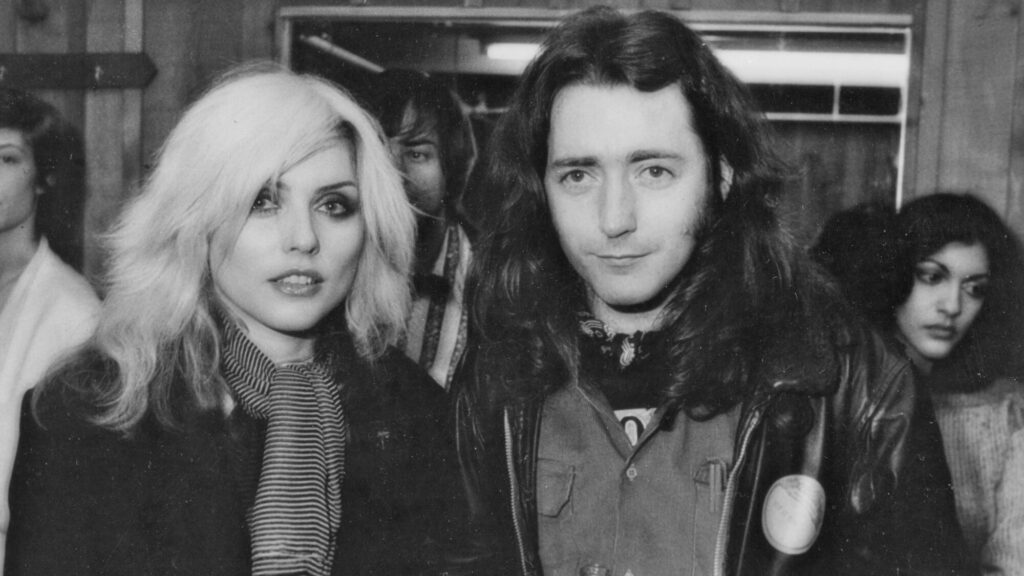

Rory Gallagher was always riding the rails. As a child, he moved between Donegal, Cork, Derry and Coventry, before eventually settling in Cork. As a musician, he ate up the miles, touring North America more than 25 times.
Like his contemporary Bob Dylan — the two had huge mutual respect — he couldn’t get off the road, no matter how rich or famous he became, a conundrum captured in his song
“Parallel with being a musician is being a troubadour,” says Dónal Gallagher, who has written a book about life riding shotgun with his guitar-slinging brother, as his manager and confidante. “It’s part of that gypsy lifestyle. Everything was a travelogue in the early music he listened to, be it rock ’n’ roll, blues, Woody Guthrie, or Lonnie Donegan covering .
“Growing up, we seemed to be always on a train going from Cork to Derry or travelling a ship across to the UK and back. Travel was built into the DNA. There was a bigger world out there. The day after he did his Leaving Cert in 1965, he was on a plane with his showband to play in Franco’s Spain in a US airbase.”
Rory had to get his hair cut to enter Franco’s Spain. Local Irish newspapers in the 1960s claimed he had the longest hair of any man in Ireland.
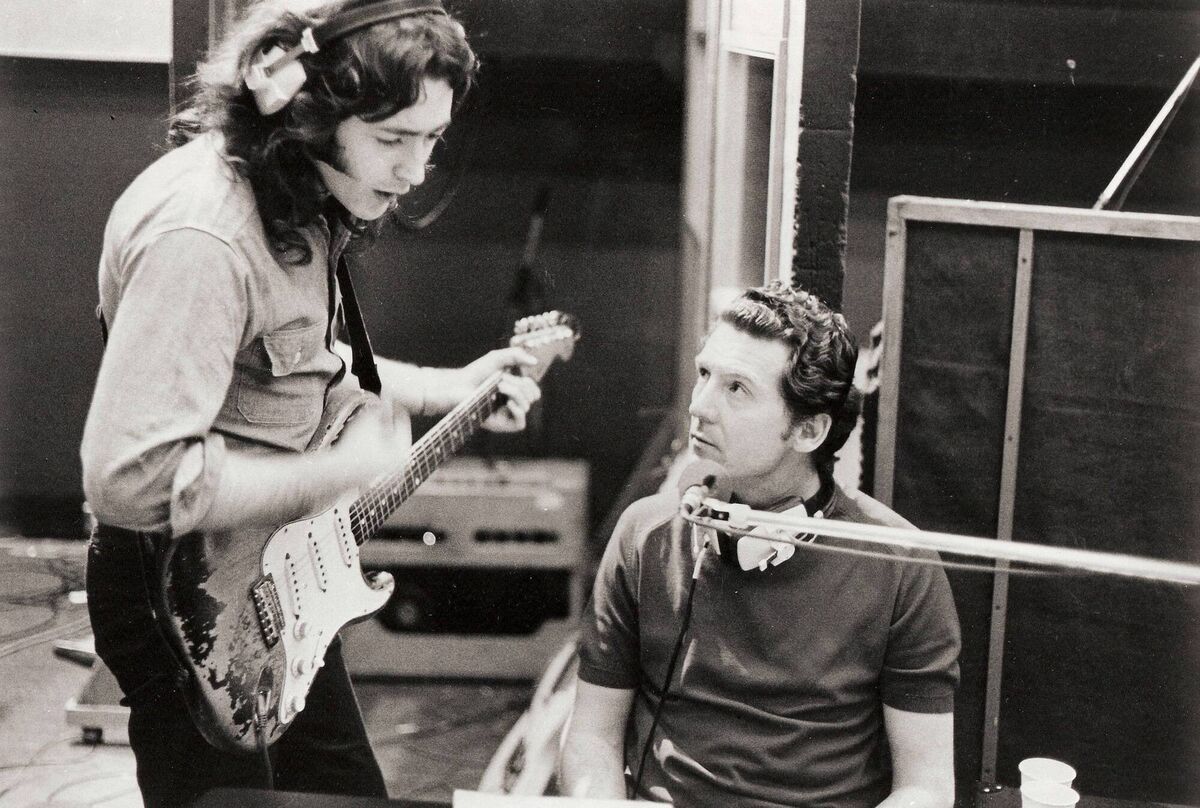
Dónal Gallagher’s book, crackles with wonderful tales from life touring during the golden age of rock’n’roll, including face-offs between Ginger Baker and Janis Joplin while Rory Gallagher’s band Taste supported the supergroup Blind Faith in 1969; and another fiery encounter between ‘The Killer’ Jerry Lee Lewis and John Lennon at a gig on LA’s Sunset Strip in 1973.
The book will overshadow previous Rory Gallagher biographies. “Other people’s books on Rory didn’t have a grasp of Rory,” says Dónal Gallagher. “They were basically cutting and pasting interviews I might have given.”
focuses on “Rory the musician” with glimpses into the musician’s private life. “The Last of the Independents”, to borrow one of his song titles, never married, fearing it might stand in the way of his music.
His brother suggests Rory spent his life building a wall around himself, ensuring there were no distractions, even though females often fancied him, going back to his days starting out on the Cork music scene in the 1960s.
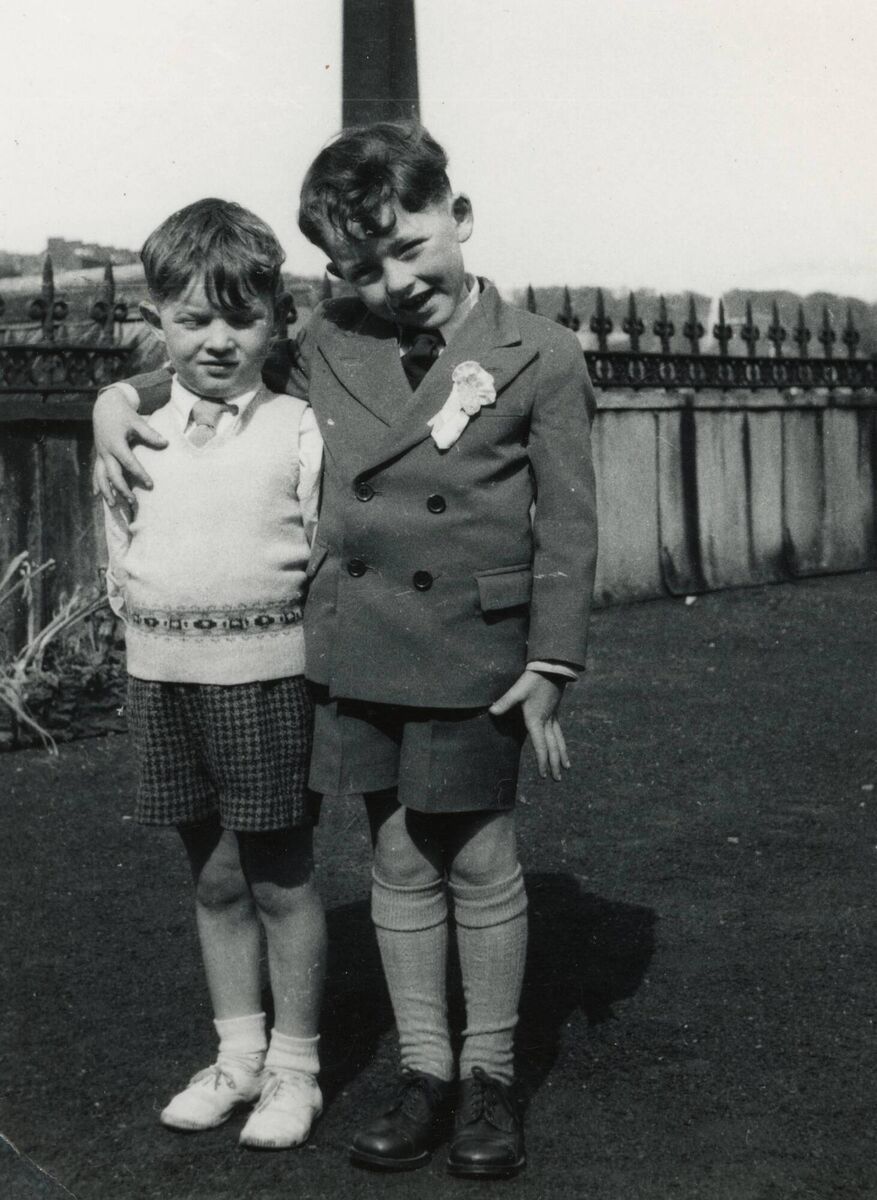
“Music was a vocation,” says Dónal. “By nine, he was on stage playing a guitar. His whole ambition was, how do I get better?”
He continues: “Rory ‘loved the company’ [of women on tour], but it’s hard to sustain a relationship if one night you’re in Hamburg, the next night in Berlin, and a schedule ahead of you. He had a band to run. He was a devoted musician. Also, you must be lucky in life to find the right person.
“Rory was a very private person. Obviously, he had ‘attractions’, but there was no steady girlfriend. There were plenty of girls — I still know some of them — that would mourn him badly.
“Particularly later in life, I wished for him to meet somebody, but he was buzzing around like a bee. He was already in his own mould, being single. He loved the idea of, ‘Oh, tomorrow I could be in Athens and play a gig, or somebody could call me up to do a recording session in New York and I’d be on a plane’. That was him, footloose and fancy-free.”
His premature death in June 1995, at 47 years of age, was technically due to liver transplant complications, but there were underlying factors: a punishing, unsustainable obsession with touring, a Catch-22 situation — he needed rest but he couldn’t face getting off the road; a bad diet, lack of sunlight; a reclusiveness that exacerbated underlying depression; and, fatally, what one doctor described as a “devil’s brew” — alcoholism mixed with an addiction to prescription drugs.
“I had to face [Rory’s death] head-on writing the book,” says Dónal. “It wasn’t pleasant. When you see somebody suffering, where there’s mental anguish, all part of a long slow illness, it’s like a crash waiting to happen. You’re trying to prevent it.
“Writing the book wasn’t cathartic, as you’re constantly judging yourself: maybe I should have said, ‘Don’t go back on the road’ or whatever. But Rory was so insular, even to me. We didn’t really have personal conversations. It was a no-go area with Rory. You had to be intuitive about what he was.
“You almost worked in mental telepathy. If he wanted to tell you something, he was going to tell you, otherwise you were wasting your time. In hospitals, clinicians would say, ‘My God, your brother’s one stubborn person. He’s a gent, but he doesn’t give out anything’.
“There were stretches of time where deliberately there wouldn’t be any bookings. Then that was a problem for Rory. He’d be in his house in London on his own. You’d call up to see him, and he couldn’t function. He wouldn’t even let the gas or electric man read a meter; he’d bar the door. He’d wait for a summons rather than let anyone into the house.
“He was isolating himself. During times off, he went downhill. He was in danger. That worried me. Will he survive tonight? He needed a schedule. It’s evident in a lot of the musicians. They must gig. It’s like breeding a collie: ‘I’ve got to work. I’ve gotta chase sheep and cattle.’ It’s inbred. It’s a hard one to square.”
The film director Alan Parker wanted to get in touch about a music film project, it felt like manna from heaven.
Alan had begun work on what would become The Commitments, and his casting team was searching for an actor to play one of the book’s key characters, Joey ‘the Lips’ Fagan. He was an ageing trumpet player who’d regale his bandmates with stories about working with old-time music legends back when he lived in the States.
It seemed that the book’s author, Roddy Doyle, was prepared to adapt the script so the part of Joey could be a guitarist instead of a trumpet player. The backstory of this character was that he’d once been a musician ‘breaking the mould’ of the traditional Irish music scene.
I think, in that sense, Rory probably formed part of the writer’s inspiration for the character of Joey Fagan, as Rory had broken out of Ireland’s showband scene to perform with American legends such as Muddy Waters, Albert King, Jerry Lee Lewis and others.
I told Rory that Alan Parker wanted to meet with him to discuss the part. I hoped this opportunity would help turn around my brother’s decline. I had visions of early morning shoots reversing his antisocial schedule of working through the night, and that being on screen might motivate Rory to pay more attention to his appearance and wellbeing.
We ventured to Soho, to the office of Hubbard Casting. Rory was ushered into a separate room to meet with Alan Parker. The longer their chat went on, the more encouraged I felt.
Some while later, both men reappeared, looking as if the meeting had been positive, though Rory quickly bid everyone farewell and went on his way. I followed him, desperate to know how the chat had gone. A nearby pub provided us with a chance to talk.
‘Well?’ ‘Well, I told Alan I didn’t think the part was for me,’ Rory replied. ‘I actually gave him Van Morrison’s number — I think he’d fit the role better, as he plays a brass instrument.’
- This is an abridged extract from Dónal Gallagher’s (Red Stripe Press). Available from Friday, September 25