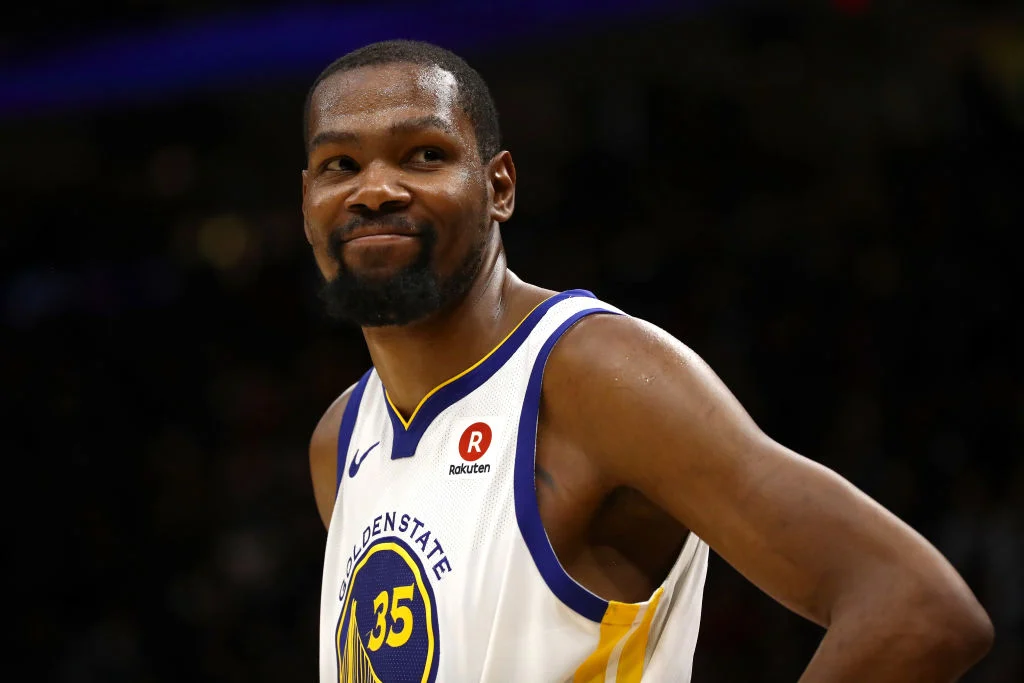

Kevin Durant was drafted second overall in the 2007 NBA Draft by the Seattle SuperSonics. The draft was held on June 28, 2007. Six days later, on July 4, Kevin signed a four-year, $19.5 million rookie contract. Two weeks after that, he signed a seven-year, $60 million endorsement deal with Nike that came with a $10 million signing bonus.
And six weeks after signing the Nike deal, on August 31, Kevin spent $2.85 million on a newly built, nearly 6,000-square-foot mansion on Seattle’s Mercer Island.
It was an odd choice for a home. Most of his teammates lived in luxury condos downtown. Mercer Island was mostly home to middle-aged middle managers from Amazon and Microsoft driving minivans to PTA meetings and soccer practices. Microsoft co-founder Paul Allen was among Durant’s neighbors.
But Kevin’s choice was intentional. He wanted to settle down and plant roots. Looking back years later, Durant remembered: “I was settling down there.” His mom, Wanda, even quit her longtime job with the U.S. Postal Service in Maryland and moved into the house to help her teenage son adjust to life in the NBA.
Life was good. Kevin was 18 years old, living in an incredible mansion with his mom, with nearly $80 million worth of NBA and Nike contracts freshly signed.
There was another nice financial perk: Washington had no personal state income tax. For a teenager who had just signed contracts with face values totaling nearly $80 million, living in Washington rather than a high-tax state like California or New York had the potential to save millions of dollars over time.
Then, after Durant’s rookie season, the owners of the SuperSonics announced that the team was moving to… Oklahoma City??? And they were going to be renamed… The “Thunder”???
Durant was stunned by how quickly it happened. As he said at the time: “I’m a little shocked and a little disappointed.”
However, as it turned out, over the next eight years, the reluctant teenage transplant became the undisputed king of Oklahoma City.
The Thunder effectively grew up around Durant. He won four scoring titles, took the team to the 2012 NBA Finals, and, in 2014, was named NBA MVP after averaging 32 points per game. His emotional MVP acceptance speech, in which he famously called his mother Wanda “the real MVP,” became one of the defining moments of his career.
Durant embraced Oklahoma City, and Oklahoma City embraced him. After the devastating Moore tornado in 2013, he donated $1 million to relief efforts. His face was everywhere. He had his own restaurant in Bricktown. He wasn’t merely the best player on the local basketball team; he was arguably the most famous and beloved person in the entire state.
By the summer of 2016, Kevin was 27 years old and squarely in his physical prime. Oklahoma City was ready to do everything financially possible to keep its king, and the NBA’s contract rules gave the Thunder an enormous advantage. Because Oklahoma City held Durant’s “Bird Rights,” it could offer five guaranteed years with larger annual raises, while any rival was limited to four years with smaller raises.
That meant the Thunder could offer roughly $153 million guaranteed over five years. The maximum another team could offer was about $114 million over four years. Durant didn’t even take the $114 million option. Instead, he signed a two-year, $54.3 million contract with the Golden State Warriors. Adding insult to injury, the Warriors had JUST eliminated the Thunder from the Western Conference Finals a few weeks prior.
Why on earth would Kevin betray his kingdom while also giving up $100 million in guaranteed contract value to join a team in the Bay Area? Gee… I wonder why…
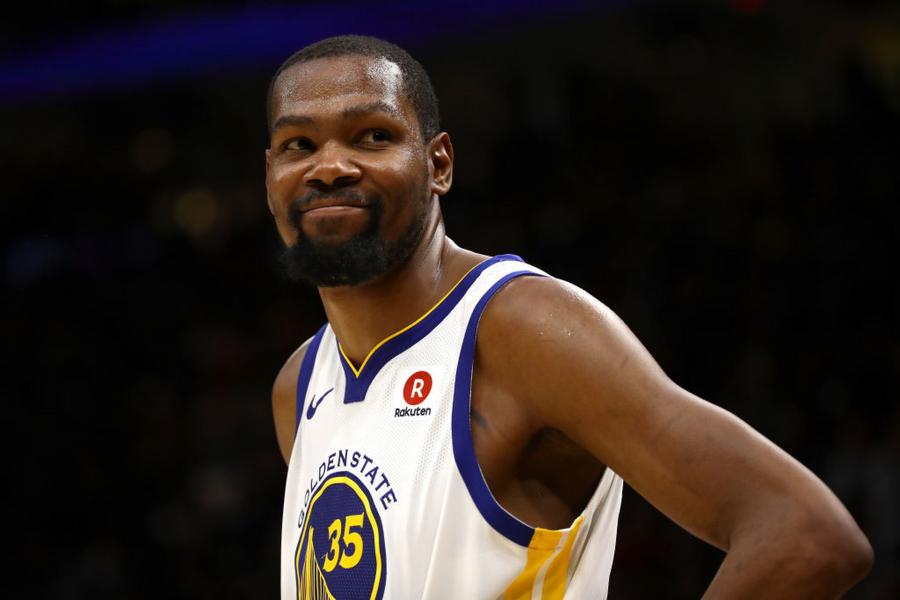
Gregory Shamus/Getty Images
From Oklahoma City To Silicon Valley
First off, we should admit that joining the Warriors probably seemed like a good bet basketball-wise. The Warriors had just won an NBA-record 73 regular-season games and featured Stephen Curry, Klay Thompson, and Draymond Green. Joining Golden State gave Durant an extraordinary opportunity to win championships, and that’s exactly what happened: two championships and two Finals MVP awards in three seasons.
But the Bay Area offered something else: access.
Durant had already begun dabbling in investments with his longtime business partner Rich Kleiman, but he would later describe Oklahoma City’s business world rather bluntly: “There’s oil and real estate… but that was a real old boys’ club, and it was hard to break into.”
The Bay Area was the exact opposite. Suddenly, some of the world’s most influential venture capitalists, startup founders, and technology executives were sitting courtside… sometimes even shoving players from the opposing teams.
At TechCrunch Disrupt in 2017, Durant and Kleiman explained how dramatically their deal flow had changed after the move, joking: “We’d never have been introduced to a drone startup in Oklahoma City.”
Durant said the biggest advantage was simply being immersed in the technology world. Warriors games became networking events, and through those relationships, he became friendly with figures including Marc Andreessen, Ben Horowitz, Airbnb founders Brian Chesky and Joe Gebbia, and Apple executive Eddy Cue. Speaking of Eddy, the following photo was taken on the fateful night in May 2016 when the Warriors eliminated the Thunder from the Western Conference Finals. That’s Eddy Cue enthusiastically screaming and pointing at Steph Curry.
This day in (recent) Golden State @Warriors‘ history- Stephen Curry and Apple’s Eddy Cue celebrate Curry’s 3 in win over OKC in Gm 7 of #NBAPlayoffs‘ West on May 30, 2016. @StephenCurry30 #curry #nba @sfchronicle photo by @ScottStrazzante pic.twitter.com/WNnyn4Zimr
— Scott Strazzante (@ScottStrazzante) May 30, 2019
Then He Actually Took Pay Cuts
After his first Warriors championship, however, Kevin didn’t get a raise. In fact, he began taking literal pay cuts. For the 2017-18 season, he could have earned roughly $34.7 million. Instead, he signed for around $25 million, leaving approximately $9.7 million on the table so Golden State could more easily retain important teammates, including Andre Iguodala and Shaun Livingston.
The following summer, Durant chose another short-term contract that paid him $30 million rather than the roughly $35.7 million available on a longer maximum deal. That represented another difference of around $5.7 million. Across those two seasons, Durant accepted roughly $15.3 million less than the maximum salaries available to him.
So by the end of his Golden State run, Durant had first placed nearly $100 million of additional long-term guaranteed contract value at risk and then subsequently left another $15.3 million of potential salary on the table.
Silicon Valley Starts Paying Him Back
One of Durant’s early bets was Postmates. He invested roughly $1 million in the delivery company around the time he moved to Golden State. When Uber acquired Postmates for $2.65 billion in 2020, Forbes estimated Durant’s position was worth roughly $15 million. One startup investment had essentially generated as much value as the salary discounts he accepted over his final two Warriors seasons.
Durant and Thirty Five Ventures also became early investors in fitness-wearable company Whoop when its valuation was around $125 million. Earlier this year, Whoop raised $575 million at a $10.1 billion valuation. As we detailed in April, we estimate 35V’s position could plausibly be worth roughly $110 million to $125 million on paper.
And then there’s Hugging Face. In 2018, while living in the Bay Area and playing for Golden State, Durant invested a reported $100,000 in a strange little technology company whose primary product was essentially an artificial friend for teenagers. A year later, he put in another $150,000.
Hugging Face eventually pivoted into one of the most important platforms in artificial intelligence. NVIDIA has now agreed to acquire the company for $12.9 billion. As we detailed in our Hugging Face article, those first $250,000 worth of investments could now be worth more than $60 million. Durant also appears to have invested additional money in Hugging Face through other funding rounds, meaning his total position could be substantially larger.
Put it all together, and just three of Durant’s Silicon Valley bets — Postmates, Whoop, and Hugging Face — may have created somewhere approaching $200 million in gross investment value for Durant and Thirty Five Ventures. And he still has dozens of bets on the table!
It’s not an exaggeration to say that over the next decade, Kevin could make more from his Silicon Valley investments than the roughly $500 million he has earned from the NBA. We currently peg Kevin Durant’s net worth at $400 million. He has a serious chance at becoming the next billionaire athlete. Now you know why giving up nearly $100 million in guaranteed contract value and leaving his Oklahoma City kingdom for the Bay Area may have turned out to be one of the best bets Kevin Durant ever made.


