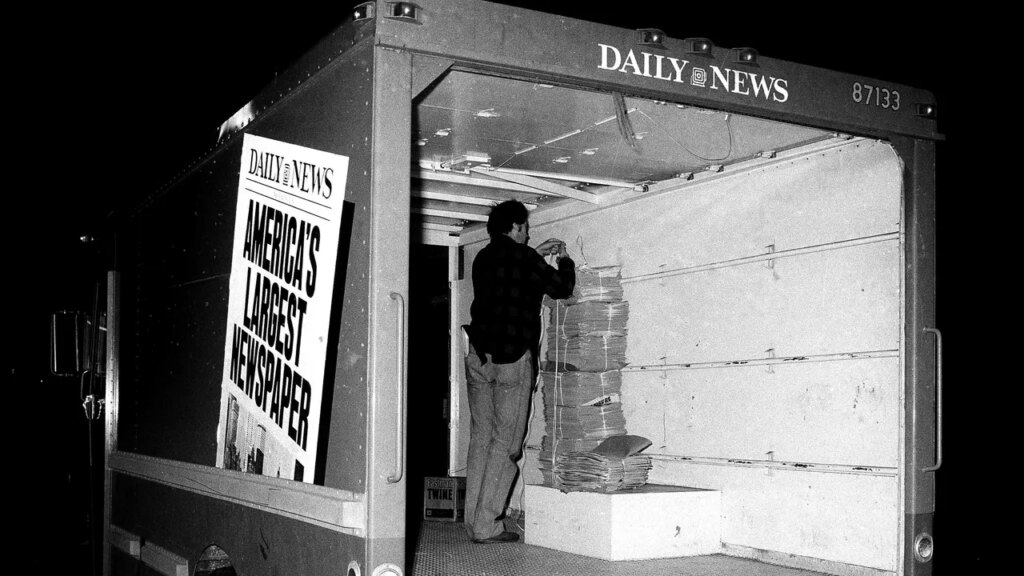

It surely wasn’t a surprise to Rupert Murdoch, who was determined to hasten Tonight’s demise. Even before it launched, Murdoch announced that his New York Post would be transforming from an afternoon newspaper into an all-day newspaper. There would be a morning edition to compete with the Daily News (which since the New York Mirror folded in 1963 had been the only local morning tabloid) as well as a late-afternoon edition carrying closing stock prices—intended to be one of the main selling points of Tonight. Murdoch also lowered his paper’s cover price to 25 cents to match that of the Daily News. It would mean millions in additional losses for the Post, but “we’re in a war here,” Murdoch said.
As he would do so many times in the decades to come, Murdoch prevailed. Clay Felker was replaced as editor of Daily News Tonight in June 1981 (apart from a stint editing the business magazine Manhattan Inc., he would never run a major publication again), and the publication folded entirely two months later.
The experiment turned out to have been an unmitigated disaster. “It was a bad marketing plan. We made a mistake,” publisher Robert Hunt conceded. “We went all out to produce the liveliest, most interesting editorial product we could, and damn it, it didn’t work.”# Mike O’Neill too had to admit that he had miscalculated badly. “I had the crazy idea that, like General Motors, we could put out both a Cadillac and a Chevy,” he wrote in a speech that he never delivered (by this time he had resigned as editor; he retired soon after).
With its investment in the Daily News having failed to pay off, the Tribune Company in 1982 put the paper up for sale—even though it still had a daily circulation of 1.5 million (larger than any newspaper except the Wall Street Journal). Initially there was little interest, due to the paper’s enormous operating costs, and it looked as though Tribune might shut it down. Then came an offer from a 35-year-old real-estate heir who had been described in the Daily News as a “whiz-kid developer” and “master builder”: Donald Trump. Trump claimed to have reached an agreement to buy the paper and its Brooklyn printing plant (but not the Manhattan skyscraper) without handing over any cash. Instead, he would split the operating losses with Tribune for five years while he arranged financing for new printing facilities. However, neither Trump nor another suitor, Joe Allbritton—the Texas millionaire who would later found Politico—could close the deal.