
This article contains spoilers for “Lanterns” Episode 7, “The Jordan Boys Legacy.”
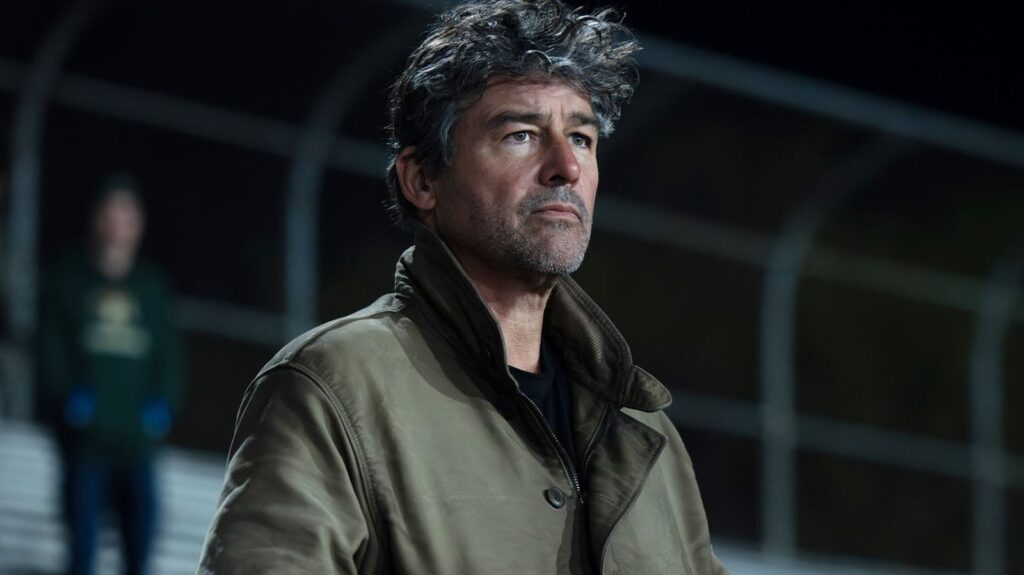
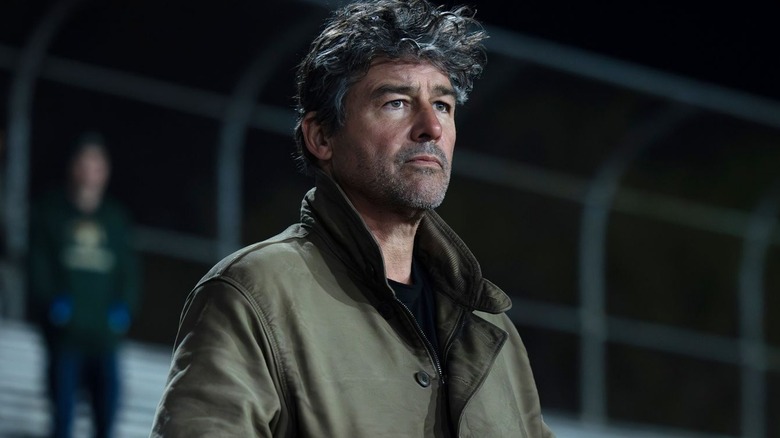
Hal Jordan (Kyle Chandler) was once a test pilot for the United States Air Force, taking experimental jets for flights to make sure they’re safe enough for deployment. That’s a job that requires willpower and fearlessness — qualities that earned Hal a Green Lantern’s ring.
Hal’s father, Martin Jordan, was a pilot before him and met a tragic end, dying in a plane crash witnessed by a young Hal. This part of Hal’s backstory goes back to the 1989 comic “Green Lantern: Emerald Dawn” by Christopher Priest (then credited as Jim Owsley) and M.D. Bright. The 2011 “Green Lantern” film even adapted this with a flashback sequence to Hal seeing his dad die.Though largely cut from the theatrical edition, it plays near the beginning of the “Green Lantern” extended cut.
“Lanterns” has also alluded to this piece of Hal’s backstory and it appeared true to the comics … until now. “Lanterns” Episode 1 ended with John Stewart (Aaron Pierre) finding Hal’s corpse, and since then he’s been searching for the murderer. The “Halogram” (a back-up of Hal’s consciousness) drops a new suspect this week: Hal himself.
It turns out Martin Jordan’s death wasn’t an accident. He deliberately crashed his plane to kill himself, leaving behind a suicide note for his family. Apparently, Hal’s dad and Hal’s grandfather died the same way, and Hal inherited his family’s depressive disorder. That’s the “Jordan Boys Legacy” referred to in the title; the Halogram tells John that his disease, not courage, is the real source of the “fearlessness” that made him worthy of the Green Lantern ring.
If you’re a DC Comics reader, this is probably the point where you nodded and said, “Yup, this is a Tom King show, all right.”
Superheroes and suicide is Tom King’s go-to theme
Tom King, the co-creator of “Lanterns,” is a prolific comic writer at DC. A former CIA agent who has been open about suffering PTSD, most of his comics are him drawing on his own struggles. “Mister Miracle,” which King is adapting into an animated series for DC Studios, opens with hero Scott Free surviving a suicide attempt; his alter ego, Mister Miracle, is a superhero escape artist and depression made him want to escape from life.
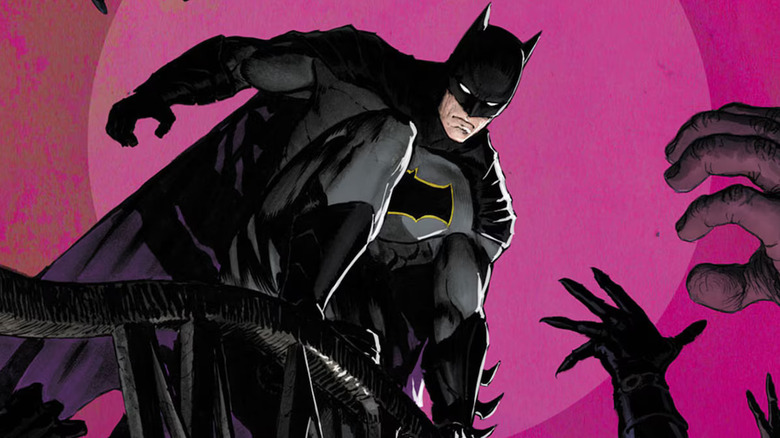
Even before that, during Tom King’s divisive run on “Batman,” he revealed Bruce Wayne had once attempted suicide when the grief of his parents’ death became too much. But King went a step further and framed Bruce’s crusade as Batman — forsaking a normal life to war against crime — as an act of suicide too.
There’s some precedent for King’s reading. The animated film “Batman: Mask of the Phantasm” has Bruce (Kevin Conroy, giving his best Batman performance ever) fall in love and plead before his parents’ grave that he “didn’t count on being happy.” The source King is pulling on the most is Frank Miller’s “The Dark Knight Returns,” where an aged Batman muses he is searching for a “good death.” But it’s not one that resonates with me.
Frankly, I find it a nihilistic inversion of what makes Batman’s story powerful. Through that prism, being Batman isn’t someone using his deepest pain as an unbreakable will to help others, it’s a man-child’s slow suicide. It makes Batman selfish, not selfless, and undercuts how his greatest source of strength is really his compassion. I’d also clock it as a misreading of “The Dark Knight Returns” — Miller’s Bruce is searching for a “good death” at first because his age means he can’t be Batman anymore, and in the end he finds a good life.
Lanterns’ Hal Jordan backstory fits a pattern
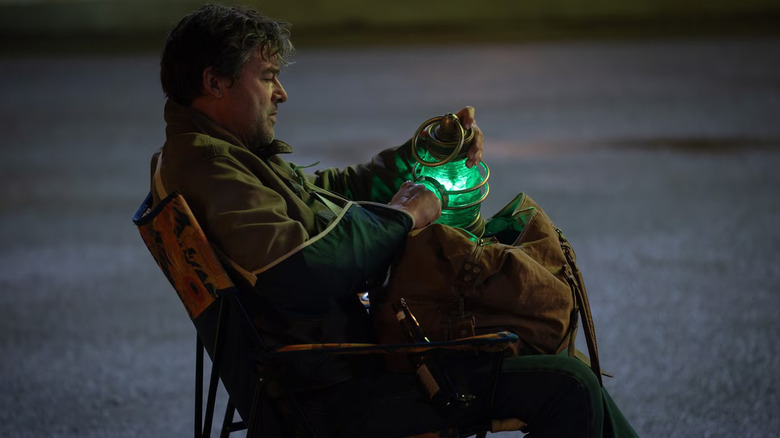
I’m admittedly not as big a Green Lantern fan as a Batman fan, so the show’s reframing of Hal Jordan’s background doesn’t get me riled up, just rolling my eyes. Still, I find it ultimately arrives at the same cynical point: There’s no real thing as heroes, just broken men.
Tom King’s comics also pull from Alan Moore and Dave Gibbons’ 1986 “Watchmen.” “Lanterns” co-creator Damon Lindelof is also such a “Watchmen” acolyte he made a “Watchmen” TV show, which Alan Moore characteristically disowned.
The then-innovative conceit of “Watchmen” was that to want to be a superhero — to dress up and go out to punch criminals, much less think the entire world rests on you saving it — you’ve gotta have mental issues. But King isn’t just making a genre statement, he’s consistently reshaped superhero narratives to fit the one he lived as a soldier with PTSD. (This type of story always centers soldiers’ trauma, not the invaded’s, as the greatest tragedy.)
This critique is a fine line for me to walk as a critic, so I’ll just state clearly that depression or suicidal thoughts are not anything to be ashamed of. Nor is seeking help, and writing is definitely one of the most personally harmless ways to process these feelings. One of my favorite works of art ever, anime series “Neon Genesis Evangelion,” turns kaiju and mecha battles into metaphors for the struggles of mentally ill teenagers. If this twist on Hal’s backstory in “Lanterns” spoke to you the same way, I’m glad it did.
“Lanterns” is streaming on HBO Max.
If you or a loved one is in crisis, please reach out to the 988 Suicide & Crisis Lifeline, available at the toll-free number 988, to talk to someone who can help.