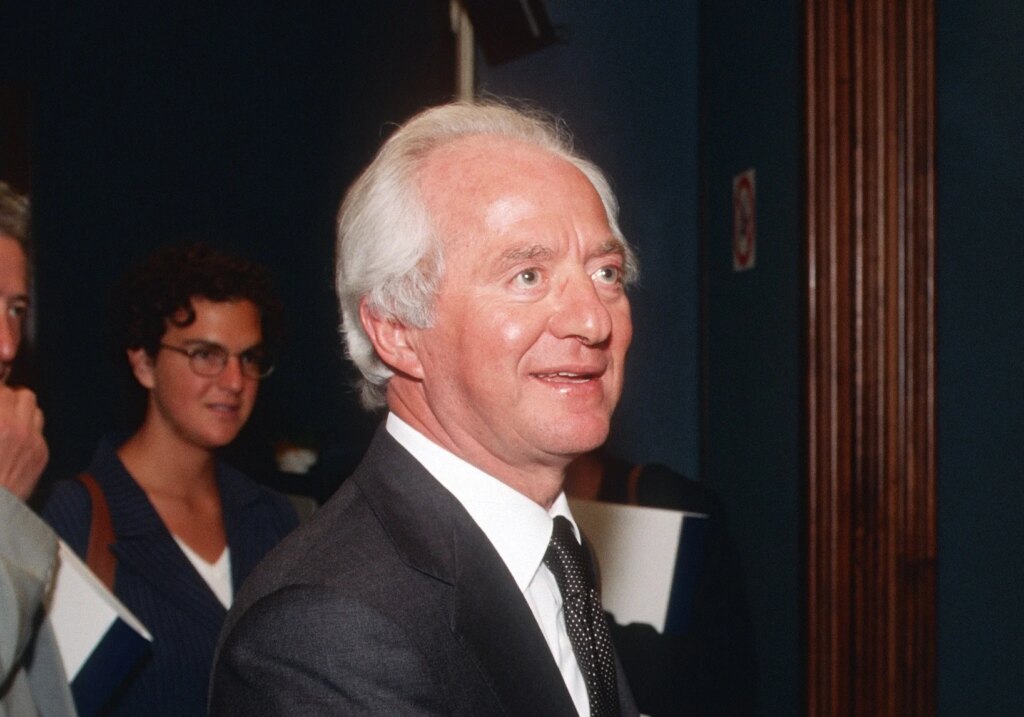

Leonardo Del Vecchio was born on May 22, 1935, into desperate poverty in Milan. His father, a street vendor who sold fruit and vegetables, died before Leonardo was born, leaving his mother, Grazia, struggling to support her children on her own.
For a few years, she somehow made it work. Then World War II engulfed Italy, and when Leonardo was seven years old, his mother made an unfathomably difficult decision: Unable to care for him, she placed Leonardo in the Martinitt orphanage in Milan.
He spent the rest of his childhood being raised there.
Leonardo Del Vecchio died on June 27, 2022, at the age of 87. Considering how his life started, what happened over the next eight decades is difficult to comprehend.
He left the orphanage as a teenager without anything resembling a privileged education or family fortune. He went to work with his hands, learned metalworking and design, and eventually founded a tiny company that made parts for eyeglass frames.
That company became Luxottica.
Luxottica eventually grew into the most powerful eyewear company on the planet, controlling some of the world’s best-known glasses brands while also manufacturing eyewear for luxury fashion houses and owning many of the stores where those glasses are sold.
When Leonardo died, he was the richest person in Italy, with a net worth of…
$30 billion
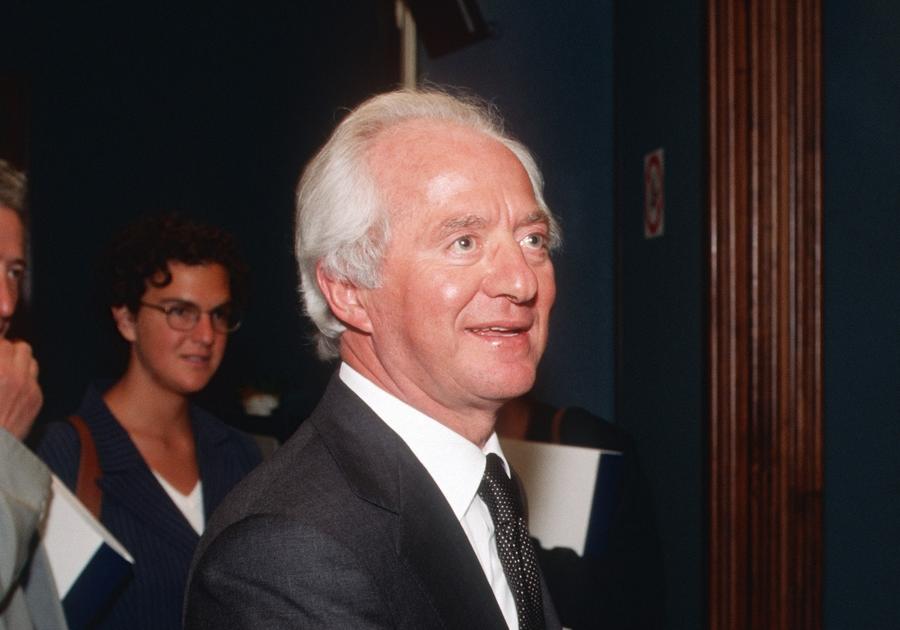
(Photo by Grzegorz Galazka/Archivio Grzegorz Galazka/Mondadori Portfolio via Getty Images)
Luxottica
Leonardo Del Vecchio earned his fortune thanks to the sunglasses company Luxottica. If you have not heard of Luxottica, you’ve definitely heard of and probably own some of their brands:
- Ray-Ban
- Oakley
- Arnette
- Persol
- Oliver Peoples
- Costa
All of these brands are 100% owned by Luxottica. Basically, if you’ve ever shopped at a Sunglass Hut, you made Leonardo a little richer. Oh, and Sunglass Hut? Owned by Luxottica.
If you bought a pair of designer Prada or Gucci glasses from Sunglass Hut, guess what? Luxottica manufactured those designer brands as well. Pretty much every designer brand of sunglasses on the planet is actually manufactured by Luxottica. Giorgio Armani, Bulgari, Gucci, Chanel, Prada, Michael Kors, Coach, Dolce and Gabbana, and Fendi… all of these companies pay Luxottica to make their glasses, then Luxottica gets an additional cut on the sale from its own stores.
Do you wear prescription glasses? If you’ve ever picked out a new pair of glasses at LensCrafters or Pearl Vision, you made Leonardo a little richer. Oh, LensCrafters and Pearl Vision? Both are owned by Luxottica.
Monopoly Money
Some might describe the above business as a monopoly. In my opinion, that would certainly be an accurate description. Over the years Luxottica has faced numerous complaints from independent sunglasses companies that claim they had no choice but to be acquired by the conglomerate. How could a company survive as an independent company if its sunglasses were not on the shelves at Sunglass Huts across the world?
For example, most people agree that Luxottica’s 2007 acquisition of longtime rival Oakley was more of a hostage negotiation than a happy merger. Oakley reportedly had no interest in selling out, but they changed their minds when Luxottica threatened to block its products from all of its retail stores.
Luxottica bought Oakley for $2.1 billion in 2007. But let’s get back to Leonardo.
Rags to Riches
Leonardo left the orphanage at 14 and went to work as an apprentice at a shop where he learned engraving and metalworking. His employers recognized his talent and encouraged him to attend evening classes in design and engraving at Milan’s Brera Academy while he continued working during the day.
He eventually began applying those metalworking skills to components used in eyeglass frames.
By the late 1950s, Leonardo saw an opportunity in northeastern Italy, where much of the country’s eyewear industry was concentrated.
The small town of Agordo was trying to encourage industry and create local jobs by offering land to entrepreneurs willing to open businesses there. Del Vecchio took the town up on the offer.
In 1961, at 26 years old, he founded Luxottica.
It was not an eyewear empire. It was a small workshop making components for other eyewear companies.
Over the next several years, Del Vecchio steadily expanded Luxottica’s capabilities. Instead of merely supplying individual pieces to other manufacturers, the company began producing complete eyeglass frames of its own.
By the early 1970s, Luxottica had moved away from contract manufacturing and was designing, producing and selling finished glasses.
Leonardo had found his life’s work.
Three Innovations
Luxottica did not become a global giant simply because it made good glasses. Del Vecchio built the company around three ideas that would eventually transform the industry.
1) Vertical integration
Del Vecchio wanted control over as much of the process as possible. Making the glasses wasn’t enough; Luxottica also needed control over distribution.
In 1974, the company acquired Scarrone, an Italian eyewear distributor. In 1981, Luxottica established its first international subsidiary in Germany. Eventually, Del Vecchio pushed the strategy much further by acquiring major retail chains like LensCrafters and Sunglass Hut.
Instead of simply manufacturing a product and hoping another company would successfully sell it, Luxottica could design the glasses, manufacture them, distribute them and, in many cases, sell them directly to the consumer.
2) Fashion
For generations, eyeglasses had primarily been viewed as medical devices. You wore them because you needed to see. Del Vecchio understood that glasses could be something more: They could be fashion.
Eyewear could communicate wealth, personality and style in much the same way as a handbag, watch, shoes or jewelry. That insight helped turn what had once been an unglamorous necessity into a high-margin fashion accessory.
3) Licensing
This may have been Del Vecchio’s most lucrative insight. Luxury fashion houses wanted their logos on sunglasses and prescription frames, but building an entire eyewear manufacturing business from scratch was complicated and expensive. Luxottica already knew how to make glasses.
In 1988, Del Vecchio signed a landmark licensing agreement with Giorgio Armani. Luxottica would make the glasses. Armani supplied the name, image and fashion credibility. Both sides shared in the economics.
The model worked. Over the following decades, designer eyewear became an enormous business, and Luxottica signed licensing partnerships with many of the world’s most recognizable fashion brands.
At the same time, Del Vecchio understood the danger of relying entirely on licenses that could someday disappear. Luxottica therefore built an increasingly powerful stable of brands it owned outright. Persol joined the portfolio, followed by Ray-Ban, Oakley and Oliver Peoples.
Luxottica had both sides covered.
From Luxottica To EssilorLuxottica
The culmination of Del Vecchio’s strategy came in 2018, when Luxottica combined with French lens manufacturer Essilor to create EssilorLuxottica.
The merger united the world’s dominant eyewear-frame business with the world’s largest manufacturer of ophthalmic lenses. Once again, Del Vecchio was expanding vertically. Frames and lenses were now under the same corporate roof.
Del Vecchio’s family holding company, Delfin, emerged with a controlling stake of more than 30% in the combined company. That stake represented the overwhelming majority of Leonardo’s fortune, but eyewear was no longer his only major investment.
Through Delfin, Del Vecchio also accumulated billions of dollars worth of shares in European companies including insurer Generali, investment bank Mediobanca, real estate company Covivio and UniCredit. The orphan who began his working life engraving metal had become one of the most powerful figures in European business and finance.
A $30 Billion Fortune
At the time of Leonardo Del Vecchio’s death in June 2022, Celebrity Net Worth estimated his fortune at $30 billion. The vast majority of that wealth came from Delfin’s stake in EssilorLuxottica.
Other financial publications produced somewhat different valuations based on share prices and how they treated Delfin’s assets and debts, but there was no disagreement about the scale of what Del Vecchio had built: one of the largest private fortunes in Europe. It was an extraordinary ending for someone whose mother had once been unable to afford to raise him.
After his death, control of Delfin ultimately passed in eight equal 12.5% stakes to his widow, Nicoletta Zampillo; his six children, Claudio, Marisa, Paola, Leonardo Maria, Luca and Clemente; and Zampillo’s son, Rocco Basilico. The inheritance instantly created a new generation of multibillionaires.
An Empire That Kept Growing
Del Vecchio did not merely leave behind a giant company. The company continued getting bigger after his death.
In 2025, EssilorLuxottica generated €28.5 billion in annual revenue. Its portfolio had grown to more than 150 brands, and its direct-to-consumer network included about 18,000 stores around the world.
The company Del Vecchio started in a small Italian town as a supplier of eyeglass components had evolved into a global corporation spanning eyewear, lenses, retail, vision care, medical technology and smart glasses. That’s quite a journey for a kid who spent his childhood in an orphanage.
And I’ll leave you with my favorite detail about Leonardo Del Vecchio: This man made one of the largest fortunes on the planet from glasses, yet he was almost never photographed wearing them.
When we originally went through Getty Images after his death, we found dozens of photographs of Del Vecchio spanning decades. In virtually all of them, the king of eyewear was staring straight into the camera without a pair of glasses on his face.
He may have spent his life convincing the rest of us that we needed another pair. Apparently, Leonardo Del Vecchio didn’t.


![Danelectro Founder Had An Unusual Way To Make Budget Pickups. It's Why They're Called 'Lipstick Pickups' [News]](https://biger.shop/wp-content/uploads/2026/10/188540_0_wide_ver1790775006.jpg@1200-150x150.jpeg)