
It’s hard to say much about You Can See Everything without discussing the incredible pivot the film makes in its second half, after Holmes is incarcerated. Without getting too far into spoiler territory, though, it’s fair to say that, like Oppenheim and Fielder, you, too, may leave the movie not knowing whether Elizabeth Holmes is an unrepentant con artist, a quixotic zealot, an alien from outer space, or some even more outrageous fourth possibility.
It’s somewhat easier to pin down Evans, who gradually emerges as the movie’s true villain: a smarmy, self-satisfied Svengali figure who sniffs conspicuously and blithely brags about his own prowess in a variety of arenas. “I’m pretty strategic and well-resourced,” he tells Fielder at one point. “I know people who can do just about anything.”
Perhaps it comes as no surprise to hear that in the time since they finished shooting, the filmmakers and Evans have become estranged. “Near the end of filming, Billy was trying to exert a level of control over the project that made us uncomfortable, and communication with him sort of broke down because of that,” said Fielder. As of the Telluride Film Festival, Evans hadn’t seen the movie; as of NYFF, that was still true. Maybe that will change October 16, when it’s released in theaters.
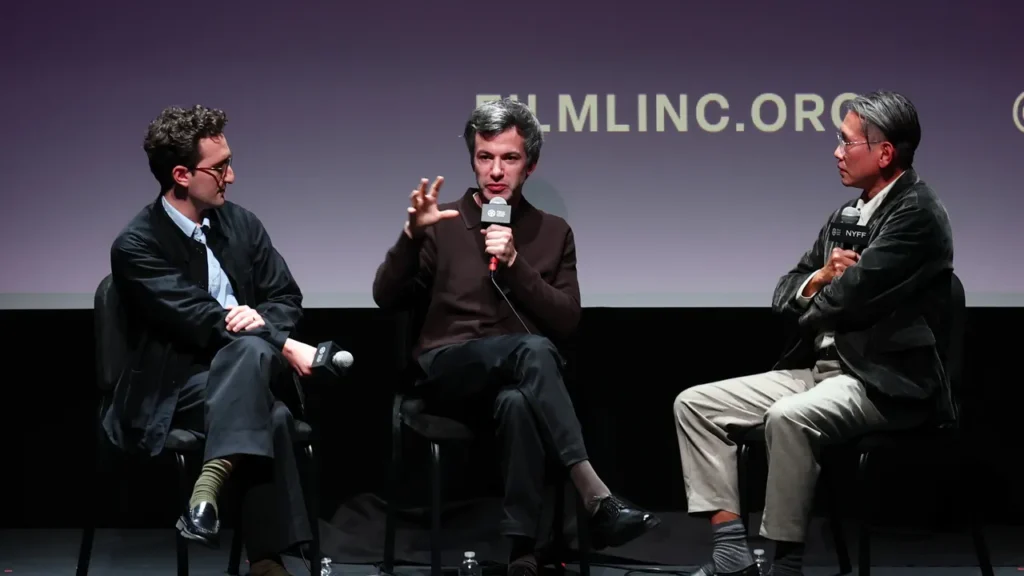
By the time the Q&A was over, it was past 11:30 p.m.—about 90 minutes later than Fielder’s usual bedtime, he joked from the stage. A bleary but charged-up audience spilled into the street. Some headed straight to the post-premiere party at the Waverly Inn. Other would-be attendees were stopped in their tracks by a truck parked right in front of Lincoln Center, which bore an LED screen displaying a portrait of You Can See Everything’s subject and a three-word message: “Free Elizabeth Holmes.”