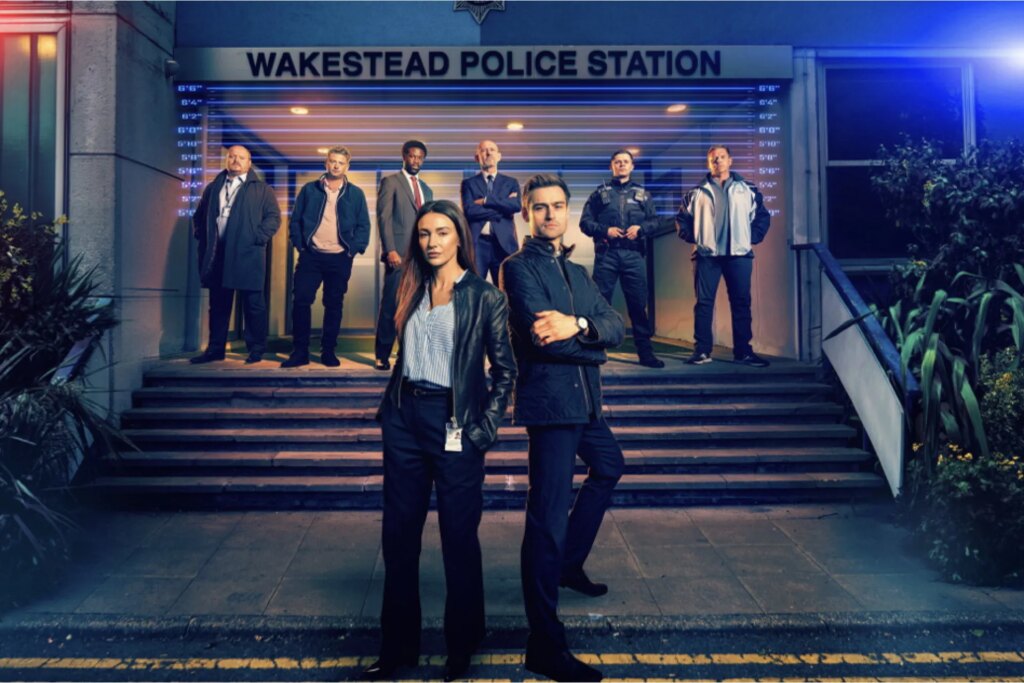

When it comes to the crime drama, it simply can’t be argued that the genre is one of the most popular on TV. With new entries into the canon being commissioned every week, and with so many hitting big with audiences like Line of Duty (2012), Broadchurch (2013) and Happy Valley (2014), it’s difficult for new shows to surprise viewers. But that is exactly what ITV’s newest series, The Blame, hopes to do.
Based on the novel by Charlotte Langley, the six-part series follows the police investigation into the murder of a teenage girl after the body of a young figure skater is discovered in a quiet town. When detectives Emma Crane (Michelle Keegan) and Tom Radley (Douglas Booth) uncover a history of institutional cover-ups, however, they are forced to navigate both the murder investigation and the culture of misogyny that exists within the police force.
Series leads Keegan and Booth sat down with FILMHOUNDS to discuss all things The Blame and what audiences can expect from the show.
Systemic corruption and institutional cover-ups in the police force are well-explored themes in British crime dramas. What does The Blame bring to the genre that hasn’t been said before?
Michelle Keegan: I feel that you don’t see what we do in a police drama. No police dramas that I’ve seen have ever talked about corruption in the police force and misogyny.
Douglas Booth: Obviously in Line of Duty there’s corruption, but I think I haven’t seen it explored in this way. It is about that sort of lad culture, that way of speaking, and how it can seem harmless, but actually it creates an extremely toxic environment that can actually rot an institution from the core and fundamentally make it dangerous because people aren’t accountable. I remember when we spoke to a detective, he was like “The biggest thing at the Met is that the higher ups, they didn’t want other scandals.” They didn’t care. They would prefer there be no scandal than occasionally a conviction be missed or wrongly done.
What does The Blame seek to contribute to the conservation about violence against women by policemen?
DB: We’re here to make a drama, we’re here to make entertainment, but you do want to make, you know, entertainment that has something to say. And I would hope that you would get to the end of the story, for me, as a man, anyway, having sort of questioned [yourself] in certain situations, to try and fully understand how a system can potentially become toxic, or [how] your place in it can sort of add to a certain toxicity or an unhealthiness, and that’s something that I hope could be could be taken from it.
DI Tom Radley is presented as an ally to DI Emma Crane. By the end of episode 1, his character shows that true allyship has to cost you something and highlights the flaw in the ‘not all men’ rhetoric. Are audiences meant to relate with Tom or view him as a warning?
DB: I don’t mean this to be a cop out, but you know, he exists in those gray areas. You know, I think it’s not one thing. At the beginning, he is trying. He’s trying to do the right thing, and from my point of view, he makes some decisions along the way that give him a moral injury that he suffers from, and I think has sort of maybe trapped him in a toxic place within this institution and where he sits in it, and it’s led him to make certain decisions that are coming back to haunt him and put him under considerable pressure, but beyond that, I think you should just watch it and see.
The Blame is available to stream on ITVX.