

Governments across the Middle East are preparing for a possible escalation in violence after Iran claimed it had received intelligence suggesting the United States was planning to resume bombing operations against the Islamic Republic. The warnings come ahead of the United Nations General Assembly in New York this week, amid growing tensions between Iran, the US and regional powers.
US President Donald Trump cut short a weekend visit to the Camp David presidential retreat on Sunday without an official explanation. The US State Department also issued a new security alert for American citizens across the Middle East.
Trump, who has not ruled out several possible courses of action, told Fox News that “very big things are going to be happening in the not-so-distant future”. He said the options under consideration included “wiping Iran out, letting them rot economically or making a deal”.
Iran Threatens Retaliation
The Islamic Revolutionary Guard Corps (IRGC) warned that any new US attack would trigger retaliation across the region. “If an attack does take place, all US bases and interests in the region will become targets of continuous, effective and painful attacks without any limitations or considerations,” it said.
Trump on Iran:
I am in a “deciding mode,” and very big things are going to be happening in the not-so-distant future.
The choices are: wiping Iran out, letting them rot economically, or making a deal.
They better behave!
Source: Fox News pic.twitter.com/btBldPXA94— Clash Report (@clashreport) September 20, 2026
Iranian leaders also warned that reprisals could extend to US naval forces in the Indian Ocean. Tehran accused some Gulf leaders of “double-dealing”, alleging that they had given approval for US attacks. The claims have not been independently verified.
The latest threats follow a series of attacks involving Yemen’s Iranian-backed Houthi rebels and Saudi Arabia, raising concerns about a wider regional conflict.
Houthi Attacks Intensify
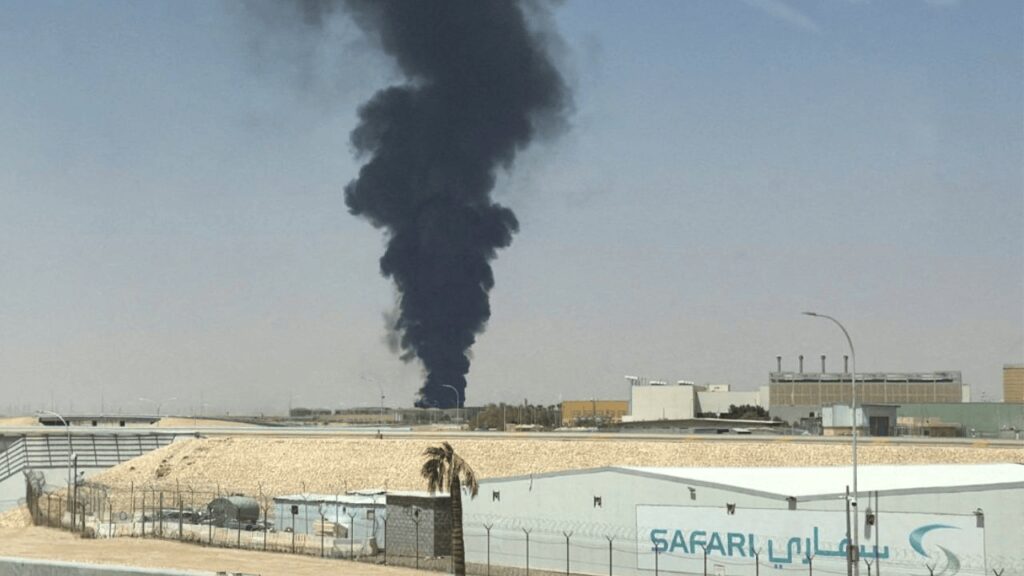
The latest escalation was reportedly prompted by attacks on the Saudi capital, Riyadh, by the Houthis. The barrage on Saturday was described as the first sustained attack on Aramco oil facilities in the capital since a Saudi-Houthi ceasefire broke down in June.
Saudi Arabia said its forces had intercepted the missiles. However, local photographs appeared to show smoke rising from an Aramco facility. The port of Yanbu, a key hub for Saudi oil exports, was also targeted.
The US considers the Houthis to be an Iranian proxy force and argues that attacks on Riyadh would not take place without Tehran’s approval. Iran denies the claim.
Last week, Trump reportedly declined a request from Saudi Crown Prince Mohammed bin Salman for direct US military assistance.
The request came after Houthi forces captured strategic ports along Yemen’s western coast, overlooking the Red Sea. The developments gave the group control of the Bab al-Mandab strait, a key maritime route linking the Red Sea with Asian shipping routes.
Energy Security Concerns Grow
The situation has added pressure to an already fragile regional energy network. The Strait of Hormuz, between Iran and Oman, is described as effectively closed to western traffic, while concerns over European energy supplies continue to grow.
France is among the countries taking emergency measures to guard against potential fuel shortages.
The Houthis had reportedly assured US officials that they would target only Saudi-linked shipping in the Red Sea, rather than American interests. Trump appeared to consider those assurances sufficient to protect key US interests without direct military involvement.
He told Fox News: “The US is in constant contact with the Houthis and they have agreed not to go to war with the US.”
The Houthi government said 318 ships had passed through the strait between 10 and 18 September.
However, pressure on the US defence budget and declining munitions supplies linked to the Iran conflict have contributed to Washington’s reluctance to widen the war, according to the report.
Previous bombing campaigns have failed to dislodge the Houthis, whose advance towards Yemen’s Red Sea coast reportedly caught Saudi-backed government forces off guard.
France Summons Iranian Ambassador
Separately, France said it would summon Iran’s ambassador after Iranian authorities shut down a French-language centre affiliated with the French embassy in Tehran.
The French foreign ministry announced the move on Sunday. Iran’s judiciary accused the centre of carrying out “illegal acts that violated diplomatic conventions”.
The closure adds another point of tension between Tehran and European governments as the wider regional crisis continues to intensify.