

In July 2018, LeBron James signed a four-year, $154 million contract with the Los Angeles Lakers. LeBron moving from Cleveland to Los Angeles was one of the biggest sports stories of the year. But, as it turns out, that was not the only enormous financial deal LeBron made that year.
According to new reporting from Bloomberg, in March 2018, just four months before signing that Lakers contract, LeBron borrowed nearly $300 million from two life insurance companies. The extraordinarily large loan was backed by a stream of LeBron’s future off-court income, including money connected to his lifetime endorsement relationship with Nike.
The transaction had never previously been reported.
And while borrowing $300 million doesn’t mean LeBron suddenly had $300 million less net worth, the revelation provides a fascinating new window into how one of the highest-earning athletes in history has managed his fortune — and raises some important questions about estimates that have declared him a billionaire.
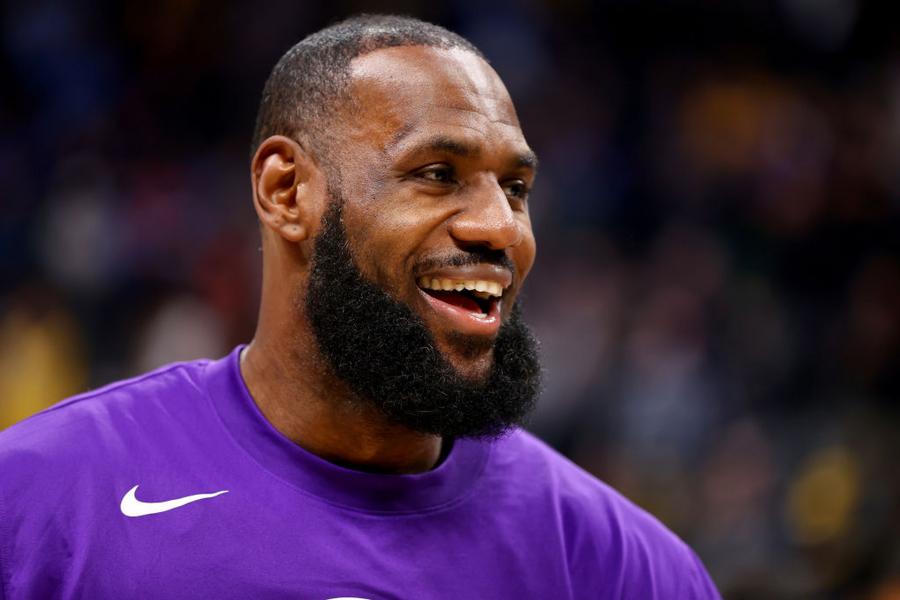
Jamie Schwaberow/Getty Images
The $300 Million Loan
According to Bloomberg, the borrowing was conducted through an LLC controlled by LeBron called King James Funding.
Two Midwestern insurers, North American Company for Life and Health Insurance and Midland National Life Insurance Co., purchased nearly $300 million of bonds issued by King James Funding. Both insurers are owned by Sammons Financial Group, and their investment portfolios were being managed at the time by an arm of Guggenheim Partners.
The 2018 bonds carried an interest rate of 4.8% and don’t mature until 2049.
Rather than functioning like a conventional bank loan secured by a house or other physical asset, the bonds were backed by future revenue streams associated with LeBron’s enormous off-court earning power.
The structure allowed LeBron to effectively turn decades of expected future income into hundreds of millions of dollars of immediate liquidity. Think of it as an extremely wealthy person’s version of calling J.G. Wentworth to get cash NOW.
LeBron Borrowed Even More In 2022
The 2018 transaction wasn’t the end of the relationship.
In August 2022, around the same time LeBron signed a two-year, $97 million extension with the Lakers, the same insurers purchased nearly $60 million of additional bonds from King James Funding. Those bonds carried a 5.75% interest rate and had a 34-year term.
King James Funding had also repaid some of the earlier borrowing. According to the insurance records reviewed by Bloomberg, the two insurers still held roughly $245 million of the bonds on their books at the end of 2025.
That $245 million figure is particularly significant when thinking about LeBron’s current finances.
A spokesperson for James told Bloomberg that the transactions represented a securitization of his personal non-NBA income and assets, describing that type of financing as common for someone with LeBron’s level of earnings and wealth. The spokesperson also said the 2022 transaction was independently rated and approved by the NBA. There is no suggestion that LeBron did anything improper.
Why Would Someone As Rich As LeBron Borrow $300 Million?
It may initially sound strange that a person earning hundreds of millions of dollars would need to borrow another $300 million. But extremely wealthy people frequently use debt for reasons that have nothing to do with needing money to pay their bills.
Consider LeBron’s Nike relationship. Nike signed LeBron to a lifetime endorsement agreement in 2015. The exact financial terms have never been publicly disclosed, but the agreement is expected to generate enormous amounts of income over many decades. Other superstar athletes, including Michael Jordan, have similarly demonstrated how valuable a long-running relationship with Nike can become.
The issue is timing.
If LeBron knows he is going to receive hundreds of millions of dollars in future payments, he could simply collect those payments gradually. Or he can pledge some of that future income to a lender and receive a large amount of cash immediately.
That money can then potentially be invested in businesses, real estate, securities or other assets that appreciate while the debt is repaid over decades. It’s essentially a way of borrowing against tomorrow’s earning power to create liquidity today.
What Does This Mean For LeBron James’ Net Worth?
Before this reporting, we estimated LeBron James’ net worth at $850 million. Other wealth-tracking publications have already anointed him with billionaire status. Forbes currently estimates LeBron’s net worth at $1.4 billion, while Bloomberg valued his fortune at nearly $1.5 billion in 2024.
We have long felt those billionaire estimates were premature. In May, we published a detailed breakdown titled “LeBron James Isn’t Actually A Billionaire (And Has Never Been One)” explaining why. Long story short, our disagreement comes down to the difference between gross earnings and net worth, along with what we believe were overly generous valuations assigned to some of LeBron’s private investments. Forbes’ original billionaire calculation, for example, attributed roughly $300 million to LeBron’s stake in SpringHill based on a $725 million funding-round valuation and then effectively assigned another $500 million to a broad bucket of cash and other investments. SpringHill subsequently struggled financially and eventually entered a cashless merger with Fulwell 73. Meanwhile, LeBron’s enormous career salary and endorsement earnings have been subject to taxes, management fees, expenses and decades of spending. By our math, the identifiable assets simply haven’t added up to a billion-dollar net fortune yet.
So does this new revelation mean we’re suddenly adding $300 million of newly discovered debt to our calculation and cutting LeBron’s net worth by the same amount? No.
When LeBron borrowed the money, he received cash at the same time he incurred a liability. Imagine someone with $600 million of assets and no debt. If that person borrows $300 million and leaves the proceeds sitting in a bank account, they now have $900 million of assets and $300 million of debt. Their net worth is still $600 million.
What happened to the borrowed money afterward is what matters. If LeBron invested the proceeds into businesses, real estate or other assets that subsequently appreciated, the financing could have increased his wealth. If he spent the money, made investments that declined in value or otherwise no longer owns assets corresponding to the borrowing, the remaining debt becomes much more significant.
Bloomberg’s reporting does not reveal exactly how LeBron deployed the proceeds. We do know that LeBron has spent years building an investment portfolio alongside longtime business partner Maverick Carter, including interests in media, consumer companies and sports through Fenway Sports Group. But there is no public evidence connecting any particular investment to the King James Funding proceeds.
In our opinion, however, the revelation is another interesting piece of evidence pointing in the direction we’ve argued for years: LeBron James is extraordinarily wealthy, but he is not necessarily a billionaire yet.
We now know that an LLC controlled by LeBron had roughly $245 million of debt remaining on the insurers’ books at the end of 2025. That is a substantial previously unknown liability. To have an $850 million net worth while carrying $245 million of debt, LeBron would need roughly $1.095 billion of gross assets, before considering any other liabilities. To be worth $1.4 billion, as Forbes currently estimates, he would need roughly $1.645 billion of gross assets.
None of this definitively proves that our estimate is correct and the billionaire estimates are wrong. We don’t know everything LeBron owns, and we don’t know what happened to the hundreds of millions of dollars he borrowed. But the Bloomberg reporting provides a rare glimpse at the liability side of his balance sheet — something that’s usually invisible when outsiders try to estimate celebrity fortunes. For now, rather than causing us to lower our $850 million estimate, the revelation makes us more comfortable with our longstanding position that LeBron has not yet crossed the billion-dollar net worth threshold.
The Weird Mark Walter/Guggenheim Connection
There is one more very strange wrinkle to this story, and it helps explain why an obscure LeBron James financing deal from 2018 is suddenly coming to light eight years later.
The two insurance companies that bought the King James Funding bonds — North American Company for Life and Health Insurance and Midland National Life Insurance — are owned by Sammons Financial Group. At the time, Sammons had outsourced the management of those insurance portfolios to Guggenheim Partners, the giant investment and financial-services firm long associated with billionaire financier Mark Walter. According to Bloomberg, Guggenheim was the sole investment manager responsible for selecting assets for Sammons’ portfolios until 2021.
That means LeBron wasn’t simply borrowing from a couple of obscure Midwestern life insurers. The money was being deployed under an investment-management arrangement with Guggenheim, which becomes much more interesting once you understand what has happened to Walter and his financial empire in the years since.
Walter would eventually become LeBron’s team owner. He initially bought a minority stake in the Lakers in 2021 and acquired majority control in 2025. Guggenheim also invested in LeBron and Maverick Carter’s SpringHill media company when it raised $100 million in 2020.
Normally, those connections might amount to little more than an interesting bit of financial-world overlap. But Walter is currently in some extremely hot water.
As we recently detailed in our deep dive into Mark Walter’s financial empire, federal prosecutors in Manhattan and the Securities and Exchange Commission are investigating whether billions of dollars of investments involving Walter-connected businesses were properly disclosed as affiliated transactions on the balance sheets of insurance companies tied to his empire.
The numbers involved are enormous. Delaware Life, one of Walter’s insurance companies, had previously reported that affiliated investments represented around 3% of its portfolio. After subpoenas triggered an internal investigation, the company identified nearly $17 billion more in investments connected to related businesses. The revised figure pushed affiliated investments to roughly 42% of Delaware Life’s portfolio. Federal investigators are examining whether those relationships were properly disclosed and whether any fraud occurred.
Investigators have reportedly seized Walter’s phone and laptop. Delaware insurance regulators have also ordered Walter’s companies to reduce or restructure much of their exposure to affiliated investments, forcing his empire to replace assets and come up with billions of dollars of liquidity. Walter has not been charged with a crime, and his companies maintain that the transactions were made in good faith, that they are cooperating with investigators and that their capital and liquidity positions remain strong.
That financial pressure also appears to explain one of the strangest sports transactions in recent memory. In 2025, Walter acquired the controlling stake in the Lakers from the family of longtime owner Jeanie Buss at a $10 billion valuation. Less than 10 months after the NBA formally approved his takeover, Walter agreed to turn around and sell control of the team to billionaire venture capitalist Josh Kushner and former Disney CEO Bob Iger at a $12.5 billion valuation. According to the Wall Street Journal, Walter had been looking for liquidity as his insurance companies worked through their regulatory problems. The Lakers weren’t even on the market when Kushner approached him. Roughly 72 hours later, they had a deal.
And now, amid all of this scrutiny into Walter, Guggenheim, insurers and the increasingly complicated ways insurance-company money has been deployed, Bloomberg has uncovered the fact that a Guggenheim-managed insurance portfolio provided LeBron James with nearly $300 million against his future earnings in 2018.
To be absolutely clear, there is no indication that LeBron’s financing has anything to do with the federal investigations into Walter’s financial empire. Bloomberg specifically reported that there is no known connection, and LeBron’s spokesperson said he has no affiliation with Guggenheim, Sammons or the two insurance companies beyond their participation in these transactions.
But the chain of events is still pretty remarkable. Guggenheim-managed insurance money financed LeBron against decades of future earnings. Guggenheim later invested in LeBron’s media company. Walter eventually became the controlling owner of LeBron’s team. And now, years later, an investigation into the much larger web of insurance money surrounding Walter’s financial empire has helped shine a light into corners of that world that had previously been almost completely invisible.
One of those corners just happened to contain a previously unknown $300 million LeBron James loan.


