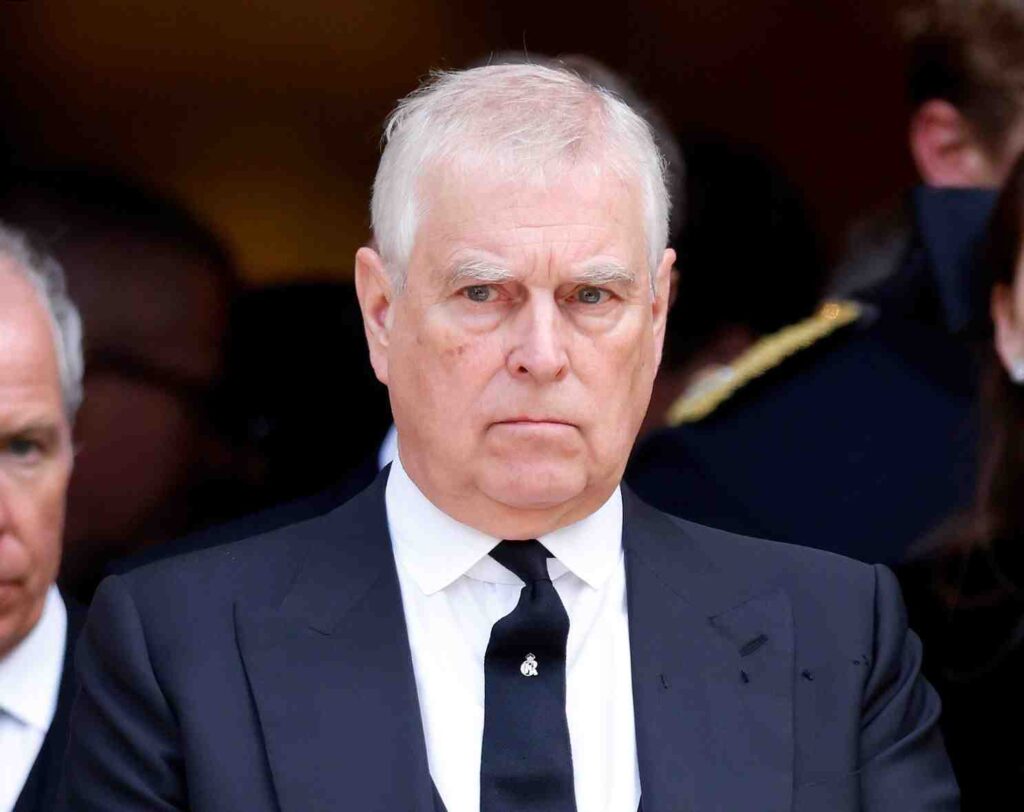

Andrew Mountbatten-Windsor’s descent from favored royal son to arrested commoner began with a single photograph and widened through years of Epstein-related documents, lawsuits, and institutional decisions that stripped every formal title, honor, and residence. The February 2026 arrest on his 66th birthday marked the clearest public signal yet that the monarchy would not shield him from legal scrutiny. For American readers tracking elite accountability cases, the sequence offers a textbook study in how reputational capital erodes once evidence accumulates faster than denials.
Initial allegations surface
Virginia Giuffre’s 2015 civil suit introduced U.S. audiences to claims that Andrew had sexual encounters with her in London, New York, and on Epstein’s island when she was 17. The 2001 photo of Andrew with his arm around Giuffre’s waist became the visual anchor for those allegations. Andrew’s legal team questioned its authenticity, but the image never disappeared from public view.
Giuffre’s posthumous memoir, released in 2025, added new details and emails that contradicted earlier statements from both Andrew and Ghislaine Maxwell. The timing mattered: the book arrived months before King Charles initiated formal title removals. Media outlets already primed by the 2022 settlement treated the memoir as corroboration rather than speculation.
Public reaction in the U.S. tracked closely with the #MeToo pattern seen in other high-profile cases. Once documents moved from sealed files to open court records, the story shifted from tabloid gossip to institutional consequence. Andrew Mountbatten-Windsor’s name began appearing in headlines without the “Prince” prefix well before any official change.
Settlement and immediate fallout
The 2022 out-of-court settlement with Giuffre for roughly twelve million pounds avoided a trial but left Andrew without a legal victory. No admission of liability was issued, yet the payment itself signaled to the palace that continued public duties were untenable. Within weeks he stepped back from all remaining patronages.
British tabloids framed the settlement as an expensive attempt to contain damage. U.S. coverage focused on the financial mechanics and what the payout suggested about risk assessment inside the royal household. Andrew Mountbatten-Windsor retained his place in the line of succession, but the practical loss of status was immediate and visible.
Inside the family, the episode accelerated existing tensions. King Charles had already signaled a smaller, streamlined monarchy. Andrew’s legal exposure gave the new king both motive and cover to accelerate that contraction by removing the most obvious source of reputational drag.
Title stripping begins
In late 2025, Letters Patent formally removed “Royal Highness,” “Prince,” and the Dukedom of York. The Gazette notice that followed cancelled Andrew’s remaining knighthoods, including the Order of the Garter. Buckingham Palace issued a single-sentence statement confirming that Andrew Mountbatten-Windsor would now be known without royal style.
The mechanics were administrative but the symbolism was absolute. No other living royal had lost so many honors in a single calendar year. The decision also set a precedent: future monarchs could treat titles as conditional rather than automatic inheritance.
Public polling in Britain showed majority support for the removals. In the U.S., the story registered mainly as another data point in the Epstein fallout, alongside the conviction of Ghislaine Maxwell and the continued release of court documents. Andrew Mountbatten-Windsor’s name now functioned as shorthand for institutional self-preservation.
Eviction and relocation
Eviction from Royal Lodge followed the title changes. The move to a smaller property on the Sandringham estate was presented as a private family arrangement, yet the optics were unmistakable. Andrew Mountbatten-Windsor was no longer entitled to the residences traditionally attached to his former rank.
Neighbors near the new Norfolk home quickly organized around a disputed public footpath. Local coverage framed the dispute as ordinary planning friction, but the underlying tension reflected broader discomfort with proximity to a figure now defined by scandal. Security costs and media presence added friction the palace had hoped to avoid.
The relocation also severed daily contact with the London establishment that had once provided social and business cover. Without a royal address, invitations and access diminished. The practical isolation matched the legal and reputational isolation already in progress.
Arrest on 66th birthday
February 19, 2026, brought the arrest at the Sandringham property on suspicion of misconduct in public office. New Epstein file releases had surfaced emails suggesting Andrew may have shared confidential information during his time as trade envoy. The timing on his birthday amplified the symbolic weight.
King Charles’s brief statement that “the law must take its course” signaled that the family would not intervene. U.S. outlets noted the contrast with earlier palace defenses that had emphasized Andrew’s military service and charitable work. The protective perimeter had clearly contracted.
Release under investigation left the legal process open-ended. Prosecutors gained time to review additional material while avoiding immediate charging decisions. For Andrew Mountbatten-Windsor, the arrest converted years of civil and reputational consequences into potential criminal exposure.
Second accuser reports emerge
Separate reporting in early 2026 referenced a potential second accuser whose claims overlapped with the Giuffre timeline. Details remained limited, yet the existence of another complainant widened the investigative scope. Police confirmed they were examining additional sexual misconduct allegations alongside the public-office inquiry.
Whistleblowers reportedly shared dossiers with U.S. authorities after claiming British police had not pursued earlier leads. The transatlantic element echoed the original Epstein case, where jurisdiction and evidence handling repeatedly delayed accountability. Andrew Mountbatten-Windsor’s legal team now faced parallel tracks in two countries.
Media framing shifted again. Earlier coverage treated the Giuffre settlement as the likely endpoint. The new reports repositioned the story as ongoing, with fresh evidence still surfacing years after Epstein’s death. The narrative of finality gave way to one of incremental accumulation.
Public sentiment and social media
Social listening data from early 2026 showed overwhelmingly negative discussion of Andrew across platforms. Hashtags pairing his name with Epstein trended in both Britain and the U.S. after each document release. The tone was rarely sympathetic; the dominant frame was accountability long delayed.
Royal commentators noted that Andrew’s reported confidence remained intact despite the losses. That perception fueled further criticism: the gap between legal jeopardy and personal demeanor read as entitlement rather than resilience. Public patience for that posture had expired.
Charitable organizations once linked to Andrew quietly removed references. Corporate partners followed. The practical effect was a near-total withdrawal of institutional affiliation, leaving only the residual line-of-succession status that Parliament alone could alter.
Remaining legal and honor questions
Freedom of the City of London remains under review, one of the few honors not automatically cancelled by the Gazette notice. City officials have signaled they will wait for the outcome of current investigations before acting. The delay keeps Andrew Mountbatten-Windsor in a state of conditional public standing.
Giuffre’s family has directed portions of the settlement toward her charity Soar. That decision reframes the money as legacy rather than personal resolution. It also keeps the victim’s name attached to the story even after her death, preventing the narrative from fading into archival status.
Ongoing police reviews could expand to include additional Epstein-related contacts or financial transactions. Each new file release resets the clock on public attention. Andrew Mountbatten-Windsor’s legal exposure now functions as an open ledger rather than a closed chapter.
Next steps for all parties
The monarchy has demonstrated it can remove titles and housing without parliamentary action, yet succession rank still requires legislation. Any future move to alter that status would test whether the institution treats Andrew Mountbatten-Windsor as a permanent outlier or a precedent for conditional royal standing.
For prosecutors, the task is converting investigative material into admissible evidence. The Epstein files continue to generate new data points, but courtroom standards differ from media standards. Timing will depend on coordination between British and U.S. authorities.
For readers tracking elite accountability, the case supplies a running ledger of how evidence, institutions, and public pressure interact once initial protections erode. Andrew Mountbatten-Windsor’s trajectory from favored son to arrested commoner offers a measurable example of what happens when accumulated documentation overtakes institutional loyalty.
What happens now
The arrest converted years of reputational damage into active legal jeopardy, but the outcome remains undetermined. Further document releases and potential additional complainants could extend the timeline. The monarchy has already absorbed the immediate cost of distance; the legal system now determines whether further sanctions follow. For Andrew Mountbatten-Windsor, the remaining variables are evidence volume and prosecutorial priority, both still in motion.

![Queen's Roger Taylor On Sid Vicious's In-Studio Provocations Of Freddie Mercury: 'I Really Loved The Sex Pistols Album… It's Just That Sid Was Such A Dick' [News]](https://biger.shop/wp-content/uploads/2026/09/188471_0_meta_ver1789297635.jpg@1200-150x150.jpeg)